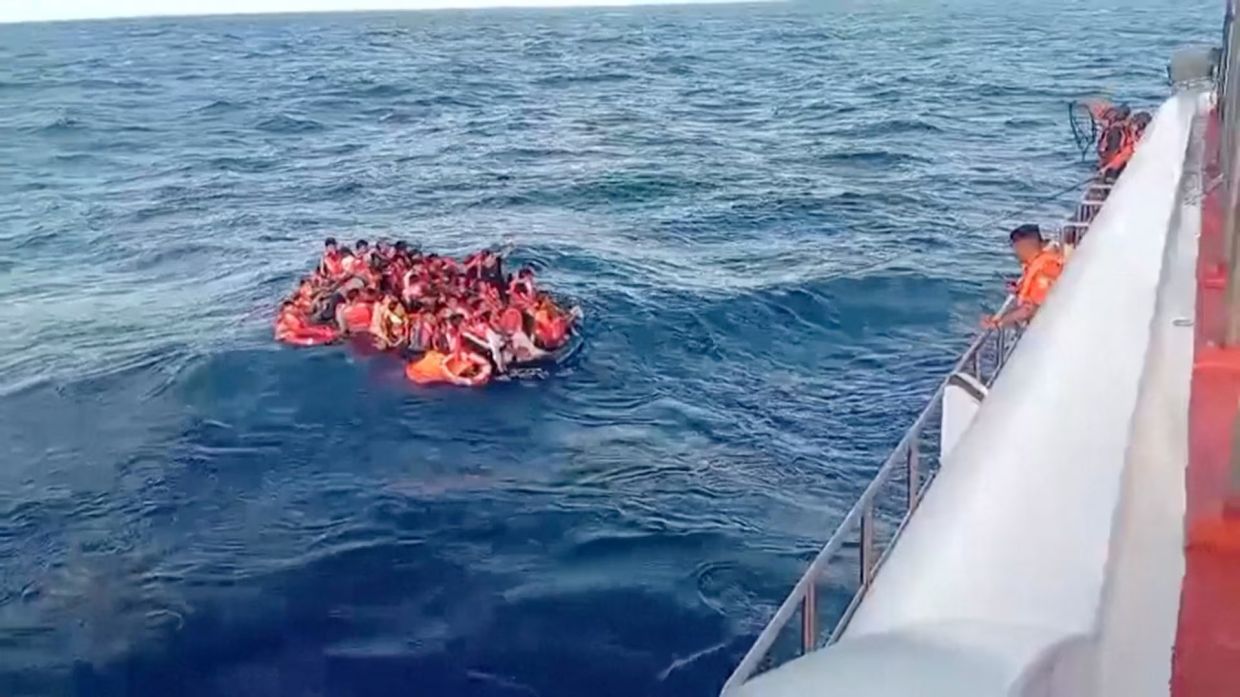
A devastating maritime incident unfolded near Bali in the early hours of Wednesday when the passenger ferry Putri Yasmin erupted in flames while navigating waters between two of Indonesia's most significant islands. The fire broke out at approximately 4:15 a.m. local time as the vessel made its regular passage from Bali toward Lombok, one of the archipelago's popular tourist and transport corridors. The disaster claimed one confirmed fatality—an Indonesian woman—while rescue teams managed to extract 211 people from the burning ship, underscoring both the severity of the emergency and the effectiveness of the coordinated response that followed.
The swift mobilisation of maritime rescue capabilities prevented what could have escalated into a far greater tragedy. Multiple agencies converged on the scene with impressive coordination, including Indonesia's National Search and Rescue Agency, the Indonesian Navy, maritime police, and several civilian vessels that were in the vicinity and responded to distress calls. Rescue personnel worked under challenging conditions typical of Indonesian waters—the incident occurred in pre-dawn darkness and required rapid decisions about passenger evacuation routes. According to an official statement released Thursday morning by local authorities, the operation achieved its objective without further loss of life, with survivors transported safely to reception points at ports across both Bali and Lombok.
However, discrepancies in passenger documentation have emerged that warrant closer scrutiny. The Putri Yasmin's official manifest recorded 131 passengers and crew members combined, with the crew comprising 17 individuals. Yet the actual rescue tally of 211 people indicates that more than 80 additional passengers had boarded the vessel without appearing in the formal registry. This substantial gap between registered and actual passenger numbers raises serious questions about port security protocols, embarkation procedures, and whether Indonesia's maritime safety oversight mechanisms are enforcing compliance with minimum safety standards. Such discrepancies are not uncommon in Southeast Asian ferry operations, where informal passenger traffic and incomplete documentation sometimes occur due to loose enforcement or deliberate circumvention of regulations.
The investigation phase has already commenced, with Indonesia's National Transportation Safety Committee taking the lead and receiving support from the Lembar Port Authority, which oversees ferry operations from the Lombok terminus. Investigators will need to determine the precise origin of the fire, whether it emerged from mechanical failure, electrical systems, engine malfunction, cargo-related ignition, or other causes. Given the rapid spread of the flames and the early morning timing, forensic examination of the wreckage will be critical. Simultaneously, authorities are tallying the full extent of material damage, which extends beyond the vessel itself to encompass vehicles that passengers had loaded and cargo stored in the ferry's hold—damage assessments that could reveal whether hazardous materials were improperly loaded.
This incident arrives as Indonesia continues grappling with systemic challenges in maritime transportation safety, a persistent concern across its sprawling archipelago. With more than 17,000 islands scattered across three time zones, ferries function as vital lifelines rather than luxury options, transporting millions of Indonesians annually for employment, commerce, healthcare, and education. The reliance on sea transport creates both economic necessity and operational vulnerability. When safety standards slip—whether through inadequate vessel maintenance, insufficient crew training, overcrowding, or poor hazard management—the consequences reverberate across communities that depend on these maritime connections for their livelihoods and survival.
For Malaysian observers and regional stakeholders, this incident carries particular relevance. Both Malaysia and Indonesia operate extensive ferry networks across comparable archipelagic geography, and maritime safety challenges in one nation often mirror those in the other. The unregistered passenger problem exemplified by the Putri Yasmin fire reflects broader Southeast Asian transportation challenges where informal economy pressures and enforcement gaps converge. Malaysian authorities overseeing Sabah and Sarawak water transport, as well as those managing routes in the Straits of Johor and within territorial waters, operate under similar pressures and occasionally face comparable compliance difficulties.
Lax safety enforcement stands out as perhaps the most persistent obstacle to maritime security throughout the region. Port authorities frequently lack sufficient inspectors, vessel operators sometimes prioritise cost reduction over maintenance schedules, and crew training programmes may not meet international maritime standards. Indonesia's archipelagic geography compounds these challenges—the sheer number of islands and ferry routes means comprehensive oversight demands resources that developing nations struggle to allocate. Weather unpredictability adds another layer of complexity; the same waters where the Putri Yasmin caught fire experience seasonal squalls and sudden weather shifts that can transform routine transits into dangerous passages, particularly if vessels lack proper maintenance or if crews have inadequate preparation.
The successful evacuation of 211 people demonstrates that emergency response capacity does exist and can function effectively when activated. The presence of civilian vessels capable of offering assistance, combined with the coordinated response of professional rescue agencies, created conditions for a better outcome than might have occurred if the fire had spread unchecked. This positive element should not, however, obscure the fundamental reality that prevention remains far preferable to rescue. Enhanced pre-voyage inspections, stricter passenger manifest enforcement, improved crew certification, and better hazard identification systems could prevent such incidents altogether.
As investigations proceed into the Putri Yasmin fire, Indonesian regulators face pressure to translate findings into concrete regulatory action. The National Transportation Safety Committee's examination will likely identify specific safety gaps that, if addressed, could prevent similar disasters. Whether those recommendations lead to meaningful enforcement changes remains an open question, one that passengers throughout the Indonesian archipelago—and their counterparts across Southeast Asia—have legitimate cause to monitor closely.

