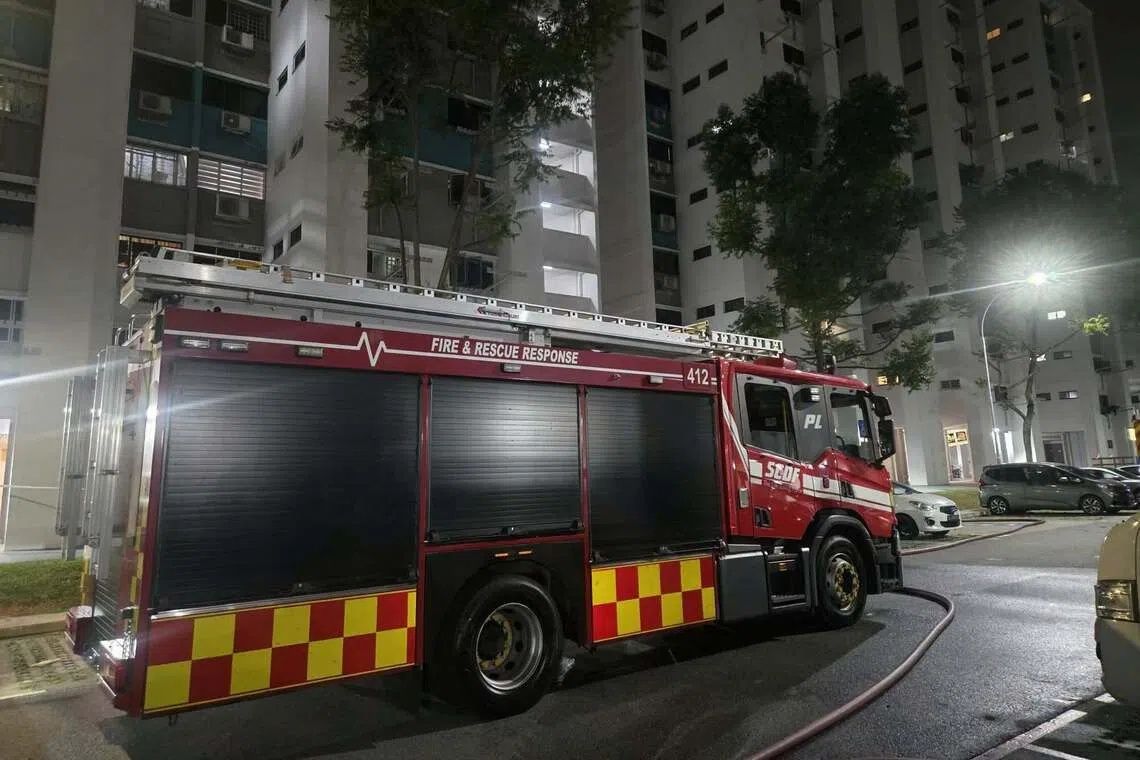
Singapore's public housing sector faces mounting safety concerns following another deadly residential fire, this time engulfing a unit at Block 339 Jurong East Avenue 1 in the pre-dawn darkness of August 16. The Singapore Civil Defence Force (SCDF) received an emergency alert at 3.55am and discovered thick black smoke billowing from a third-floor apartment, where flames had consumed furnishings in the living room. When firefighters forced entry into the unit, they located an unresponsive occupant who was pronounced dead at the scene. Authorities have launched an investigation into the fire's origin, though initial findings remain undisclosed.
The immediate response involved the rapid evacuation of fifty residents from the affected block, a procedure that underscores the residential density characterising Singapore's HDB estates and the potential for such incidents to disrupt entire apartment buildings. While the SCDF's swift arrival prevented the fire from spreading to neighbouring units, the casualty toll reflects the dangers posed by domestic blazes in high-rise settings where occupants may have limited escape routes and response times prove critical. The evacuation procedure, though successfully executed, highlights vulnerabilities in older public housing stock where fire detection and suppression systems may require upgrading.
This tragedy arrives amid a disturbing surge in fatal HDB fires across the island-state. The August 16 incident represents at least the fourth deadly fire within a three-week window, signalling either coincidental clustering or potentially systemic issues deserving urgent examination. The pattern began on July 28 when a fire at Block 39 Circuit Road claimed the life of a 70-year-old resident in the morning hours. Just three days later, on July 31, another blaze consumed an eighth-floor flat at Block 309 Clementi Avenue 4, killing a 65-year-old man and injuring two firefighters who battled the flames, suggesting intensifying fire behaviour that poses hazards even to professional responders.
The fourth incident in this tragic sequence occurred on August 3 at Block 684 Race Course Road, where a fifth-floor fire sent five residents aged between 55 and 88 to hospital for treatment. The severity of that incident became apparent days later when the 88-year-old victim succumbed to injuries on August 5, elevating the death toll from that single blaze. These overlapping incidents—spanning multiple locations across the island and affecting predominantly elderly residents—paint a concerning picture of fire risk management within Singapore's public housing system.
For Malaysian observers and policymakers, Singapore's HDB fire crisis carries direct relevance. Malaysia's own public housing schemes, including the DBKL flats in Kuala Lumpur and various state housing authorities' developments, accommodate hundreds of thousands of residents in similar high-rise configurations. The safety lessons emerging from Singapore's experience warrant careful scrutiny, particularly regarding fire detection technology, emergency response protocols, and resident evacuation procedures. Malaysian housing authorities may benefit from benchmarking against Singapore's response mechanisms while identifying weaknesses in their own fire safety infrastructure.
The concentration of fatal fires involving elderly residents raises additional concerns about vulnerability within senior populations living in public housing. Many HDB residents are retirees with limited mobility, hearing impairments, or cognitive conditions affecting their ability to detect smoke, respond to alarms, or evacuate independently. This demographic reality necessitates housing designs prioritising accessible emergency exits, supplementary alarm systems tailored for sensory-impaired residents, and community support networks enabling rapid assistance. Singapore's housing authorities must examine whether existing provisions adequately address these needs across their ageing resident base.
Fire safety in high-density residential environments depends on multiple interconnected systems functioning correctly. Early detection through smoke detectors, rapid alarm transmission to emergency services, accessible escape routes, functional sprinkler systems, and fire-resistant materials all contribute to survival outcomes. When multiple fatal fires occur within weeks across different locations, the pattern suggests potential gaps spanning detection, building maintenance, resident awareness, or emergency response coordination. The SCDF's commendable response speed cannot compensate for prevention failures occurring before firefighters arrive.
The investigation into the August 16 Jurong East fire will likely examine whether the unit's smoke detector functioned, whether residents understood evacuation procedures, and whether the fire's origin points to electrical faults, cooking accidents, or deliberately set ignition. Beyond determining this specific incident's cause, Singapore's authorities face pressure to conduct a comprehensive audit of HDB fire safety across all public housing stock. Such an examination might encompass detector maintenance schedules, sprinkler system functionality, building material compliance, resident education programmes, and staff training protocols.
Regional implications extend beyond individual administrative jurisdictions. Southeast Asian cities housing millions in public housing developments face comparable challenges. Indonesia's Jakarta, the Philippines' Manila, and Malaysia's expanding urban centres all grapple with rapid HDB-style development where safety infrastructure sometimes lags behind construction pace. Singapore's experience—both its advanced systems and current vulnerabilities—provides instructive lessons for neighbouring nations developing housing policies and safety standards. The elevated fatality rate observed over recent weeks suggests that even developed systems require constant vigilance and periodic recalibration.
The emotional toll on Singapore's communities cannot be overlooked. Residents in HDB flats now face heightened anxiety about their homes' safety, potentially affecting mental wellbeing and trust in government housing provision. Transparent communication regarding investigation findings and remedial measures becomes essential for maintaining public confidence. When residents perceive inadequate response to safety concerns, informal risk communication through community networks can amplify anxiety beyond what actual risk profiles justify.
Moving forward, Singapore's housing authorities must balance reassurance with honest acknowledgment of gaps. Public statements confirming whether this period represents statistical anomaly or systemic concern will guide both resident vigilance and policy interventions. Simultaneously, investment in next-generation detection technologies, accessible escape infrastructure, and targeted education for vulnerable populations deserves acceleration. The convergence of four fatal fires within three weeks demands more than standard procedural responses; it requires fundamental examination of whether existing HDB fire safety frameworks remain adequate for current housing conditions and resident demographics.

