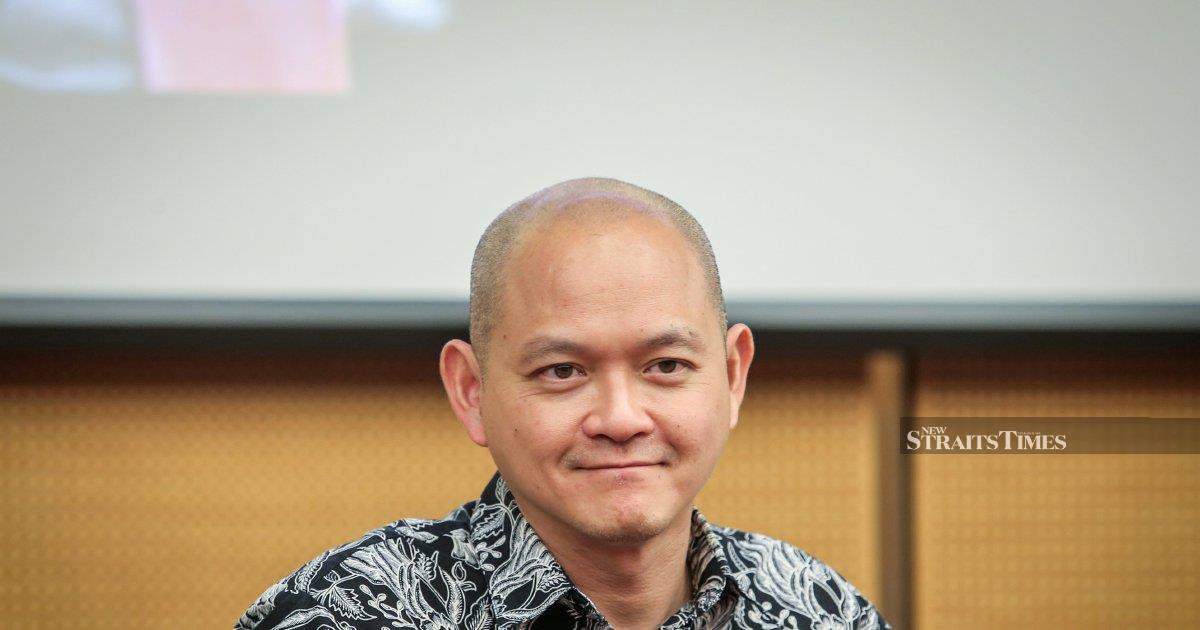
Dr Ong Kian Ming, who previously represented Bangi in parliament, has formally announced his departure from the Democratic Action Party (DAP), signalling a notable reconfiguration of Malaysia's political landscape as the nation heads toward its next general election. The economist and policy specialist's exit from the opposition coalition represents one of the more striking recent defections, bringing fresh momentum to Khairy Jamaluddin's electoral preparations.
Ong's decision to leave DAP after years as one of the party's prominent voices underscores the fluid nature of Malaysian politics, where individual political calculations often shift based on electoral prospects and personal ambitions. His expertise in economic policy and development issues had made him a visible figure within DAP's parliamentary caucus, frequently engaging in policy debates and serving as a counter-voice to government proposals. The resignation appears to reflect a strategic realignment rather than an ideological rupture, given the evolving political dynamics that have characterised Malaysian politics since the 2022 general election.
The move gains particular significance in the context of Khairy Jamaluddin's positioning within the broader coalition politics. Khairy, a figure who has navigated numerous political transitions himself, has been actively preparing groundwork for the next electoral contest, and Ong's involvement suggests efforts to consolidate support among intellectual and policy-oriented segments of the electorate. This type of recruitment typically aims to strengthen a campaign's technical capacity and credibility on substantive governance issues, areas where economists and seasoned parliamentarians can add considerable weight.
For DAP, the departure represents a loss of parliamentary experience and economic expertise at a time when opposition parties are grappling with declining voter confidence and evolving coalition dynamics. The party has faced considerable internal adjustments following recent electoral cycles, and the exit of prominent members can complicate internal morale and external messaging. Ong's profile as someone willing to engage across ideological lines made him valuable to DAP's positioning as a pragmatic, development-focused alternative government.
Ong's shift also reflects broader patterns within Malaysian politics whereby individual politicians reassess their options based on changing electoral mathematics. The former Bangi MP's calculation appears centred on where he can exercise greater influence and achieve his policy objectives, whether those involve direct parliamentary representation or advisory roles within a broader political formation. His economist background suggests he may contribute substantially to policy formulation in Khairy's circle, potentially influencing economic messaging for the upcoming campaign.
The timing of this announcement carries weight given the fluid state of Malaysian coalition politics. With various parties manoeuvring for electoral advantage and questioning the durability of existing alignments, moves like Ong's resignation from DAP can trigger ripple effects across the political establishment. Other political figures may reconsider their own party affiliations, and DAP leadership faces questions about retention and party renewal heading into an election campaign.
Khairy Jamaluddin has been actively assembling a team of capable individuals for his electoral push, and Ong's involvement amplifies the intellectual firepower behind this effort. This recruitment strategy reflects a recognition that modern Malaysian electoral campaigns increasingly emphasise policy differentiation and governance competence as voters grow more sophisticated in their political choices. An economist of Ong's calibre can substantially enhance the credibility of economic policy proposals that Khairy's group intends to present to voters.
For Malaysian observers tracking political developments, Ong's departure from DAP illustrates how Malaysian politics operates as a perpetual negotiation among ambitious individuals seeking optimal platforms for their ambitions. Unlike more institutionalised party systems, Malaysian political formations remain remarkably permeable, with movement between parties occurring based on calculation rather than principled conviction. This fluidity enables ambitious politicians to maximise influence but also undermines party institutionalisation and ideological clarity.
The broader implications for the opposition coalition remain uncertain. DAP's ability to retain capable parliamentarians and policy specialists directly affects its capacity to present a credible alternative government narrative. Conversely, Ong's movement toward Khairy's camp suggests consolidation among various political actors seeking to challenge the current government or reshape coalition configurations ahead of elections.
Ong's announcement also touches upon questions of political identity and affiliation in contemporary Malaysia. As political loyalties become increasingly transactional and contingent upon electoral prospects, individual politicians navigate calculations about where their contributions will generate maximum returns in terms of influence, portfolio opportunities, and policy implementation. Ong's decision reflects these contemporary realities, where political careers transcend single-party loyalty.
The economist's involvement with Khairy's campaign team positions him to shape economic policy discussions during the election cycle and potentially beyond, depending on electoral outcomes. His technical expertise in development economics and policy analysis fills particular gaps that many political operatives lack, making his participation valuable to any political formation seeking to move beyond populist messaging toward substantive governance proposals.

