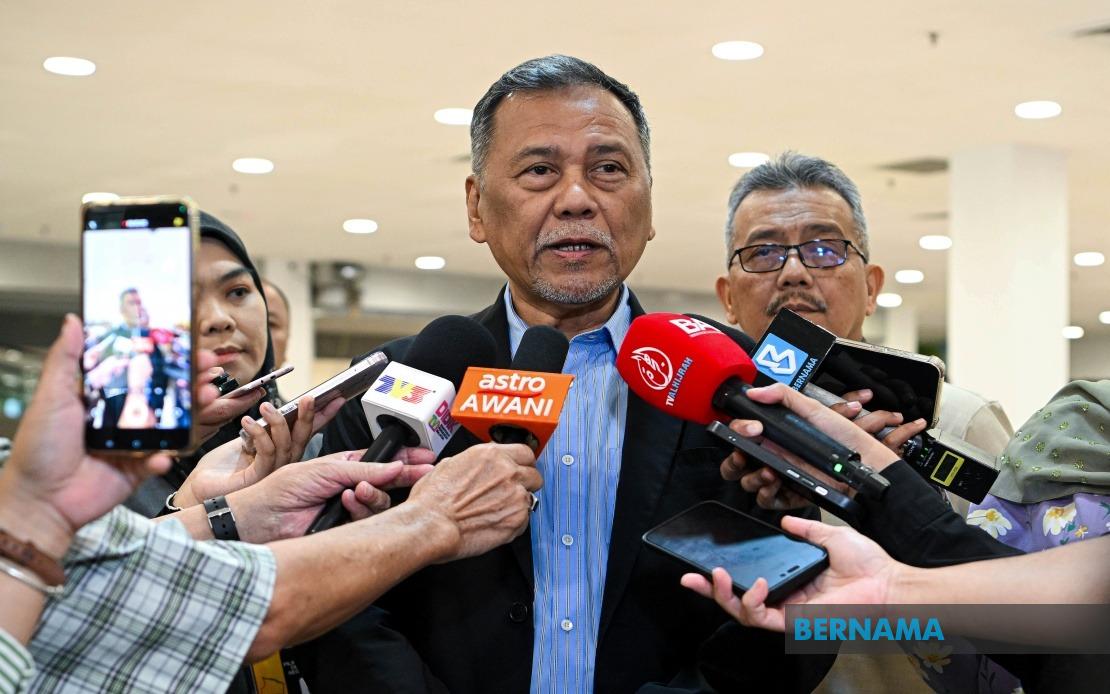
The Negeri Sembilan state election machinery is ramping up final preparations, with Election Commission chairman Datuk Seri Ramlan Harun confirming that 464 nomination forms have been distributed to interested candidates, though the response rate remains modest at this stage of the contest. The disclosure comes as the commission urges remaining aspirants to complete their deposit payments before tomorrow's nomination process commences, warning that delays could strain the administrative machinery on what promises to be a demanding day across the state.
With only 70 candidates having formally committed to contesting by paying their required deposits, Ramlan emphasised the importance of early submission to prevent last-minute congestion and ensure the nomination process unfolds without disruption. The EC chairman made these remarks during an inspection of nomination centres at the Seremban City Council building, where he oversaw preparation work at venues serving the Lenggeng, Nilai, Lobak, Temiang, Sikamat and Ampangan constituencies. The relatively low confirmation rate at this juncture suggests that many prospective candidates remain undecided or are still making final calculations about their electoral viability.
The commission has completed comprehensive rehearsals at all nomination centres throughout Negeri Sembilan to guarantee smooth operations when the process begins at 9 am tomorrow. These dry runs, conducted across all eight parliamentary constituencies serving as nomination hubs, represent part of a broader push to eliminate procedural bottlenecks. Unlike the approach adopted during the recent Johor state election, which operated nomination centres at individual state constituency level, Negeri Sembilan has opted for a centralised model organised around parliamentary boundaries. The EC argues this structure better accommodates local circumstances while streamlining coordination among election officials.
The scale of the operation underscores the logistical complexity involved. A total of 761 EC officers will be stationed across eight nomination centres tomorrow to process candidates and verify documentation. This represents a substantial deployment of personnel, reflecting the EC's determination to maintain procedural integrity despite the compressed timeline. The centralised nomination approach, while potentially requiring candidates to travel to their designated parliamentary constituency centre rather than their immediate locality, is designed to enhance efficiency and reduce administrative strain on election staff.
Security considerations have featured prominently in Ramlan's messaging to stakeholders. The EC chairman issued a pointed appeal to all participating political parties and their supporters to refrain from provocative conduct that might compromise the election's peaceful progression. He specifically urged prospective candidates to arrive early at nomination centres to mitigate congestion, whilst simultaneously calling on party supporters to maintain decorum and avoid confrontational behaviour. These appeals reflect broader concerns about maintaining electoral harmony during an increasingly polarised political environment, where campaign temperatures can rise sharply once nominations conclude.
The nomination process itself will occur tomorrow within a single hour, beginning at 9 am and closing at 10 am, after which returning officers will immediately announce which candidates have successfully met all requirements and are therefore eligible to proceed to the campaign phase. This compressed timeline necessitates meticulous preparation and disciplined execution, as any administrative delays could prejudice candidates' chances of lodging nominations. The brevity of the window means the EC's pre-nomination rehearsals assume critical importance in identifying and resolving potential operational glitches.
Negeri Sembilan's electoral landscape comprises 36 state constituencies distributed across eight parliamentary divisions, with voting ultimately determining which party or coalition commands the state assembly. The EC has registered 889,490 eligible voters according to its updated electoral roll as of June 4, 2026, comprising 867,151 ordinary voters, 16,884 military personnel and their spouses eligible for early voting, and 5,455 police personnel classified as early voters. The state legislature was formally dissolved on June 5 following consent from Tuanku Muhriz Tuanku Munawir, the Yang Dipertuan Besar of Negeri Sembilan, setting in motion the election calendar.
Polling day is scheduled for August 1, with early voting available to military and law enforcement personnel on July 28. This timetable grants the campaign period approximately two weeks of activity between nomination closure and election day, a compressed schedule that concentrates political messaging and grassroots mobilisation. For candidates ultimately selected through tomorrow's nomination process, the fortnight ahead represents the sole opportunity to persuade voters before ballots are cast. The intensity of this campaign window often determines which personalities and parties gain traction with the electorate.
The political composition of the current assembly provides insight into the likely competitive dynamics. In the 15th state election held in 2023, Pakatan Harapan secured 17 of the 36 seats, establishing a governing majority, whilst Barisan Nasional claimed 14 seats and Perikatan Nasional captured five. These results suggest a competitive three-way contest, with the previous victor possessing a slim majority that could prove vulnerable if voter sentiment shifts. Many observers will watch whether incumbent Pakatan Harapan can retain its plurality or whether either Barisan or Perikatan can gain ground through more effective ground mobilisation or topical campaign messaging. The composition of the candidate lists emerging tomorrow will provide early indicators of each coalition's strategic priorities and confidence in particular constituencies.
Ramlan's emphasis on regulatory compliance and orderly conduct reflects the EC's institutional interest in maintaining public confidence in electoral administration. Malaysian elections, particularly at state level, carry significance not merely for determining government formation but for validating democratic legitimacy and demonstrating the integrity of institutional processes. Any suggestion of administrative incompetence or partisan manipulation can undermine acceptance of results, particularly in closely contested polls where margins prove narrow. The commission's investment in thorough preparation and repeated appeals for decorous conduct accordingly serve broader democratic imperatives beyond merely managing the immediate procedural tasks confronting election staff.

