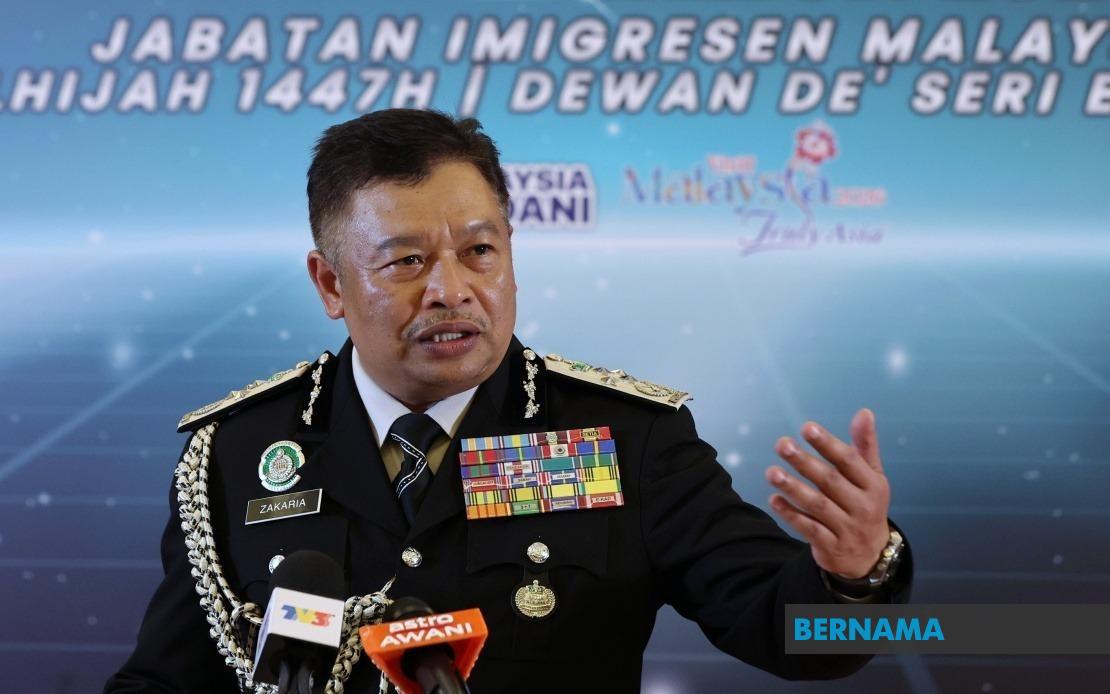
Malaysia's immigration authorities have narrowed down the source of ongoing passport processing complications to just two airlines, according to a statement from Immigration Director-General Datuk Zakaria Shaaban in Putrajaya. The technical difficulties arise specifically when these carriers attempt to process Malaysian International Passports that have been issued with validity periods longer than the standard decade, a situation that has prompted temporary policy adjustments by the Immigration Department.
Datuk Zakaria emphasised during a press conference that the complications do not reflect broader international resistance to Malaysian travel documents. Instead, the problems originate entirely within the operational systems deployed by these specific airlines for passenger processing, systems that operate on a global platform used by carriers worldwide. His clarification represents an important distinction for Malaysian travellers, as it suggests the issue is isolated to particular airline infrastructure rather than indicating any depreciation in the standing or acceptance of Malaysian passports internationally.
The director-general acknowledged, however, that the two identified airlines may not constitute the complete picture of the situation. He noted that the Immigration Department has received feedback from only these two carriers, while cautiously allowing for the possibility that other airlines might be experiencing similar difficulties without having formally reported them. This admission reflects the challenges inherent in gathering comprehensive data across a complex global aviation ecosystem where individual carriers may not immediately escalate technical issues to national immigration authorities.
Most other airlines operating globally have demonstrated no difficulties whatsoever in processing Malaysian passports with extended validity periods, a fact that further corroborates the conclusion that the problem is airline-specific rather than document-wide. This broader compatibility across the industry underscores that the vast majority of international carriers possess compatible systems capable of handling the extended passport validity without complications. Consequently, Datuk Zakaria stressed that the Immigration Department was not attributing blame to the affected airlines, recognising that the systems in question are standardised platforms utilised across multiple carriers and regions.
The Malaysian government has maintained that the standard ten-year validity period for Malaysian International Passports remains unchanged and operational. The suspended element is specifically the additional validity extension that previously exceeded this decade-long baseline. This distinction has become critical for public understanding, as confusion regarding which aspects of passport validity have been altered could create unnecessary concern among Malaysian travellers. The department clarified that only the supplementary extension provision has been temporarily halted pending resolution with the problematic airline systems and coordination with the International Civil Aviation Organization.
Prior to implementing the suspension, Malaysia's immigration procedures included a provision granting additional validity time to applicants whose previous passports still retained more than half a year of validity at the time of renewal. This measure was designed to compensate Malaysians for the unused portion of their existing documents, effectively extending their new passport validity by up to six months beyond the standard ten-year term. The practice reflected a customer-focused approach aimed at maximising value for citizens transitioning between documents.
The temporary suspension of validity extensions beyond ten years directly addresses the technical constraints encountered by these two airlines when their systems process documents with validity dates falling outside conventional parameters. Rather than abandoning affected passport holders entirely, the Immigration Department has implemented a goodwill gesture programme offering complimentary replacement of passports already distributed with the extended validity of ten years and six months. This measure protects existing passport holders from potential travel disruptions while the technical issues are resolved.
The decision to suspend extended validity periods takes effect immediately, as announced by the department yesterday. This prompt action reflects the priority accorded to resolving impediments to Malaysian citizens' international mobility. The collaboration framework involving the Immigration Department, the affected airlines, and the International Civil Aviation Organization suggests a structured approach toward identifying systematic solutions rather than ad-hoc interventions.
For Malaysian travellers currently holding passports with validity extending beyond ten years, the situation presents a mixed picture. Those who obtained such documents before the suspension remains in effect retain valid travel credentials, though the new free replacement option provides an opportunity to obtain standard ten-year passports without additional expense. Prospective applicants, meanwhile, will receive passports with the conventional decade-long validity, eliminating potential complications at airline check-in counters during the interim period.
The emergence of this technical compatibility issue highlights the complex intersection between national identity documentation standards and international airline operational systems. While rarely publicised, such friction points between different technological ecosystems periodically disrupt traveller experiences across the globe. Malaysia's experience demonstrates how swift identification and transparent communication from immigration authorities can mitigate public anxiety while technical solutions are pursued through appropriate international channels.

