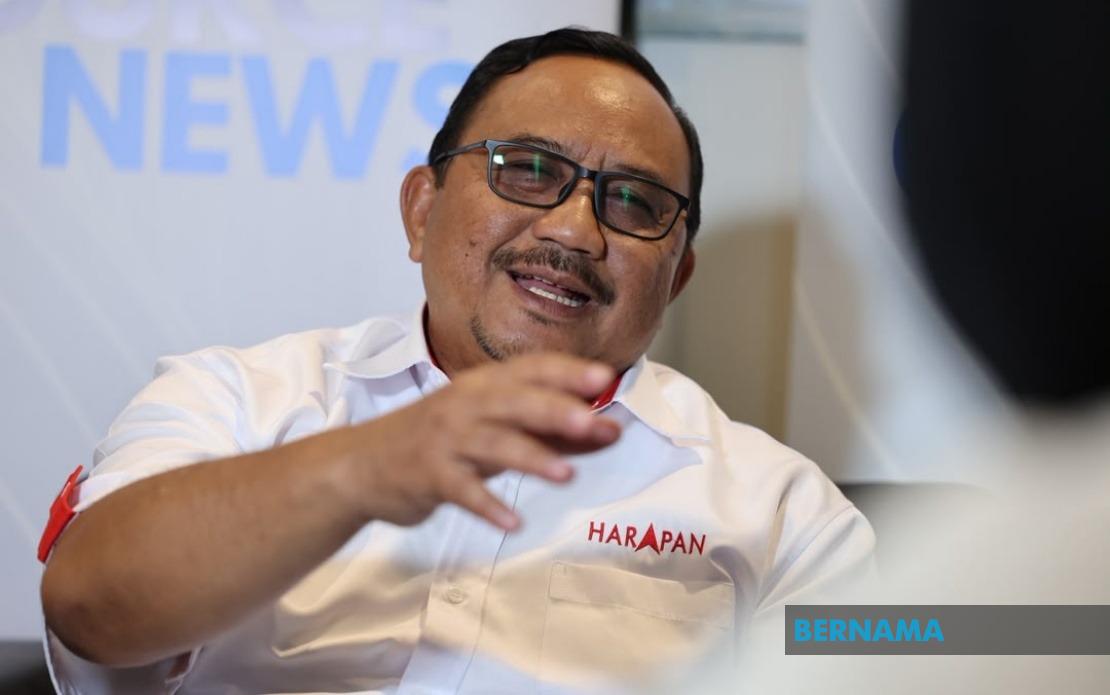
As Johor prepares for its 16th state election on July 11, broadband connectivity has emerged as an election issue in the Senggarang constituency, where Batu Pahat MP Onn Abu Bakar is championing a technology-driven solution to resolve persistent internet access problems affecting rural communities. The Pakatan Harapan candidate has proposed a Wireless Bridging System project intended to eliminate digital dead zones where residents currently struggle with signal strength of merely one to two bars on their mobile devices.
The initiative, submitted to the Academy of Sciences Malaysia under the purview of the Science, Technology and Innovation Ministry, carries a projected budget of between RM100,000 and RM200,000 for initial implementation. The proposal represents a collaborative effort between Onn's office and Universiti Tun Hussein Onn Malaysia, which brings technical expertise and research capacity to the infrastructure challenge. Seven geographic zones have been identified as priority areas requiring intervention: Jalan Kampung Sungai Keluang Darat, Jalan Kampung Parit Kadir, Jalan Kampung Parit Seri Bahrom, Kampung Punggur Darat, Sri Merlong, Simpang 6, and the vicinity of Seri Bahrom Mosque.
Onn has framed digital access as a fundamental issue of equity in Malaysia's transition toward a technology-enabled economy. His campaign messaging emphasises that no resident should face disadvantage due to geographic location, particularly as the nation pursues ambitious goals around Industry 4.0 and digital transformation. The WBS technology addresses what telecommunications authorities term communication "blind spots"—areas where topography, infrastructure gaps, or market economics have left populations underserved by mainstream mobile network operators. For residents dependent on remote learning, telemedicine, agricultural e-commerce, or distance work, such deficiencies impose tangible costs and limit economic opportunity.
The timing of Onn's proposal reflects broader positioning within the campaign context. As Batu Pahat MP, he maintains institutional relationships with agencies including the Malaysian Communications and Multimedia Commission and the Communications Ministry, which he suggests provides leverage in advocating for infrastructure investment. His argument rests on the assertion that parliamentary-level coordination can translate grievances into structured funding and implementation mechanisms that local-level candidates cannot independently access. This distinction carries electoral significance in a three-cornered contest also involving Mohd Yusla Ismail representing BN-UMNO and Datuk Mohd Rashid Hasnon representing PN-Bersatu.
Universiti Tun Hussein Onn Malaysia has demonstrated practical capability in deploying comparable solutions. Professor Muhammad Ramlee Kamarudin from the institution's Electrical and Electronic Engineering Faculty notes that UTHM previously implemented a successful WBS installation in Kampung Simbuan Tulid, Keningau, Sabah. That installation has proven effective in delivering dependable broadband to a rural population where conventional 4G and 5G network coverage remains inadequate. The Sabah precedent provides empirical validation that the proposed technology functions reliably in challenging geographic environments similar to those found throughout the Senggarang constituency.
The technical specifications reveal that WBS operates by bridging wireless signals across distances, effectively extending coverage from established network nodes into areas where direct transmission proves insufficient. The system requires ongoing technical supervision to maintain performance standards and ensure longevity. Professor Muhammad Ramlee indicated that his research team has committed to overseeing the Sabah installation through 2027, signalling confidence in the technology's durability and underlining the importance of sustained expert engagement rather than one-off deployment and abandonment.
Integrating this initiative within broader campaign messaging, Onn positions digital infrastructure as one of six core commitments aimed at comprehensive constituency development. This framing elevates broadband access from technical infrastructure into a cornerstone of his electoral platform, suggesting that digital equity underpins progress across education, commerce, healthcare, and government service delivery. Such positioning aligns with national policy discussions around regional development and the rural-urban divide, issues that resonate beyond Senggarang's specific context.
The proposal's submission timeline reveals an established procedural progression. The concept was presented to MOSTI in February and underwent formal presentation in early March, preceding the state election announcement by several months. This chronology suggests the initiative developed through conventional government channels rather than as campaign improvisation, potentially lending credibility to its implementation viability. Approval and funding release remain uncertain, and the project's realisation depends on securing ministerial endorsement and budget allocation through normal appropriation processes.
Senggarang constituency encompasses one of three state seats within the Batu Pahat parliamentary division, alongside Rengit and Penggaram, making it strategically important within the broader electoral geography. Early voting commenced on July 7, with the main polling day scheduled for July 11. The three-candidate contest reflects the fragmented opposition landscape that has characterised recent Malaysian elections, potentially creating circumstances where vote consolidation becomes critical to electoral outcomes. Infrastructure proposals such as the WBS project may influence voter behaviour particularly among rural populations dependent on connectivity for economic participation and access to services.
Malaysia's digital infrastructure disparities persist despite decades of development initiatives, reflecting the challenge of achieving universal broadband coverage in a nation with mountainous terrain and dispersed settlement patterns. Successive governments have launched programs addressing rural connectivity gaps, yet significant populations remain underserved. The WBS proposal represents an incremental approach focused on specific problem areas rather than systematic national coverage expansion. Whether such targeted interventions prove sufficient to eliminate digital divides or merely postpone systemic infrastructure investment decisions remains an open question informing broader policy debates about resource allocation and regional equity.

