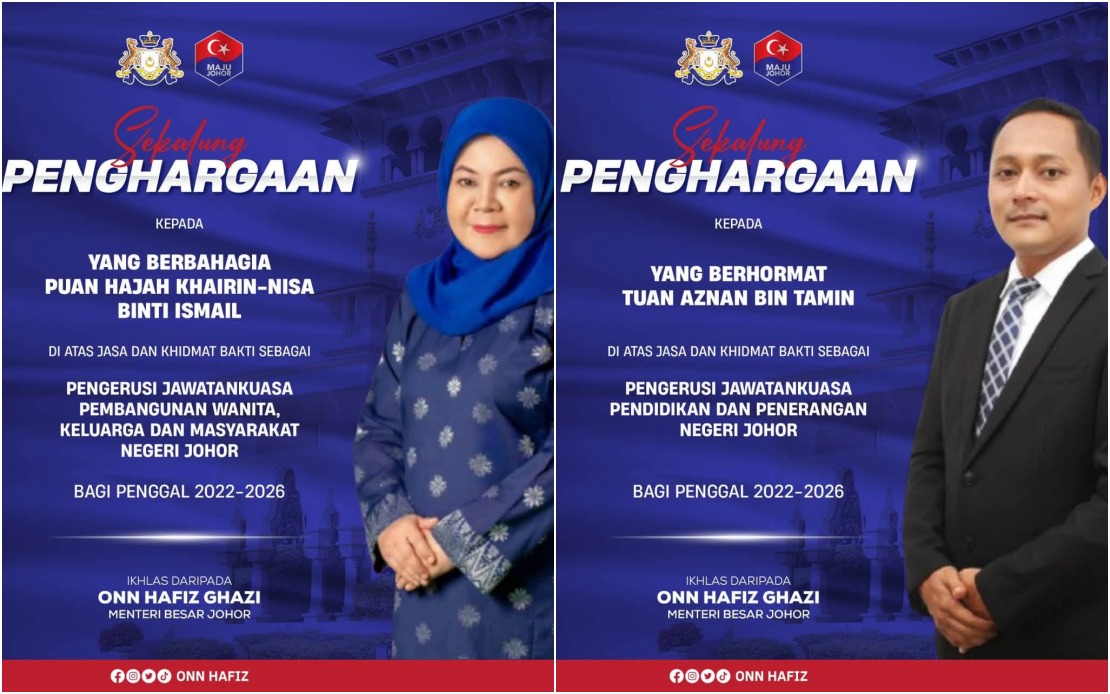
Johor's state administration has undergone a significant restructuring of its executive council, marking a fresh chapter in the state government's leadership while maintaining institutional continuity. Menteri Besar Datuk Onn Hafiz Ghazi framed the reshuffle as a deliberate and necessary step in the broader modernisation of the state apparatus, emphasising that such administrative changes represent standard practice in the pursuit of sustained development and improved governance.
The Johor Menteri Besar took the opportunity to recognise the efforts of those departing from the executive council, acknowledging that Datuk Zahari Sarip, K. Raven Kumar, Aznan Tamin and Khairin-Nisa Ismail had invested considerable sacrifice, time and intellectual capital during their tenure in the 2022-2026 term. Rather than treating the reshuffle as a clean break, Onn Hafiz positioned the transition as a natural evolution within a broader commitment to public service, suggesting that the knowledge and dedication of outgoing members would remain valuable assets to the state's development trajectory.
Central to Onn Hafiz's message was the assertion that administrative positions are fundamentally transient vehicles for public service, and that the true measure of contribution transcends any particular title or portfolio. This framing sought to honour departing members whilst simultaneously legitimising the need for renewal, arguing that experience, wisdom and commitment to service would continue to benefit Johor regardless of formal position within the state administration. The statement reflected a delicate balance between appreciating the past and charting a clear course toward the future.
The practical composition of the new executive council demonstrates a measured approach to change, with six incumbents retaining their ministerial responsibilities whilst four fresh appointees enter the state government administration. This configuration suggests a deliberate strategy of combining continuity with infusion of new perspectives, a approach common in Malaysian state-level governance transitions. The retention of experienced hands provides institutional memory and policy coherence, whilst new appointments signal openness to alternative viewpoints and generational renewal within the leadership structure.
For Malaysian states, executive council reshuffles carry significance beyond mere personnel management. They reflect the political health of the ruling coalition, test the flexibility of the administration, and signal priorities for the incoming term. The Johor transition, given the state's economic importance and political weight within Malaysia's federal structure, warrants attention from observers of regional governance trends. State governments compete for investment and talent, and leadership stability combined with strategic refreshment can influence both local and national perceptions of administrative competence.
The formal appointment ceremony, presided over by Tunku Mahkota Ismail at Istana Bukit Serene, underscored the ceremonial and constitutional dimensions of the transition. The swearing-in of all ten assemblymen before the Regent provided institutional legitimacy to the reshuffle, grounding the administrative changes within Johor's constitutional framework. This procedural formality reinforces the importance of such transitions in Malaysia's constitutional monarchy system, where symbolic affirmation by royal authorities carries weight beyond mere administration.
Onn Hafiz's emphasis on collective achievement during the previous term attempted to deflect potential criticism that the reshuffle represented dissatisfaction with departing members' performance. By attributing state government successes to the outgoing council's contributions, the Menteri Besar sought to preserve their reputations and maintain party cohesion. In Malaysian politics, where intra-party dynamics frequently influence governance outcomes, such careful messaging becomes crucial to preventing the emergence of disgruntled factions within ruling coalitions.
The narrative of administrative renewal reflects broader trends in Southeast Asian governance, where state-level administrations increasingly emphasise modernisation and efficiency improvements. Johor, as Malaysia's second-largest state economy and a crucial component of the Klang Valley's broader economic ecosystem, faces competing pressures to maintain stability whilst embracing contemporary approaches to public administration. The reshuffle signals an attempt to balance these imperatives through strategic personnel management.
Looking forward, the composition and performance of the newly restructured executive council will shape Johor's policy direction across critical areas including economic development, infrastructure, education and social services. The integration of four new faces into the administration will inevitably create adjustment periods as working relationships crystallise and policy preferences become apparent. The extent to which continuity and renewal successfully coexist within this new configuration may offer insights into the state's governance effectiveness over the next term.
For observers of Malaysian state politics, this reshuffle exemplifies the perpetual tension between institutional stability and adaptive change. Neither stasis nor constant upheaval serves state interests effectively, and the Johor model of selective renewal whilst retaining experienced practitioners suggests a pragmatic middle path. Whether this balance ultimately proves sufficient to maintain administrative momentum and public confidence will become evident as the new executive council begins implementing its agenda across the diverse challenges facing Malaysia's southern frontier state.

