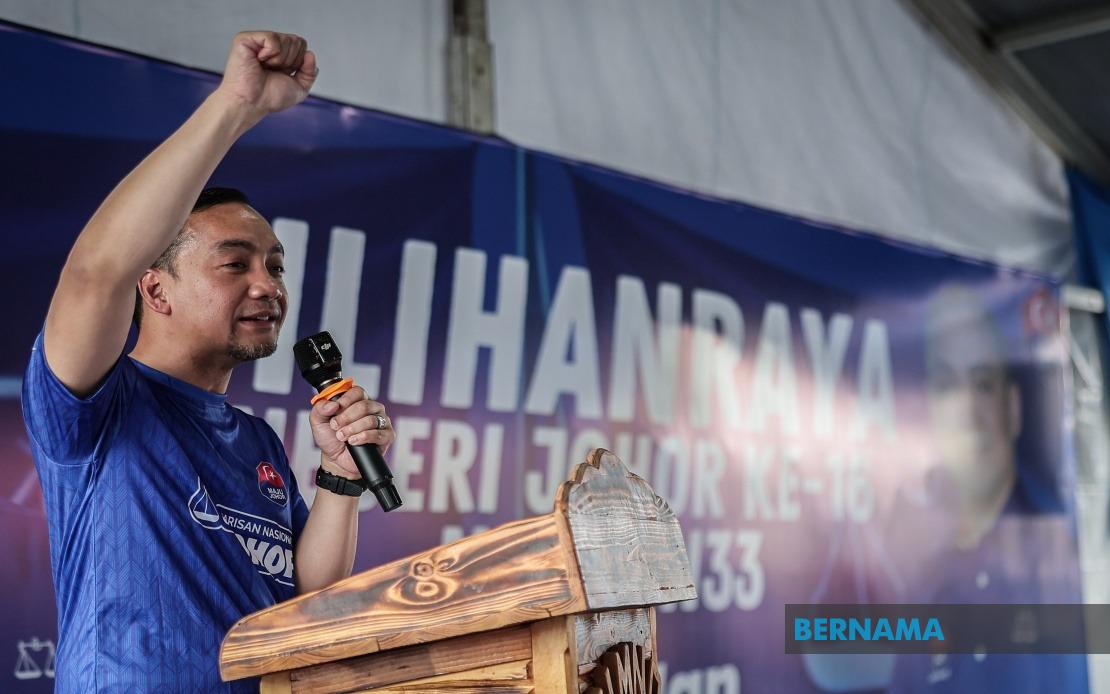
The Barisan Nasional coalition is banking on sustained voter enthusiasm for its Endau candidate, Alwiyah Talib, as the Johor state election enters its closing phase. BN chairman Datuk Onn Hafiz Ghazi, who is also Johor Menteri Besar, made the assessment during a campaign event in the Mersing district on June 29, underlining that the groundswell of community support has reinforced the coalition's prospects heading toward polling day on July 11.
Alwiyah, popularly known as "Kak Awi" within her constituency, has generated what BN leadership characterises as notably encouraging responses from voters throughout the campaign period. Onn Hafiz attributed this reception partly to her established track record of community service, noting that despite her earlier affiliation with the opposition, she had consistently delivered for her constituents. The positive sentiment reflects what BN sees as validation of its inclusive political approach at a moment when the coalition is rebuilding after setbacks in recent electoral cycles.
The return of Alwiyah to the BN fold represents a symbolic victory for the coalition's unity strategy. Onn Hafiz explicitly linked her candidacy to the Rumah Bangsa concept championed by UMNO president Datuk Seri Dr Ahmad Zahid Hamidi, a framework emphasizing cohesion and broad-based representation across BN's constituent parties. By welcoming back a figure who had previously contested under Perikatan Nasional, the coalition seeks to demonstrate flexibility and pragmatism in pursuit of electoral gains while reinforcing a narrative of national unity transcending factional divisions.
Alwiyah's political journey itself carries significance for understanding current dynamics within Johor's political landscape. She first captured the Endau seat under the BN banner during the 14th General Election before transitioning to Bersatu and subsequently contesting under Perikatan Nasional during the 2022 Johor state election. In that contest, she retained the seat with a majority of 3,041 votes despite a five-cornered fight, indicating her personal popularity remained intact even amid broader state-level shifts in voter preferences. Her re-entry into BN signals confidence that her electoral base remains resilient and potentially expandable.
Onn Hafiz's public statements about campaign momentum carry particular weight given the broader context of BN's resurrection as a political force in Johor. The state proved to be a critical battleground for the coalition's revival, and success in this election would consolidate gains made since the 2022 state polls. The emphasis on smooth campaign operations without significant incidents also addresses concerns about electoral integrity and party discipline, matters that have occasionally disrupted BN's public image.
The inclusion of Tenggaroh BN candidate Mohd Youzaimi Yusof at the campaign event underscores how BN is coordinating efforts across multiple constituencies within the Mersing parliamentary district. This coordinated approach reflects lessons learned from recent elections about the importance of integrated campaign strategies rather than isolated constituency-level efforts. The presence of both candidates alongside the Menteri Besar projects an image of unified organizational capacity.
For Malaysian political observers, this election represents a critical indicator of whether BN's recovery trajectory will persist or whether opposition forces have stabilized their support base. Johor's significance extends beyond its electoral votes—the state's political direction carries symbolic weight for federal-level BN positioning and the broader governance narrative within the nation. An emphatic BN victory would validate claims that the coalition has successfully repositioned itself as an inclusive, forward-looking force; a mixed result might suggest that voter preferences remain fluid and regionally fragmented.
The scheduled early voting on July 7, preceding the main polling day on July 11, provides BN with an additional mobilization opportunity. Party machinery operates through a calculated schedule of such contests, with each phase offering data on voter turnout patterns and shifting sentiment. Campaign teams will carefully monitor early voting results to refine their final push toward the main election day, adjusting messaging and resource allocation based on real-time feedback from the electorate.
Onn Hafiz's confidence reflects internal BN assessments that party machinery in both Endau and Tenggaroh has achieved high levels of preparedness and commitment. In Malaysian electoral politics, such organizational capacity often proves decisive in close contests. The mention of preparation levels suggests BN has invested substantially in ground-level operations—volunteer networks, logistics, voter identification databases, and canvassing efforts—that collectively determine whether campaign enthusiasm translates into actual votes on polling day.
The broader implications for Southeast Asian politics merit consideration, as Malaysia's electoral processes and coalition dynamics influence regional perceptions of democratic governance and political stability. A successful BN campaign would reinforce the viability of broad-based coalitions in managing diverse, multi-ethnic societies, while also demonstrating that major political groupings can refresh themselves and retain electoral competitiveness even after significant setbacks. Conversely, any significant BN underperformance might fuel questions about the durability of traditional political structures across the region.

