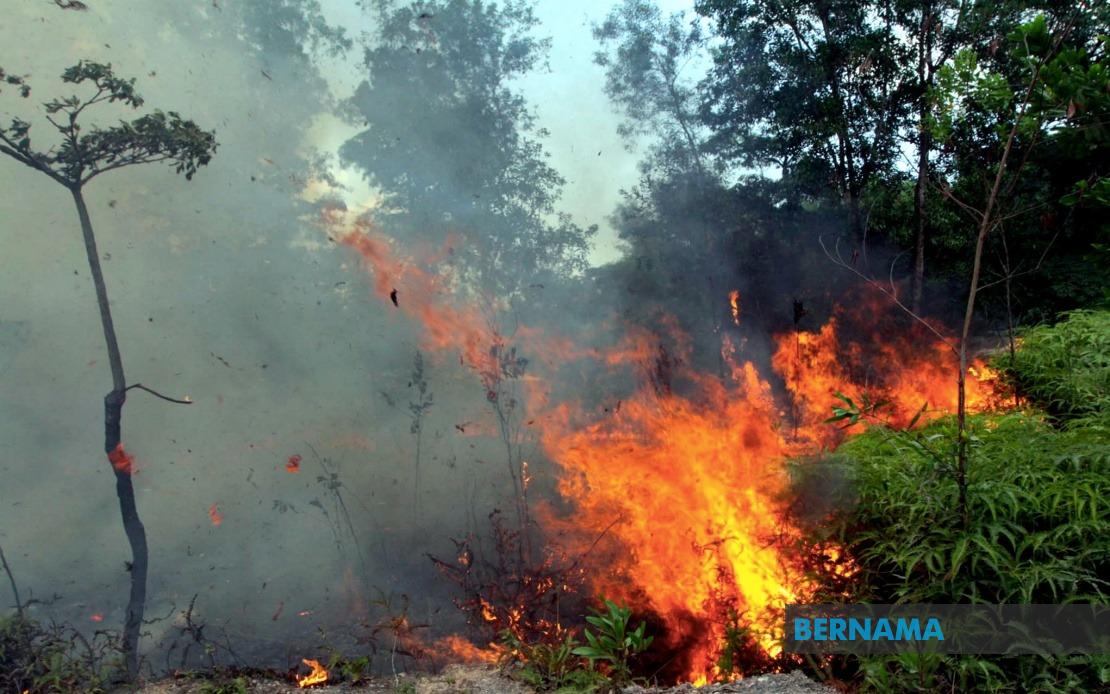
The Malaysian Fire and Rescue Department (JBPM) has sounded the alarm over a dramatic escalation in open burning incidents across the country, releasing figures that underscore mounting pressure on firefighting resources during what appears to be an increasingly volatile fire season. Between January and July this year, the department documented 18,432 cases of uncontrolled burning involving forests, shrubland and waste—a staggering 85 percent jump compared to the 9,941 cases recorded during the same seven-month window in 2024. The year-on-year surge is even more pronounced when measured against 2023, when 16,294 cases occurred during the comparable period, highlighting an upward trajectory that has alarmed fire safety officials.
JBPM director-general Datuk Seri Nor Hisham Mohammad disclosed these statistics while cautioning that the department faces mounting challenges in managing the geographical distribution of fire incidents across Malaysia's diverse landscape. The sheer volume of cases, combined with the unpredictable nature of large-scale fires, has forced authorities to adopt a more sophisticated monitoring approach. In response to escalating threats, JBPM has established a targeted surveillance network encompassing 183 locations nationwide that have demonstrated heightened susceptibility to open burning based on historical data spanning the past five years. This long-term analytical framework allows the department to pre-position resources and personnel in areas where experience suggests incidents are most likely to occur.
Within this broader network, authorities have designated 62 locations as presenting imminent risk for catastrophic fires capable of engulfing areas exceeding 25 hectares—a threshold that fundamentally alters firefighting operations and resource allocation. Fires of this magnitude pose exceptional logistical challenges; mobilizing sufficient teams and equipment becomes exponentially more difficult as fire perimeters expand, and controlling such blazes often requires inter-agency coordination and prolonged deployment. The identification of these specific hotspots reflects JBPM's recognition that not all fire-prone areas present equivalent risk levels, and that focusing preventive efforts on the most dangerous zones represents a more efficient use of stretched departmental resources. Nor Hisham emphasized that close monitoring of these 62 critical locations remains a priority for the coming months.
Geographically, the fire emergency has struck with uneven intensity across Malaysia's regions. Sarawak has emerged as a particularly concerning flashpoint, with large-scale burning incidents occurring frequently in districts including Sri Aman and Mukah, where dense vegetation and challenging terrain complicate suppression efforts. Peninsular Malaysia, while recording a greater overall volume of incidents, has generally experienced smaller-scale fires that remain more manageable for response teams. However, Sabah presents a distinctive and worrying profile, combining high vegetation density with rugged topography that creates ideal conditions for rapid fire spread and escalation. The state has drawn heightened departmental attention precisely because its natural characteristics accelerate ignition and propagation; when fires ignite in Sabah's terrain, they often develop beyond control far more quickly than in flatter, less densely vegetated regions.
Data from 2024 identified seven locations around Kota Kinabalu where major fires occurred, and these same zones are now incorporated within JBPM's list of 62 high-priority monitoring areas. This historical analysis reveals a concerning pattern: certain localities experience repeated large-scale fire events, suggesting that underlying environmental, human, or infrastructural factors create recurring vulnerabilities. Understanding these patterns enables the department to concentrate prevention and preparedness efforts, though the correlation between past incidents and future ones also implies that some regions face endemic fire risk that may require structural interventions beyond emergency response capacity.
According to Nor Hisham, the dramatic increase in open burning cases stems substantially from elevated temperatures in specific localities, which lower ignition thresholds and accelerate fire spread once combustion begins. Hot weather conditions create ideal conditions for fire development, particularly when combined with dry vegetation and human carelessness or deliberate burning practices. This meteorological dimension introduces an element beyond direct departmental control, as weather patterns reflect broader climatic trends that Malaysia must anticipate and to which response strategies must adapt.
Recognizing the potential for further deterioration, JBPM has shifted focus toward proactive preparation for anticipated climatic disruptions. The department is actively preparing for weather pattern changes expected to accompany the Super El Niño phenomenon, a significant oceanic-atmospheric event projected to influence Pacific and regional weather conditions. Meteorological forecasts indicate that the phenomenon will manifest in the Pacific around November, with downstream effects anticipated to reach Malaysia approximately between the third and fourth weeks of January next year. The El Niño-induced weather patterns typically bring elevated temperatures and reduced precipitation to Southeast Asia, creating conditions highly conducive to fire ignition and propagation. By preparing now—months ahead of anticipated climatic stress—JBPM aims to position itself to manage what could be an even more severe fire season.
The convergence of rising open burning incidents, identified high-risk zones, regional variations in fire behavior, and anticipated climatic challenges presents a complex operational environment for Malaysian firefighting authorities. The department must simultaneously address current incidents, maintain vigilant monitoring across 62 critical locations, build inter-agency coordination capacity in Sabah and Sarawak, and prepare institutional readiness for potentially worse conditions in early 2026. For residents in high-risk areas and neighboring regions, these developments carry concrete implications: increased fire risk means heightened potential for air pollution, evacuations, and economic disruption, particularly affecting agriculture-dependent communities and industries reliant on forest resources.
The statistics and projections disclosed by Nor Hisham underscore that Malaysia's fire challenge has evolved beyond episodic incidents into a systemic problem requiring sustained, multi-faceted responses. The near-doubling of cases year-over-year suggests that existing prevention and enforcement mechanisms may require strengthening, whether through stricter regulation of land-clearing practices, enhanced community education on open burning dangers, or technological investments in early detection systems. As JBPM prepares for what appears an intensifying fire season, the department's transparency about risk levels and resource constraints invites scrutiny regarding whether current institutional capacity and budgetary allocation sufficiently match the escalating threat profile.

