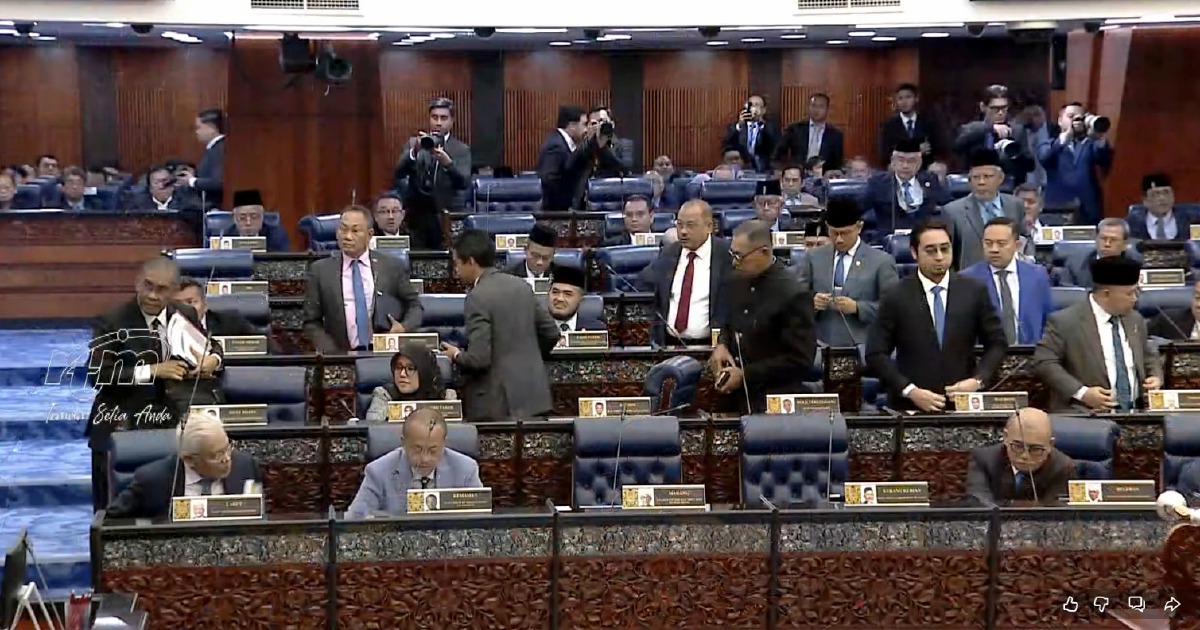
The opposition benches emptied during today's parliamentary session as lawmakers staged a coordinated exit in protest over procedural disagreements surrounding the Tabung Haji commission hearing. The walkout occurred after the Speaker declined to grant a postponement that opposition members had sought, arguing that proceeding without Prime Minister Datuk Seri Anwar Ibrahim present undermined the significance of the discussion on the Royal Commission of Inquiry findings.
The dispute centred on timing and attendance at the special parliamentary sitting convened to address the RCI report on Tabung Haji, the pilgrim fund management body that has faced considerable scrutiny in recent years. Opposition representatives contended that the absence of the prime minister—who holds ultimate responsibility for government policy and ministerial oversight—rendered the session substantively incomplete and procedurally questionable. Their request for deferral appeared designed to ensure that any parliamentary deliberation on the commission's conclusions would occur with full executive representation present to respond to concerns and undertake necessary commitments.
The Speaker's rejection of this request forced opposition MPs to make a choice between proceeding under conditions they deemed inadequate or absenting themselves from the proceedings. The walkout represented a form of parliamentary protest commonly employed by opposition parties to signal dissatisfaction with procedural decisions or governmental conduct. This tactic, while disruptive, carries symbolic weight in Malaysia's parliamentary system, allowing the opposition to register formal objection without engaging in extended debate that the government majority could simply vote down.
Tabung Haji has been a subject of intense political and public interest following revelations about its financial management and investment practices. The creation of the Royal Commission of Inquiry reflected widespread concerns about governance standards at the institution, which serves millions of Malaysian Muslims by facilitating and managing savings for the Hajj pilgrimage. The RCI's conclusions have major implications for policy reforms and accountability within the fund's operations, making parliamentary scrutiny of its findings a matter of genuine national importance rather than routine legislative business.
The timing of the special sitting, combined with the prime minister's reported unavailability, raised legitimate questions about parliamentary priorities and the government's approach to engaging with significant governance issues. For opposition parties already monitoring executive accountability closely, the apparent attempt to proceed without the PM present suggested either insufficient governmental regard for the matter's seriousness or a preference to limit direct questioning on sensitive findings. This interpretation, whether accurate or not, provided sufficient ground for the opposition to contest the proceedings' legitimacy.
Parliamentary walkouts carry different significance depending on their frequency and context. While not uncommon in adversarial legislatures, they work best when deployed judiciously to highlight genuinely substantive disagreements rather than routine partisan skirmishing. In this instance, the opposition's action reflected a calculated judgment that the absence of the prime minister during a special session on an RCI report constituted sufficient grounds for formal protest. Whether observers viewed this assessment as reasonable or as excessive political theatre largely depended on their institutional expectations and political perspective.
The incident illuminates the complex dynamics between Malaysia's executive and legislative branches, particularly regarding government accountability mechanisms. Special sittings convened to examine Royal Commission findings represent moments when Parliament potentially exercises substantial oversight authority, scrutinising executive performance and demanding policy responses. The opposition's insistence on the PM's presence underscored the principle that such scrutiny requires engagement at the highest levels of government rather than delegation to junior ministers who might lack authority to commit to substantive reforms.
For Malaysian readers following parliamentary developments, this episode demonstrates how disagreements over procedural matters can become vehicles for broader political contestation about governmental accountability and democratic norms. The walkout was not principally about partisan theatre, though political calculations certainly influenced the opposition's decision, but rather about asserting the principle that matters of significant governance importance warrant appropriate levels of executive engagement and transparency.
The broader implications extend to how Parliament functions as an institution in holding government accountable. When special sittings occur without expected participants, questions arise about whether such sessions serve their intended purpose or become largely symbolic exercises lacking substantive deliberative power. These considerations matter for public confidence in parliamentary institutions and for the effectiveness of oversight mechanisms that theoretically constrain executive overreach.

