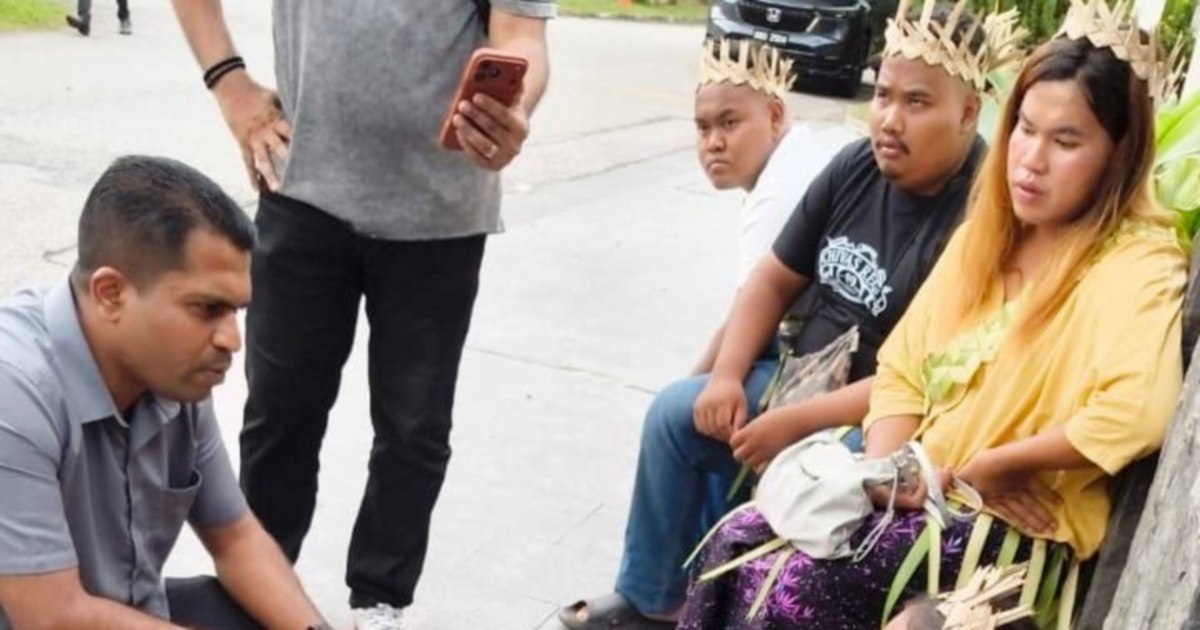
Indigenous residents of Kampung Sungai Cot in Maran, Pahang have escalated their long-running land dispute by making a direct appeal to the federal government. After a physically demanding two-day trek, the group arrived at Prime Minister Datuk Seri Anwar Ibrahim's residence in Bandar Sungai Long, where they presented their grievances regarding what they describe as the destruction of their ancestral homes and territories. The dramatic journey underscores the desperation felt by the community, which has exhausted conventional channels for addressing their concerns and now seeks high-level political intervention.
The dispute centring on Kampung Sungai Cot represents a broader pattern of land-related conflicts involving Orang Asli communities across Malaysia. These indigenous populations have historically faced considerable pressure from competing development interests, agricultural expansion, and resource extraction schemes. The village's location in Maran, a district with significant economic activity in forestry and agriculture, places it at the intersection of traditional land rights and commercial pressures that have intensified over recent decades. The fact that residents felt compelled to undertake such an arduous journey signals that earlier attempts to resolve matters through state or district-level mechanisms have proven insufficient.
The alleged destruction of homes and lands represents a critical flashpoint in a conflict that likely involves complex overlapping claims to the same territory. Orang Asli communities maintain customary rights to their ancestral lands, rights that are recognised in Malaysia's legal framework through Article 8 of the Federal Constitution and various indigenous affairs legislation. However, the practical enforcement of these protections has often fallen short of guaranteeing meaningful protection against encroachment or development projects, particularly when powerful economic interests are involved. The villagers' arrival at the Prime Minister's residence represents an attempt to force the issue onto the national political agenda.
The journey itself carries symbolic weight beyond its immediate purpose. Walking for two days to reach the federal capital region demonstrates the community's commitment to their cause and the lengths they are willing to go to secure attention from senior government officials. It also highlights the geographic and political distance between rural indigenous communities and the centres of decision-making power in Kuala Lumpur. The physical challenge of the trek serves as a powerful reminder of the vulnerability experienced by these communities and their limited access to conventional channels of political redress.
Orang Asli affairs in Malaysia have increasingly drawn scrutiny from both domestic civil society organisations and international human rights bodies. The United Nations Declaration on the Rights of Indigenous Peoples, which Malaysia has endorsed, emphasises the right of indigenous peoples to their lands and resources, as well as their right to free, prior, and informed consent regarding projects affecting their territories. While Malaysia has incorporated some of these principles into its legal framework, implementation remains inconsistent across different states. The central government's role in mediating such disputes is crucial, as state-level authorities may lack either the political will or the institutional capacity to challenge established economic interests.
The destruction of homes specifically mentioned by the villagers raises questions about due process and the protection of property rights for indigenous populations. In Malaysia, demolitions of structures on disputed land can occur through various mechanisms, including enforcement actions by local authorities, development clearances, or land reclamation projects. Without clear legal status or formalised land titles—a common situation for many Orang Asli settlements—communities are particularly vulnerable to forced relocation or destruction of their dwellings. The federal government's potential response to this petition could set important precedents for how such disputes are handled nationally.
From a regional perspective, the Kampung Sungai Cot case reflects challenges faced by indigenous communities across Southeast Asia. Indonesia, Thailand, and other nations in the region have experienced similar conflicts between indigenous land rights and development pressures. Malaysia's approach to resolving such disputes could influence how other governments in the region handle comparable situations, particularly given Malaysia's role in regional forums and its stated commitment to sustainable development goals. How the federal government responds to this direct appeal from the villagers will signal its prioritisation of indigenous rights relative to other economic and development objectives.
The timing and method of the villagers' approach—a physical demonstration at the Prime Minister's residence—suggests frustration with established institutional processes. Rather than relying on petitions submitted through official channels or representations made through the Department of Orang Asli Development, the community has chosen a more visible and confrontational strategy. This approach reflects broader patterns of how marginalised groups sometimes feel compelled to escalate their activism when conventional advocacy appears ineffective. The government's response to this demonstration will be closely watched by other indigenous communities facing similar pressures across the peninsula.
Moving forward, resolving the Kampung Sungai Cot situation will require more than symbolic gestures or promises of investigation. Effective resolution demands a comprehensive approach that includes clear legal determination of land boundaries and ownership status, compensation for destroyed properties, and meaningful consultation with affected residents regarding any future development or land use decisions. The federal government's willingness to undertake such substantive action will determine whether this case becomes a turning point in how Malaysia protects Orang Asli rights or whether it serves merely as a brief moment of attention before the community's concerns fade from the political agenda. The journey undertaken by these villagers represents an investment of considerable time and resources; their return journey will depend significantly on the seriousness with which federal authorities treat their grievances.

