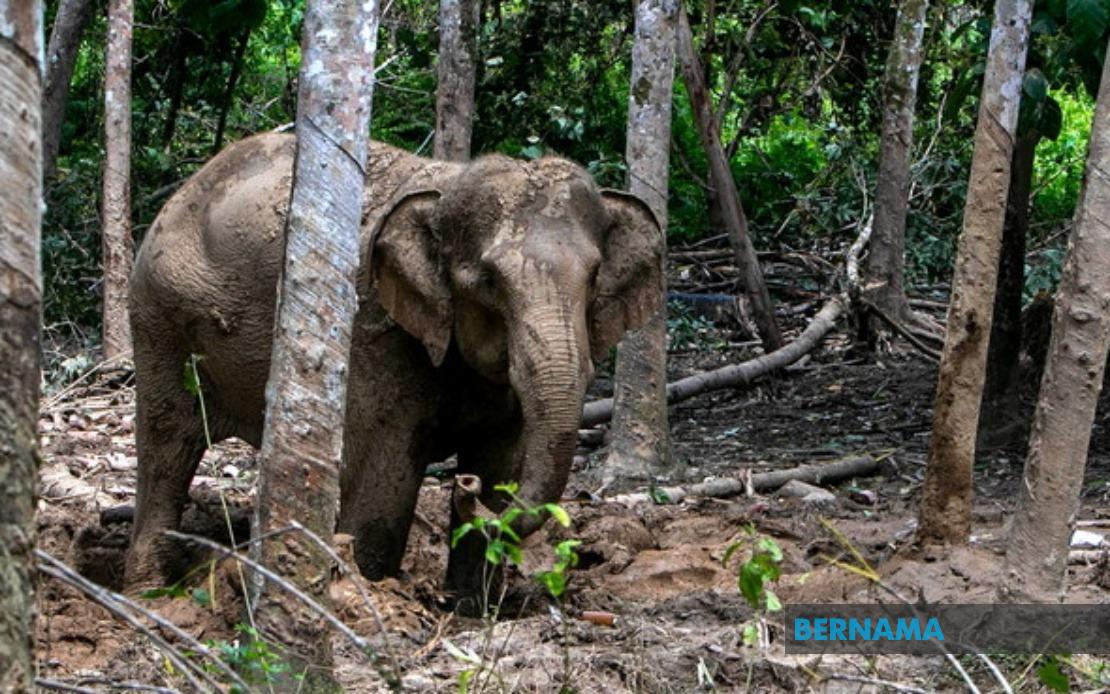
A resident of Kampung Orang Asli Perjek in the Legap Resettlement Scheme near Sungai Siput in Perak suffered serious injuries on Friday evening when he was attacked by an elephant while attempting to protect his crops. The incident highlights the intensifying conflict between local communities and wildlife in Peninsular Malaysia's inhabited regions, particularly in areas where resettled populations live in close proximity to elephant migration routes.
Authorities from the Department of Wildlife and National Parks (PERHILITAN) received an emergency call around 10 pm and swiftly dispatched personnel from the Sungai Siput district office to respond. Initial investigations revealed that a group of four elephants had penetrated the village perimeter and begun feeding on cassava and banana crops planted in the vicinity of residential areas. The animals had wandered into an area directly behind where villagers' homes were situated, creating a high-risk situation for those living there.
The victim, along with several other residents, made the decision to attempt driving the elephants away from the settlement in what they felt was necessary self-defence of their agricultural assets. However, the situation deteriorated rapidly when the villager approached the herd too closely, prompting one of the animals to turn aggressive. The elephant subsequently attacked the man, causing significant physical trauma that included substantial bleeding and resulted in him losing consciousness at the scene.
Local residents managed to rescue the injured man and provide immediate assistance before professional medical personnel arrived. He was transported to Raja Permaisuri Bainun Hospital in Ipoh, where medical staff stabilised his condition. Officials from PERHILITAN reported that as of the latest update, the victim remained in stable condition and was receiving ongoing treatment for his injuries.
Following the attack, PERHILITAN deployed drone technology to conduct aerial surveillance and confirm that all four elephants had vacated the settlement area. This monitoring capability has become increasingly important as authorities seek to track wildlife movements and predict potential flashpoints for human-animal encounters. The department confirmed that it had implemented what it described as appropriate management strategies designed to mitigate the likelihood of recurrent conflicts between people and elephants in this particular location.
Beyond the immediate emergency response, PERHILITAN indicated that it would support the victim's family in applying for financial assistance through the Wildlife Attack Victim Assistance initiative. This programme, administered by the Ministry of Natural Resources and Environmental Sustainability, provides compensation to individuals and families who have suffered injuries or losses due to encounters with wild animals. Such schemes represent an important recognition that communities living at the interface between human settlement and wildlife habitat bear particular risks that merit institutional support.
The incident carries broader implications for Peninsular Malaysia's expanding settlements and the wildlife corridors they increasingly intersect with. The Legap Resettlement Scheme represents an effort to provide Orang Asli communities with improved living conditions and land security, yet its location places residents in a landscape that remains critical habitat for Peninsular Malaysia's diminishing elephant population. Elephants traditionally migrate across vast territories spanning Perak, Pahang, and other northern states, and their interaction with human communities is becoming more frequent as forests shrink and development expands.
PERHILITAN has used this incident as an opportunity to issue a public advisory discouraging residents from confronting wild animals, particularly elephants, without professional assistance. The department emphasised that attempting to drive away such large and powerful creatures without specialised knowledge and equipment substantially increases the risk of serious injury or death. Such direct encounters frequently result in exactly the kind of trauma seen in this case, demonstrating why expert intervention is preferable to community-led responses.
The department has established formal channels for reporting wildlife-related incidents and concerns. Residents can contact the PERHILITAN hotline at 1-800-88-5151 at any time, or lodge formal complaints through the Public Complaints Management System (SISPAA) available on the department's official website. These mechanisms are designed to ensure that authorities can respond rapidly when wildlife enters populated areas and that incidents are properly documented and investigated.
This attack underscores the ongoing tension between wildlife conservation and rural development in Malaysia. While authorities work to preserve populations of endangered megafauna like elephants, these efforts must be balanced against the legitimate needs of communities who depend on agriculture and animal husbandry for survival. For the Orang Asli communities in resettlement schemes, such incidents represent an additional layer of vulnerability and economic risk that distinguishes their position from many other Malaysian residents. Finding sustainable solutions that protect both human lives and elephant populations remains a significant challenge for policymakers and conservation agencies across the region.

