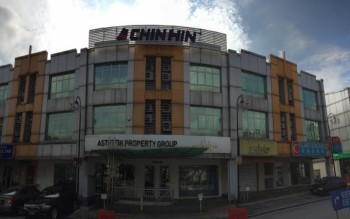
Kuala Lumpur-listed property developer Oriental Interest Bhd (OIB) has announced a major acquisition strategy that will reshape its corporate portfolio, proposing to purchase the entire equity stakes in Chin Hin (Jitra) Sdn Bhd and CHJ Motor Holdings Sdn Bhd for a combined RM280 million. The deal, disclosed to Bursa Malaysia, represents a significant departure from the company's traditional property development focus and signals management's intention to diversify revenue streams across multiple sectors.
Under the terms agreed with LLSB 1980 Holdings Sdn Bhd, OIB will acquire 100 per cent ownership of both companies through a conditional share sale and purchase agreement. The transaction structure involves acquiring 30 million ordinary shares in Chin Hin (Jitra) and six ordinary shares in CHJ Motor Holdings, consolidating them as wholly owned subsidiaries within the broader OIB corporate structure following completion.
The financing mechanism for this acquisition blends equity instruments to distribute the financial burden across different shareholder classes. OIB will issue 76.92 million new ordinary shares priced at RM1.30 per share, generating RM99.996 million in equity consideration. Additionally, the company will issue 180 million redeemable non-convertible preference shares at RM1.00 each, contributing RM180 million to the total purchase price. This two-tier approach allows existing shareholders to maintain proportional ownership while introducing new capital instruments into the company's balance sheet.
For Malaysian investors and market observers, this acquisition carries implications that extend beyond conventional corporate restructuring. The move into automotive and industrial manufacturing represents OIB's recognition that traditional property development faces cyclical pressures and regulatory headwinds in the current economic environment. By acquiring established operational entities rather than building new ventures from scratch, the company gains immediate revenue-generating assets with existing customer bases, operational infrastructure, and market positioning. This approach typically carries lower execution risk than organic expansion into unfamiliar sectors.
Chain Hin (Jitra) and CHJ Motor Holdings appear to operate within Malaysia's automotive and industrial supply chain, sectors that have demonstrated relative resilience compared to property development during recent economic cycles. The integration of these companies into OIB's portfolio should enable cost synergies through consolidated procurement, shared administrative functions, and potentially cross-selling opportunities between property development projects and automotive or industrial components. Such operational efficiencies could meaningfully improve margins across the combined entity.
The transaction structure indicates management confidence in the long-term earnings potential of the acquired assets. OIB's board explicitly projects that the acquisitions will contribute positively to future earnings and financial performance, while reducing dependency on existing property-related business segments. This forward-looking statement reflects an assessment that automotive and industrial sectors offer more sustainable growth trajectories than residential or commercial property development in the current Malaysian context, where property market activity has faced pressures from interest rate increases and financing constraints.
From a governance perspective, OIB has flagged the transaction as a related party matter, necessitating approval from non-interested shareholders at an extraordinary general meeting. This classification suggests that LLSB 1980 Holdings maintains connected relationships with OIB's existing stakeholder structure. The requirement for shareholder approval provides minority investors with formal opportunity to scrutinize transaction terms and management's strategic rationale, though related party transactions by public companies typically proceed to completion once disclosed and voted upon.
The anticipated completion timeline of fourth quarter 2026 provides a reasonable window for conducting due diligence, satisfying regulatory requirements, and integrating acquired operations into OIB's existing corporate systems. This 18-month implementation window allows both acquired entities to continue normal operations under current ownership while OIB's management team develops detailed integration plans. Successful integration will require careful attention to retention of key personnel in the acquired companies, maintenance of customer and supplier relationships, and alignment of operational processes with OIB's corporate governance standards.
For Malaysian corporate strategy watchers, this deal exemplifies a broader sectoral shift among property developers seeking to reduce exposure to cyclical real estate markets. Several comparable companies have pursued similar diversification strategies over recent years, recognizing that property development alone generates volatile earnings streams sensitive to interest rates, banking policies, and consumer sentiment. By acquiring manufacturing and automotive operations, property developers can stabilize cash flows and present themselves to shareholders as diversified industrial conglomerates rather than single-sector plays vulnerable to property market downturns.
The automotive and industrial manufacturing sectors in Malaysia benefit from established supply chains, technical expertise, and established relationships with regional and international customers. Chin Hin (Jitra) and CHJ Motor Holdings' existing market positions and operational capabilities represent valuable intangible assets that OIB cannot easily replicate through organic investment. Acquiring proven businesses with established track records accelerates OIB's entry into these sectors compared to building equivalent capacity internally.
Regional implications of this transaction warrant consideration as well. OIB's diversification into industrial manufacturing potentially positions the company to participate in broader Southeast Asian supply chains, particularly as manufacturing relocates from China due to geopolitical tensions and rising labor costs. Malaysian automotive and industrial component manufacturers have increasingly sought to expand within ASEAN markets, and OIB's financial resources and real estate assets could support regional expansion strategies that acquired subsidiaries might independently pursue.
Shareholder value creation from this acquisition depends critically on post-acquisition execution and integration success. While the strategic logic appears sound, history demonstrates that diversification through acquisitions frequently disappoints if management underestimates integration complexities or overestimates synergy realizations. OIB shareholders will closely monitor management's ability to generate the projected earnings contributions and operational efficiencies that justify the RM280 million expenditure. The company's successful integration of acquired assets will significantly influence investor perception of management competence and confidence in future corporate strategy decisions.

