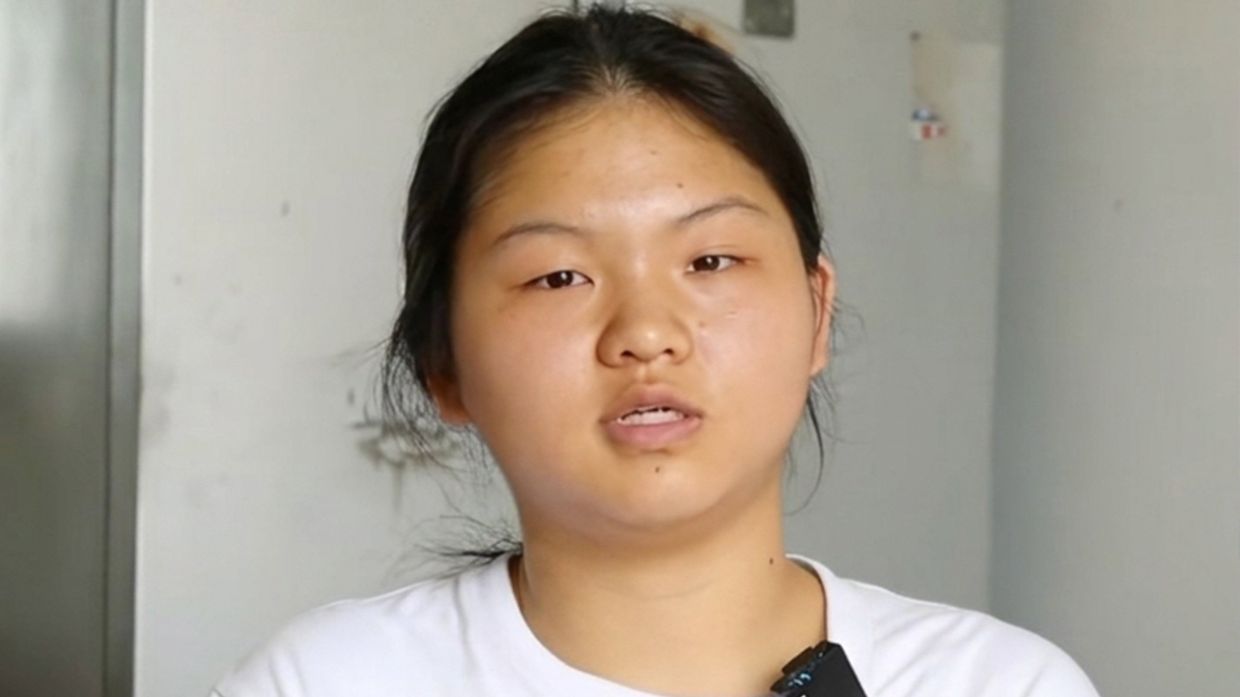
Zeng Zixuan's journey into adulthood arrived shadowed by profound loss. The eighteen-year-old completed China's highly competitive gaokao university entrance examination with a score of 564 out of 750, gaining admission to a university near her hometown. Her deliberate choice of institution reflected her priorities at the time—proximity to her grandmother, with whom she had built a life of quiet interdependence. That calculation, however, would be rendered irrelevant within weeks. In early July, as Zeng prepared to embark on her tertiary education, her grandmother—the sole family member she had left—fell gravely ill and died, leaving her without a living relative in the world.
The circumstances that brought Zeng to this solitary point began years earlier, rooted in the fragmentation of her nuclear family. Her parents' divorce during her childhood prompted a division of their responsibilities that left her in the care of her grandmother. Her mother subsequently remarried and severed contact entirely, while her father relocated to Guangdong to seek employment opportunities. Raised primarily by her elderly grandmother in their village, Zeng developed the discipline and academic excellence that would eventually earn her university admission. She became known among her peers for consistently performing at the top of her class, a testament to her determination to create a better life for herself and her grandmother.
Then came another devastating blow. During her senior secondary school years, her father was killed in an accident—a tragedy that not only shattered her emotionally but eliminated the household's primary source of income. The loss reverberated through her behaviour and demeanour. The once cheerful girl withdrew into herself, struggling visibly with the weight of her circumstances. Her supervising teacher, observant and compassionate, recognized the change immediately and made repeated efforts to speak with Zeng, offering counsel and encouragement during her darkest periods. Village officials also intervened, assigning a representative responsible for women's welfare to ensure that Zeng and her grandmother received necessary government assistance and school subsidies that could sustain them.
Despite these hardships, Zeng's academic ambitions remained intact. Her teacher offered her perspective that would anchor her through the subsequent years: "Only by attending a good university can you secure a better future and honour your father and grandmother." This guidance crystallized her focus, providing moral scaffolding when her personal world seemed to be collapsing. She channeled her grief into her studies, maintaining the discipline and focus that had always characterized her approach to learning. The path to the gaokao examination became her pathway through mourning.
When her grandmother's unexpected illness and death occurred in July—scarcely weeks before university commencement—news of Zeng's circumstances rippled through her village community. The tragedy of a bright young woman facing the world entirely alone, having already endured the loss of both parents, generated an outpouring of compassion. Kind strangers began offering financial donations through the village government office, each contribution representing a stranger's acknowledgment of her suffering and desire to ease her burden. The donations accumulated rapidly; within a brief period, the village had collected over 60,000 yuan, equivalent to approximately US$8,800—a substantial sum in rural China that could cover her university tuition, accommodation, and initial living expenses.
Yet Zeng's response to this collective generosity revealed something remarkable about her character. She did not accept the donations silently or with quiet gratitude alone. Instead, she made direct contact with the village office and requested that further contributions cease. She expressed appreciation for the support she had received, addressing her benefactors with formal respect: "Thank you, uncles, aunties, brothers, and sisters; your contributions are sufficient for me now." The statement was not merely polite protocol; it was accompanied by a moral assertion that reflected values seemingly at odds with her vulnerability.
Zeng's reasoning demonstrated empathy that extended beyond her own circumstances. She explained that earning money was difficult for most people, and that many others in her community and beyond faced even more pressing hardships than she did. She explicitly requested that donors redirect their resources toward individuals and families whose needs exceeded her own. This perspective—that her needs, though real, should not eclipse those of others potentially in greater distress—resonated powerfully throughout Chinese social media and news outlets. Her dignity and consideration became the story, not merely her loss.
Practically, Zeng had devised a realistic plan for managing her expenses. The accumulated donations, she calculated, would cover her tuition fees and university accommodation. For living expenses beyond these major costs, she intended to take part-time employment while studying. The village government, moved by her integrity and determination, offered her a position designed to accommodate a student's academic schedule, ensuring that work would complement rather than derail her education. This arrangement reflected the community's continued commitment to supporting her journey while respecting her independence.
The narrative of Zeng Zixuan's response to unrelenting tragedy captured the imagination of millions across China and beyond. Online observers offered commentary that ranged from simple encouragement—"Life is full of mishaps, but your future will surely be bright"—to more reflective observations about the intersection of individual misfortune and collective social responsibility. One commenter noted, "She is a disadvantaged child, but she is fortunate to live in such a supportive time," acknowledging both the material reality of her disadvantage and the intangible benefit of living within a society where strangers would offer assistance to a teenager they would never meet.
For Southeast Asian readers, Zeng's story carries particular resonance. Many countries in the region grapple with similar questions about social safety nets, family structures, and the obligations of communities toward vulnerable young people. Her refusal of excessive aid while accepting genuine support reflects a maturity about interdependence that transcends cultural boundaries. Her experience also illuminates the pressures on students within competitive education systems—the gaokao's intensity and psychological weight compound when students face economic precarity. The story ultimately speaks to the resilience of youth confronting mortality and loss while attempting to build futures, a universal challenge that connects viewers across vastly different circumstances.

