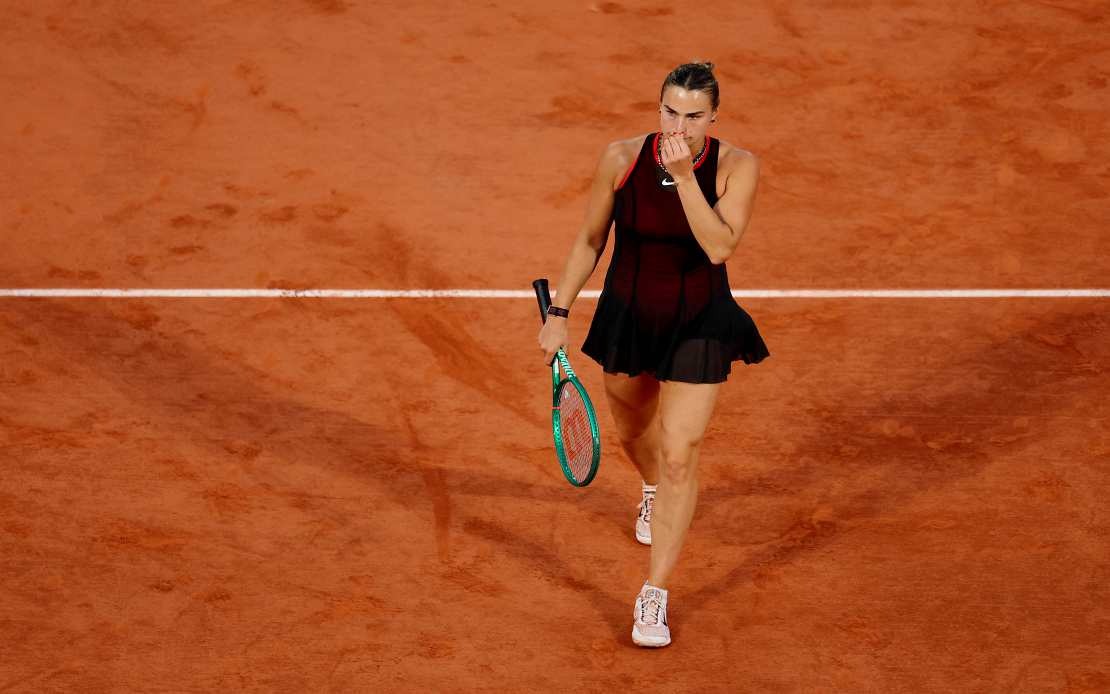
Naomi Osaka delivered a commanding upset at Wimbledon on Sunday, dispatching world No. 1 Aryna Sabalenka of Belarus 6-2, 7-6(2) to secure her first quarterfinal appearance at the All England Club. The 14th-seeded Japanese champion's straight-sets victory against the tournament's top seed represents a significant career milestone, demonstrating her ability to perform when stakes are highest and opponents are formidable.
Osaka's achievement marks a watershed moment in Japanese tennis at Wimbledon. She becomes the first Japanese woman to reach the quarterfinals at the grass-court Grand Slam since Ai Sugiyama accomplished the feat in 2004, nearly two decades ago. This breakthrough also punctuates a broader narrative about Osaka's career trajectory since stepping back from competition to prioritise her mental health, signalling a meaningful return to competitive form and confidence on one of tennis's most prestigious stages.
The victory carries particular significance given Osaka's recent head-to-head record against her Belarusian opponent. Sabalenka had dominated their matchups, winning their three previous encounters this season alone, including a fourth-round clash at the French Open earlier this year. This pattern had tilted decidedly in Sabalenka's favour, creating psychological pressure heading into their Wimbledon encounter. By reversing this trend decisively, Osaka demonstrated mental resilience and tactical adjustment, qualities essential for sustained success at the elite level.
Osaka's approach to the match reflected a player enjoying her tennis rather than merely grinding through points. During her on-court interview, the four-time Grand Slam winner acknowledged this mental shift, noting that it had been considerable time since she experienced such genuine enjoyment competing. She consciously framed her triumph not simply as a technical victory but as an opportunity seized after consecutive setbacks to the same opponent, a reflection of her evolved perspective on competition and personal growth.
The tactical narrative deserves examination. Sabalenka, renowned for her powerful baseline game and aggressive striking, typically imposes her will through relentless depth and pace. Osaka neutralised these advantages through measured serving, consistent placement, and strategically timed aggression of her own, rather than engaging in a raw power contest. The tiebreaker score in the second set—7-6(2)—illustrated clinical execution when the match reached a critical juncture, suggesting improved mental composure in pressure moments.
Osaka's next opponent will be 10th-seeded Karolina Muchova of the Czech Republic, a skilled player renowned for her technical proficiency and movement. This quarterfinal matchup shapes as a fascinating tactical encounter between Osaka's powerful baseline game and Muchova's clever construction and flexibility. A victory would propel Osaka toward the Wimbledon semifinals, territory she has not previously explored at this particular tournament.
The significance of this run extends beyond individual achievement. Japanese tennis maintains a respectable global profile, yet Grand Slam breakthroughs remain relatively infrequent, particularly at Wimbledon where grass-court specialisation remains a distinct challenge. Osaka's advancement reignites domestic interest and provides inspiration for emerging Japanese players navigating the professional circuit. Her story, encompassing personal challenges, career interruptions, and measured comeback progression, resonates beyond sporting circles.
Conversely, the men's draw saw Japanese prospects falter. World No. 151 Shintaro Mochizuki, competing as a qualifier and having engineered an impressive tournament run, succumbed to defending champion and top seed Jannik Sinner of Italy 6-3, 7-6(0), 6-3 in the fourth round. While Mochizuki's qualification and progression through multiple rounds represented commendable achievement for a player ranked outside the conventional seeding positions, the encounter against Sinner revealed the gulf separating challenger from established elite. Sinner's commanding performance, particularly the second-set tiebreaker shutout, underscored his dominance at Wimbledon.
The contrasting fortunes of Osaka and Mochizuki illustrate different career trajectories within Japanese tennis. Osaka, a former world No. 1 with multiple Grand Slam titles despite recent interruptions, retains sufficient experience and skill to compete against the highest-ranked opponents. Mochizuki, conversely, remains developing his game at the professional level, where breakthrough performances occasionally mask underlying experience gaps against established champions.
Osaka's advancement contributes to broader Wimbledon narratives about resilience and comeback. The tennis calendar increasingly features players managing mental health considerations, injuries, and personal circumstances, making stories of successful returns particularly compelling. Her Wimbledon run, still ongoing, represents validation that strategic breaks and refocused training can yield tangible competitive returns without necessitating permanent departure from the sport.

