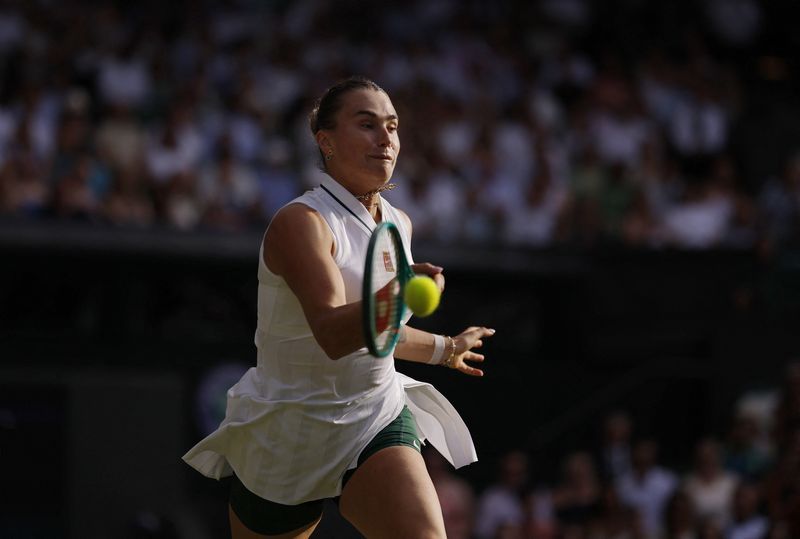
Naomi Osaka has reignited her Grand Slam credentials with a stunning upset victory over top-seeded Aryna Sabalenka at Wimbledon, dismantling the Belarusian player 6-2 7-6(2) in the fourth round on Centre Court. The 14th-seeded Japanese champion's commanding performance on Sunday has torn open the women's draw in unprecedented fashion, leaving the tournament without its three highest-ranked competitors and signalling a dramatic shift in the competition's trajectory.
The matchup promised drama befitting two players who have combined for eight Grand Slam titles, yet Osaka's dominance in the opening set left little room for suspense. Sabalenka's trademark power game, which has propelled her to the top of the rankings, appeared fundamentally broken as she struggled to establish rhythm during a lopsided 32-minute opening set. The defending world number one, who had reached the semi-finals in each of her previous three Wimbledon appearances, seemed unable to find answers to Osaka's incisive service returns and controlled aggression.
The second set evolved into something resembling the competitive battle spectators had anticipated, with both players trading holds and pushing each other to the baseline. Sabalenka's competitive fire burned brightly as she fought back from break points, yet Osaka remained unflappable throughout. The decisive moment came in the tiebreak when Osaka's composure and precision proved decisive, allowing her to snap Sabalenka's remarkable streak of 21 consecutive tiebreak victories across all Grand Slam tournaments. After squandering a match point opportunity, Sabalenka's frustration boiled over as she launched a ball far beyond the stadium's confines, a rare display of uncontrolled emotion from the normally composed competitor.
Osaka's triumph carries particular significance given the trajectory of her recent career. Having taken a hiatus from professional tennis to welcome the birth of her daughter Shai, the Japanese champion has methodically rebuilt her competitive edge since returning to the tour in 2024. This victory represents her most commanding performance since her comeback and marks her maiden appearance in the quarter-finals at the All England Club, a milestone that eluded her during her previous prime years.
The impact of Sunday's result extends far beyond individual achievement. With defending champion Iga Swiatek and second seed Elena Rybakina both exiting during the third round on Saturday, Sabalenka's elimination represents a seismic shift in the tournament's power dynamics. The departure of the top three seeds has obliterated conventional expectations about the women's championship and created a genuinely open competition landscape in which multiple contenders now harbour realistic ambitions.
Speaking immediately after her triumph, Osaka reflected on the emotional weight of the occasion. She expressed genuine appreciation for the quality of the match itself, noting that the intensity and engagement of competing on Centre Court against one of the world's elite players held profound meaning beyond the scoreline. Her comment that she would have cherished the experience regardless of the outcome revealed a mentality refocused on the pure enjoyment of competition rather than merely collecting titles.
The professional histories of these two competitors illustrate fascinating parallels and divergences. Born merely seven months apart, both players have constructed their Grand Slam success primarily on hardcourt surfaces, where their powerful games prove most effective. Yet their career trajectories have followed strikingly different paths. Osaka captured all four of her major titles before Sabalenka claimed her inaugural Grand Slam victory, creating an interesting dynamic between the slightly older but more recently successful player and her younger rival who has surged to the sport's summit.
Their head-to-head record has long favoured Osaka, particularly at the highest levels of competition. Eight years ago, they first encountered each other at a Grand Slam tournament when Osaka prevailed en route to capturing the U.S. Open title. The intervening years have seen Sabalenka compile an impressive record against most rivals, yet this clash with Osaka proved a painful reminder that even the world's elite face opponents capable of neutralising their greatest strengths.
Osaka's on-court persona has evolved since her comeback, with her Japanese-inspired walk-on attire generating considerable attention and adding theatrical flourish to her appearances. However, it is her tennis fundamentals that have begun capturing the serious notice of the sport's analysts and competitors. Her service return game proved instrumental against Sabalenka, consistently forcing the world number one into awkward defensive positions early in rallies. Breaking serve twice during the first set established psychological momentum that Osaka maintained throughout the contest.
Sabalenka attempted multiple tactical and psychological interventions to regain her footing as the match progressed. She banged her racket against her head during the second set in an effort to spark a competitive response, yet such gestures failed to activate the aggressive rhythm that characterises her finest tennis. Rather than generating momentum, these displays of frustration only underscored her inability to execute the precise shotmaking required to challenge Osaka's composed baseline game.
The consequences of this upset ripple beyond the immediate tournament results. For Malaysian and Southeast Asian tennis followers, Osaka's resurgence carries particular resonance given her status as an Asian player reclaiming prominence at sport's highest echelon. Her quarter-final appointment with Czech 10th seed Karolina Muchova presents an entirely different tactical challenge, yet the manner of her Centre Court victory suggests Osaka has recovered the self-belief and technical precision that previously made her a multiple Grand Slam champion.
Sabalenka's departure marks the beginning of an unexpected chapter at this year's Wimbledon. With the conventional power players eliminated, the remaining competitors in the women's draw now face genuinely unpredictable circumstances. No clear consensus favourite has emerged to inherit the championship aspirations, suggesting that the ultimate champion will likely emerge from an unlikely quarter. Osaka's victory has fundamentally altered the narrative and transformed what appeared to be a predictable fortnight into genuine theatre.

