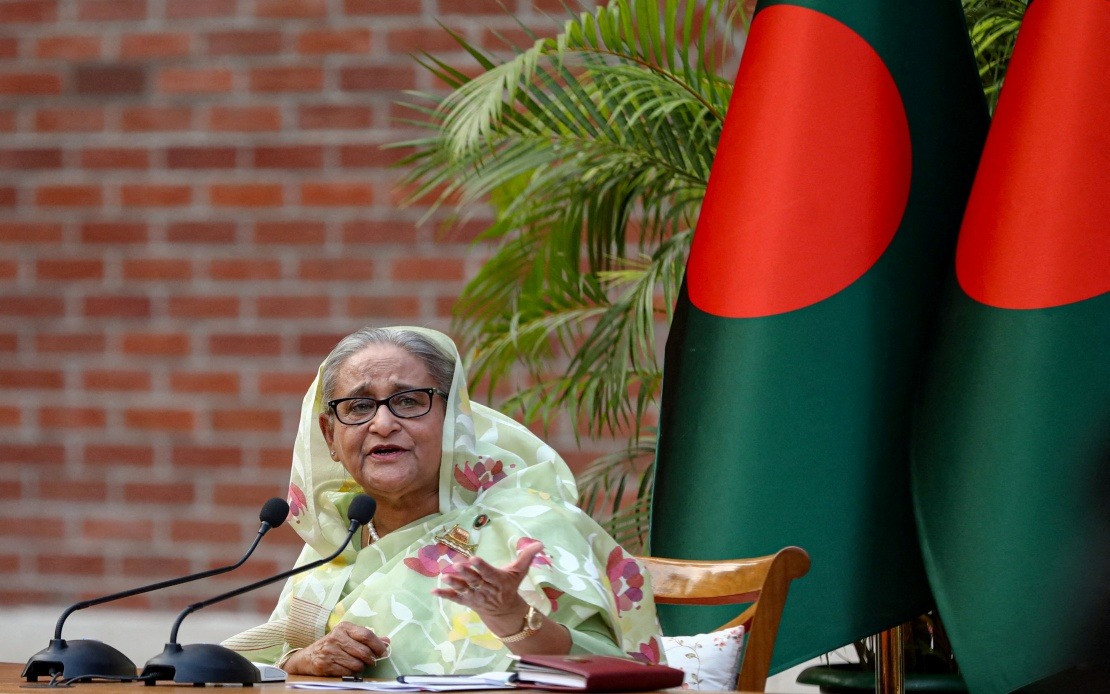
Sheikh Hasina, Bangladesh's ousted prime minister now in self-imposed exile in India, has made an extraordinary pledge to return to her homeland and face trial despite being sentenced to death in absentia. The 78-year-old former leader, convicted by Bangladesh's war crimes tribunal in November 2025 for crimes against humanity stemming from a brutal government response to student-led unrest, dismissed the charges as politically driven persecution. In a written statement to international media, Hasina acknowledged the existential threat she faces, candidly noting that authorities could imprison or execute her upon her return, yet she remains adamant that she will submit herself to the judicial process.
The political crisis that forced Hasina to flee Bangladesh originated in June 2024, when a court decision to reinstate a 30 per cent employment quota for descendants of the 1971 independence war sparked widespread student protests. What began as anger over civil service recruitment procedures rapidly transformed into a broader anti-government uprising, with demonstrators clashing violently with security forces and members of Hasina's then-governing Awami League party. The United Nations documented that approximately 1,400 people lost their lives during the turmoil, the vast majority killed by gunfire from government security personnel. Despite the staggering death toll, Hasina has consistently maintained she never ordered a crackdown, instead characterising the movement as an orchestrated political conspiracy by her opponents designed to topple her administration.
Hasina's trajectory from leading Southeast Asia's oldest continuous democracy to fugitive status represents one of the region's most dramatic political reversals. Her political career spans nearly three decades, encompassing five separate terms as prime minister between June 1996 and August 2024, interrupted by two significant breaks from power. She served as the daughter of Sheikh Mujibur Rahman, the founding father of independent Bangladesh, a legacy that has both strengthened and complicated her political standing throughout her life. This dynastic connection remains central to understanding contemporary Bangladeshi politics and the intense polarisation that has gripped the nation since her departure.
International attention has focused particularly on the trial's procedural legitimacy. Human Rights Watch expressed significant reservations about the war crimes tribunal's conviction handed down in the absence of the defendant, raising important questions about due process and fair trial standards that resonate across the region. The international human rights organisation simultaneously acknowledged that individuals responsible for abuses during Hasina's administration warrant accountability through proper legal mechanisms. This nuanced position reflects the genuine tension between seeking justice for victims of state violence and maintaining judicial fairness, a challenge that many Southeast Asian nations continue to grapple with as they confront their own histories of political violence.
Hasina's extradition situation has added another layer to the dispute, with Bangladesh formally requesting India's intervention to return the former prime minister to face trial. India's Ministry of External Affairs confirmed receipt of the extradition request but indicated that New Delhi would carefully evaluate the matter within the framework of existing legal and judicial protocols. This cautious approach reflects India's broader diplomatic positioning, as Bangladesh remains an important regional partner despite significant political differences. For Malaysia and other Southeast Asian observers, the case illustrates how neighbouring countries navigate the complex intersection of bilateral relations, legal obligations, and political asylum considerations.
The interim administration that took over following Hasina's August 2024 departure operated under the leadership of Muhammad Yunus, a Nobel Peace Prize recipient appointed chief adviser at the recommendation of protest movement leaders. This transitional authority subsequently gave way to an elected government following February 2026 polls won by the opposition Bangladesh Nationalist Party, whose leader Tarique Rahman now serves as prime minister. Significantly, all activities of Hasina's Awami League party were banned in May 2025, a sweeping prohibition that underscores the depth of political rupture and the current government's determination to dismantle the organisational structures that dominated Bangladeshi politics for much of the past two decades.
Hasina's defence strategy, as articulated through recent statements, centres on challenging the evidentiary basis of the tribunal's judgment. She has called for independent international forensic examination of how the protest victims died, arguing that ballistic analysis and pathological investigation could establish definitively which weapons inflicted fatal injuries and whether security forces acted on explicit orders or operated with unauthorised excessive force. This approach attempts to reframe the legal narrative from questions of command responsibility to technical questions of causality, a distinction with potentially significant implications for her culpability assessment.
The 2016 Holey Artisan Bakery attack in Dhaka, which occurred during Hasina's tenure and killed 20 people including nine Italians and seven Japanese working on development projects, provides important context for understanding her government's security record and the militant challenges she confronted. Although seven Islamist perpetrators received death sentences that were subsequently commuted to life imprisonment, the incident demonstrated the real security threats Bangladesh has faced and the pressures that have driven increasingly aggressive security responses. For Japanese and other international investors and development partners, such incidents fundamentally shaped perceptions of governance capacity and stability during her administration.
Hasina has sought to position herself as a champion of regional stability and development, emphasizing Bangladesh's importance not merely as a domestic concern but as a matter affecting South Asia broadly, the Bay of Bengal strategic zone, and international development partners including Japan. She has highlighted the substantial investments and institutional relationships that developed nations have cultivated with Bangladesh, framing stability and democratic governance as shared interests transcending immediate political conflict. This appeal to international stakeholders suggests an attempt to build diplomatic pressure and external advocacy networks that might ultimately influence her legal prospects.
The former prime minister has articulated a vision for Bangladesh's future that acknowledges the nation's need for healing and reconciliation while asserting that genuine healing cannot mean forgiving crimes without proper legal consequence. She has identified the coming decade as a potential period of recovery and renewal, contingent upon the restoration of democratic processes and protection of popular sovereign choice. This formulation carefully walks a line between accepting accountability mechanisms and rejecting what she characterises as victors' justice or politically motivated prosecution.
For Malaysian readers and Southeast Asian observers more broadly, the Bangladesh crisis illuminates fundamental tensions within the region regarding the relationship between political power and legal accountability. The case demonstrates how revolutionary or transformative moments in governance can produce legal proceedings that critics characterise as retroactive and partisan, yet which populations supporting change view as essential redress. It also raises uncomfortable questions about the role regional powers like India play in mediating such disputes, and whether traditional legal frameworks adequately address mass violence generated by state actors rather than insurgent forces.
The ultimate significance of Hasina's stated determination to return likely depends on multiple factors beyond her personal resolve, including the evolving political dynamics within Bangladesh, international pressure and mediation, and the calculations of current Bangladeshi leadership regarding whether maintaining her exile serves their interests more effectively than a prosecution that could generate complications. Her pledge carries symbolic weight that extends far beyond one individual's legal fate, speaking instead to broader questions about political accountability, transitional justice, and the contested meaning of democracy in a nation struggling to redefine its governance structures following profound political upheaval.

