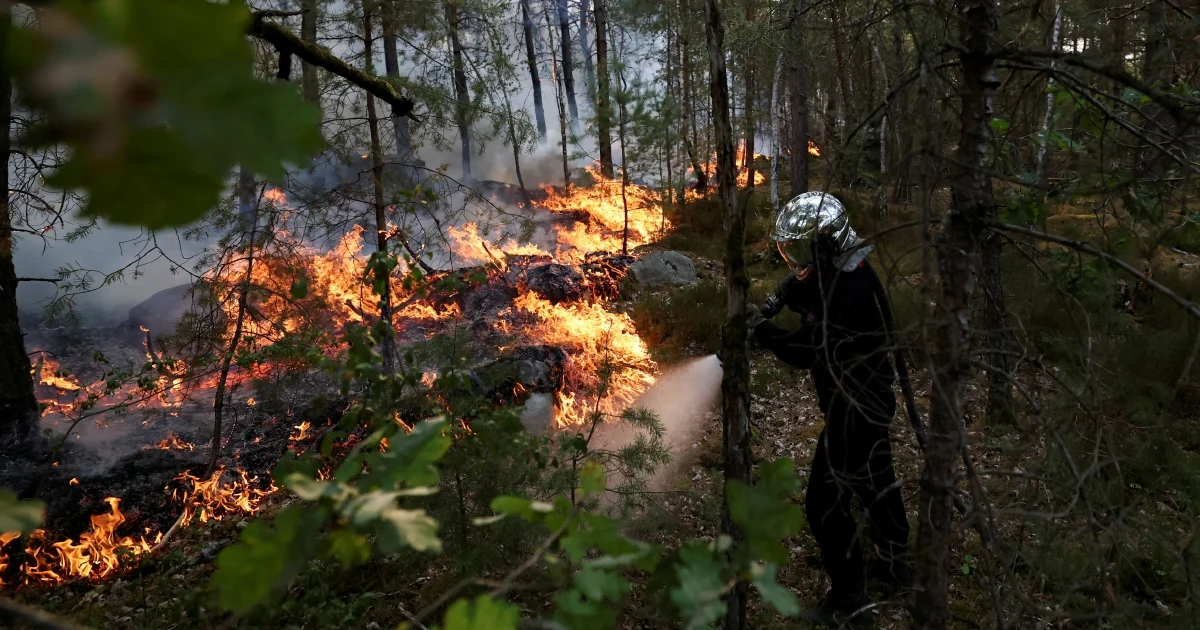
Firefighting crews across France mobilized on Monday to confront two separate but destructive wildfires that tore through a substantial expanse of historically significant woodland located in the region south of Paris. The combined flames swept across more than 1,300 hectares before being brought under control, marking a significant environmental incident for the densely populated Île-de-France region. The scale of destruction raised immediate concerns about the vulnerability of France's ancient forests to both natural hazards and deliberate human interference.
Parallel to the firefighting operation, French law enforcement moved swiftly to investigate the origins of the outbreak. Investigators identified and detained two individuals suspected of deliberately igniting the fires, shifting focus from natural causes to the possibility of criminal negligence or malicious intent. The arrests underscored growing concerns across southern Europe about arson-related forest destruction, a persistent challenge that compounds the damage caused by climate-driven drought conditions.
The forests near Arbonne-la-Forêt hold particular ecological and historical value for the Paris region. This wooded area, part of France's broader natural heritage, provides habitat for diverse wildlife and serves as a crucial green space for one of Europe's largest metropolitan centres. The loss of such extensive forest cover in a populated region raises questions about land management strategies and the adequacy of preventative measures in fire-prone areas.
Wildfire incidents in France have intensified in recent years, driven partly by longer periods of heat and reduced precipitation during summer months. Climate scientists have consistently warned that Mediterranean and temperate regions face escalating fire risk as atmospheric temperatures climb. The Île-de-France region, though not typically associated with severe wildfire activity compared to southern France, faces emerging vulnerability as weather patterns shift.
For Malaysian and Southeast Asian observers, the incident carries instructive value regarding regional preparedness and climate adaptation. While Southeast Asia confronts different fire dynamics—primarily driven by agricultural burning and peatland degradation—the underlying factors mirroring parts of the European experience warrant attention. The intersection of human action (whether accidental or deliberate) with environmental stress creates compounding hazards that demand comprehensive policy responses.
The arrest of suspects on arson charges highlights how intentional fire-setting remains a significant factor in forest loss even in developed nations with sophisticated law enforcement apparatus. Investigative resources must therefore address not only the technical capacity to suppress active blazes but also the preventative work of identifying and prosecuting those who deliberately create fire hazards. This dual approach reflects an understanding that environmental crime carries consequences warranting criminal sanction.
French firefighting services demonstrated organizational capability in mobilizing resources to contain the advance of multiple fire fronts. The coordination required to manage incidents spanning over 1,300 hectares demands trained personnel, specialized equipment, and logistical networks developed over decades. Yet even well-resourced nations find suppression increasingly challenging when conditions favour rapid fire spread, suggesting that prevention and early detection remain strategically superior to reliance on reactive suppression alone.
The environmental aftermath of such destruction extends beyond immediate tree loss. Forest ecosystems require decades to recover their full ecological function, with consequences for carbon storage, water infiltration, and wildlife habitat. Soil erosion accelerates on denuded slopes, potentially affecting water quality in downstream areas and increasing flooding risk during heavy rainfall. For regions surrounding Paris that depend on these landscapes for recreation and environmental services, the recovery trajectory represents a multi-generational undertaking.
Seasonal fire management planning in France typically intensifies during summer months when conditions favour ignition and spread. Monday's incident occurred within this predictable window, underscoring the importance of sustained vigilance and maintained readiness. Emergency services across European nations continue developing interagency protocols and cross-border cooperation mechanisms to address the reality that major fires often exceed the capacity of single-jurisdiction responses, particularly in densely populated regions where evacuation and infrastructure protection complicate suppression efforts.
The investigation into the two arrested individuals will likely yield insights into motive and method that inform future prevention strategies. Whether the fires resulted from calculated arson or reckless negligence, the criminal justice process serves both as specific deterrent to the accused and general deterrent to others contemplating similar actions. This criminal dimension to forest destruction operates alongside environmental management and climate adaptation as a necessary component of comprehensive fire risk reduction.

