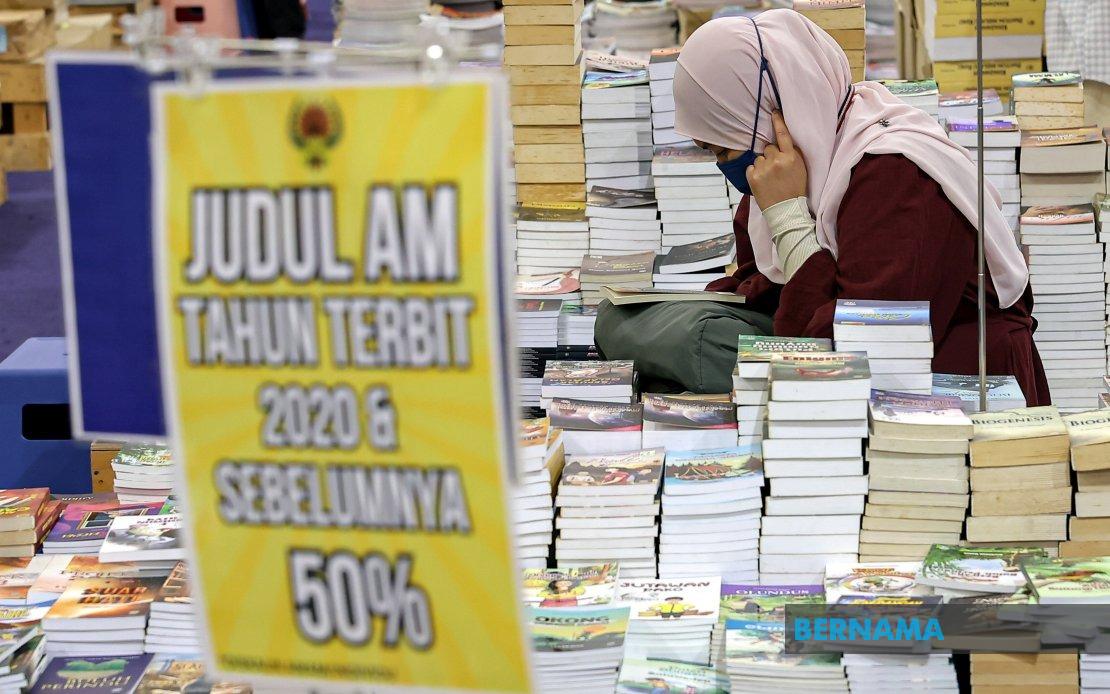
Beginning tomorrow, more than 2.2 million Malaysian students will start accessing RM100 electronic book vouchers under the government's MADANI Book Voucher Programme 2026, funded through a RM221.6 million allocation announced during today's parliamentary session. Deputy Education Minister Wong Kah Woh revealed that eligible recipients span Remove Class through Form Six, as well as students enrolled at vocational colleges, matriculation institutions, and the Malaysian Institute of Teacher Education, collectively representing 2,217,579 young people across the education system.
The redemption phase commences at 11 am tomorrow and will remain open until October 31, providing a four-month window for students to select and purchase from an expanded catalogue of approved titles. Wong confirmed that the entire transaction process operates through the BookCapital digital platform, which has successfully onboarded 1,238 registered booksellers nationwide, creating what officials describe as a seamless ecosystem for literary distribution across Malaysia's diverse geography.
A distinctive feature of this year's iteration involves the MADANI Special Title Focus initiative, a curated collection emphasising both canonical literature and contemporary non-fiction works spanning history, philosophy, economics, and geopolitical analysis. The curriculum-aligned approach reflects growing recognition among policymakers that broad intellectual foundations matter as much as technical skills. The ministry has mandated that each voucher recipient must allocate resources toward at least one title from this designated category, ensuring exposure to foundational knowledge areas deemed critical for developing informed citizens.
Technological advancement and future-ready competencies occupy centrestage within the 2026 allocation strategy. Priority has been granted to materials addressing artificial intelligence, information technology applications, and the broader STEM landscape alongside digitalisation challenges and opportunities. This curricular emphasis responds to Malaysia's positioning within global innovation ecosystems and the acknowledged skills gap between secondary education outputs and workplace demands in high-growth sectors. By embedding such subjects into incentivised reading habits at the formative educational stage, the government seeks to cultivate organic interest in fields projected to dominate employment trajectories through the coming decade.
Wong's parliamentary testimony highlighted findings from an impact assessment conducted by the Darul Ehsan Institute, a research body tasked with evaluating programme effectiveness after its 2024 inception. The study revealed that 97.5 per cent of surveyed recipients agreed the voucher initiative substantially benefited them, with particular advantages accruing to households facing economic constraints. Furthermore, 92.2 per cent of respondents indicated the scheme had bolstered examination preparation capacity, suggesting tangible academic returns beyond mere reading promotion.
The digital-first architecture deserves closer examination, particularly concerning equity implications for Malaysia's dispersed student population. By routing all transactions through an online purchasing and delivery mechanism, the programme theoretically eliminates friction points that previously disadvantaged students in remote municipalities where physical bookstores remain scarce or non-existent. Wong emphasised this democratising dimension, asserting that urban and rural learners now possess identical access pathways to identical catalogues, a structural achievement that addresses longstanding regional disparities in educational resources.
Operational metrics released during the parliamentary exchange underscore administrative competence around the scheme's implementation. The 2024 iteration achieved a complete redemption rate, meaning virtually every distributed voucher found its way into actual book purchases rather than lapsing unused. This near-perfect uptake suggests strong student interest in the initiative and effective communication around its mechanics. Wong additionally stressed the absence of documented leakages or fraud within the system, attributes he positioned as markers of transparency and institutional integrity within a government machinery sometimes confronted with public scepticism regarding fund utilisation.
The programme's framing around equity merits contextual positioning within Malaysia's broader educational equity agenda. Upper-middle-income households with established reading cultures typically purchase books regardless of voucher availability; the intervention's genuine significance lies in its capacity to subsidise literary consumption among families for whom discretionary spending on educational materials represents a genuine constraint. By lowering the financial barrier to book access, particularly for lower-income students, the scheme functions as a targeted wealth transfer mechanism disguised within cultural and intellectual promotion rhetoric—a politically sophisticated approach that avoids means-testing stigma while directing resources toward demonstrated need.
The expansion of the BookCapital vendor network to 1,238 booksellers reflects deliberate ecosystem development, ensuring that voucher redemption drives commercial activity across the publishing and retail sectors. Independent bookstores, chains, and online retailers have collectively integrated into a single transaction platform, creating network effects that theoretically enhance both consumer choice and supplier competitiveness. This market-based infrastructure distinguishes Malaysia's approach from simpler voucher schemes that merely distribute purchasing power without simultaneously building institutional capacity among suppliers.
Parliamentary questioning touched upon programme sustainability and evolving refinements. The responses indicated ongoing feedback loops between the Ministry of Education and participating stakeholders, with systematic evaluation mechanisms embedded within implementation rather than appended retrospectively. Wong's invocation of surveys and impact studies suggests that policy iteration occurs based on evidence rather than assumption, though the limited detail provided regarding specific modifications made in response to 2024 feedback leaves questions regarding adaptive capacity and responsiveness to identified shortcomings.
For Malaysian parents and educators, the practical implications involve heightened literary engagement among secondary students during a developmental window when reading habits crystallise. The mandatory inclusion of STEM-related titles within voucher portfolios reflects government assessment that traditional humanities-dominated reading cultures require recalibration toward technological and analytical disciplines. Whether this normative reorientation succeeds in reshaping reading preferences or merely satisfies compliance requirements before students revert to previous patterns remains an open empirical question warranting future assessment.
The RM221.6 million investment positions book accessibility as a legitimate expenditure category within national education budgets, affirming literary culture as integral to human capital development rather than supplementary to it. This budgetary commitment, distributed across 2.2 million beneficiaries, yields per-student allocations of approximately RM100—a modest individual sum yet collectively significant when aggregated across the school-age population. The scheme's continuation through 2026 signals ministerial confidence that the investment generates returns commensurate with opportunity costs, though rigorous cost-benefit analysis comparing educational outcomes between voucher recipients and control cohorts would strengthen such claims.

