More than 200 community-led initiatives have applied for grants through Singapore's newly launched SG Partnerships Fund, a S$50 million initiative designed to nurture ground-up projects that tackle local challenges. Announced by Prime Minister Lawrence Wong in February 2026 and operationalised in April, the fund represents a significant shift in how Singapore channels public resources towards citizen-driven social innovation. The diversity and volume of applications underscore growing enthusiasm among Singaporeans to translate community concerns into tangible action, supported by structured funding and institutional backing.
The fund operates through a tiered system that deliberately lowers barriers to entry, recognising that transformative ideas often emerge from individuals and small groups rather than established institutions. The seed tier, which offers grants of up to S$5,000, has proven unexpectedly popular with applicants despite dispensing the smallest sums. According to Hasliza Ahmad, director of the Singapore Government Partnerships Office (SGPO), this pattern reveals something important about community engagement: ordinary citizens are willing to step forward when they perceive a realistic pathway to action, even at modest scale. The message embedded in this tier is deliberate—that impact need not be grand to be meaningful, and that starting small in one's own neighbourhood can be a legitimate first step towards broader change.
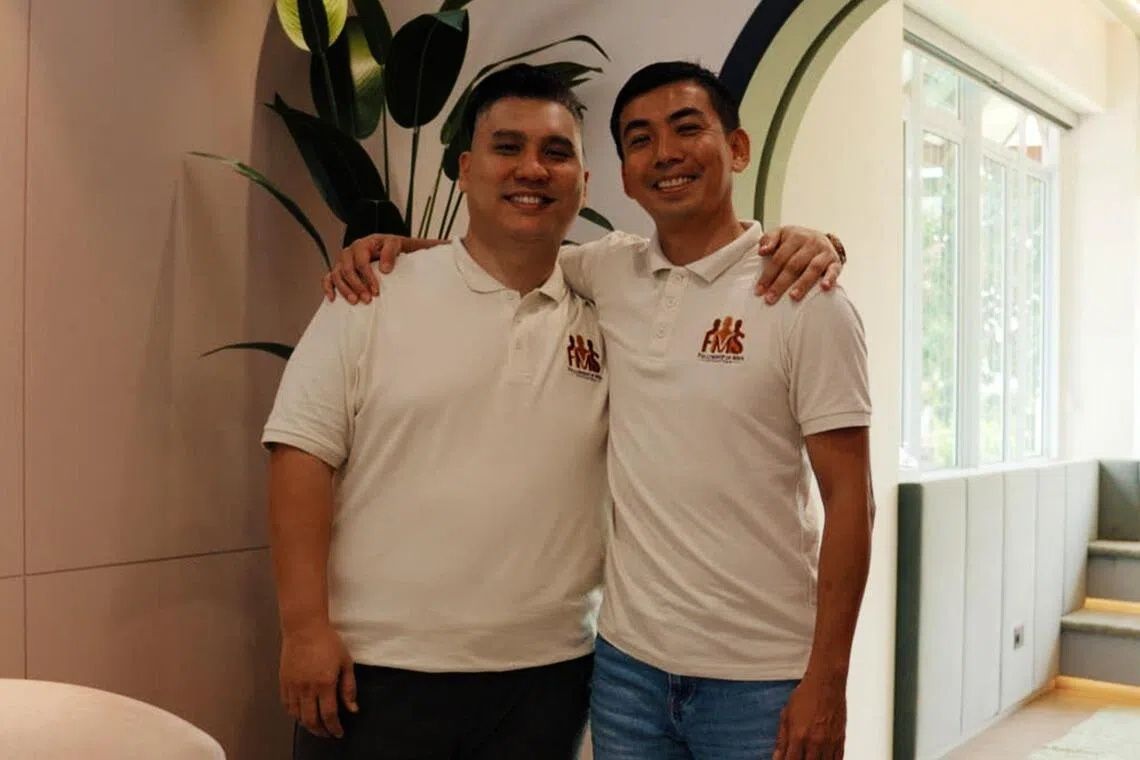
For many applicants, the S$5,000 threshold removes financial friction that would otherwise prevent ideas from moving beyond wishful thinking. Ben Ang and Ismail Didih Ibrahim exemplify this dynamic. The two men met five years ago while working at a family service centre, initially focused on crisis intervention for men struggling with aggression and violence. Over time, they recognised that prevention held greater promise than remedial approaches. When they formally established Fellows for Movement Singapore in January 2026 as a non-profit dedicated to encouraging men to seek help and build emotional resilience, they lacked the resources for meaningful community outreach. Their seed grant transformed possibility into practice, enabling them to conduct a three-hour engagement session at a professional culinary school in Geylang involving 24 men and their family members. What would otherwise have occurred in Ang's home kitchen instead took place in a proper venue where cooking became the medium for conversations about masculinity, self-care, relationships, and help-seeking—practical topics framed in relatable, hands-on activities rather than clinical discourse.
The initiative reflects broader tensions within male-focused social work. Ang articulates this clearly: many men remain reluctant to engage with traditional therapy or counselling services, viewing such help-seeking as incompatible with conventional notions of masculinity. By building entry points through community activities—mentoring groups, hands-on workshops, guided peer conversations—Fellows for Movement Singapore sidesteps this resistance. The organisation's underlying theory is that once men experience the benefits of emotional connection and mutual support in informal settings, they become more open to formalised help if required. This approach carries implications beyond Singapore's specific context; across Southeast Asia, similar patterns of male reluctance to seek mental health support persist, rooted in similar cultural expectations around emotional stoicism and self-reliance.
Loke Wai Yee's experience with the same seed grant tier illustrates how the fund catalyses youth-driven social entrepreneurship. At 21, while studying at LASALLE College of the Arts, Loke observed a gap in Singapore's charitable giving ecosystem. Annual angel tree programmes—wherein disadvantaged children hung gift wish lists on trees in shopping malls during Christmas season—reached only limited populations, partly because the programme existed mainly in affluent shopping centres and partly because expensive wish items excluded younger or budget-conscious donors from participating. Together with 12 friends, Loke conceptualised Little Wishes, an online platform designed to democratise charitable giving by allowing donors to select gifts within their budget constraints and be matched with child beneficiaries. Without the S$5,000 grant, the team would have attempted to design their website themselves, likely resulting in a less polished, less user-friendly platform that might have dampened donor engagement. The grant enabled them to hire a professional web developer, ensuring the site launching in August 2026 would attract and retain users.
Beyond the monetary support, both Fellows for Movement Singapore and Little Wishes benefited from SGPO's broader ecosystem of assistance. The office connected Loke's team with established social service agencies, providing intelligence about complementary funding streams and offering ongoing mentorship. This wraparound support distinguishes the SG Partnerships Fund from simpler grant-dispensing models. By coupling capital with networks, knowledge, and guidance, the SGPO positions itself not merely as a funder but as a facilitator of sustainable community enterprises. For emerging initiatives often lacking institutional experience, such navigation support proves as valuable as the grant itself.
The fund's two higher tiers address different organisational maturity levels. The sprout tier, offering grants up to S$50,000, targets established organisations seeking to deepen their sectoral impact without requiring the scale of the uppermost tier. The scale tier, newly launched in July 2026, supports organisations with proven track records pursuing sector-wide transformation, providing grants reaching S$1 million. This graduated approach acknowledges that community ecosystems contain actors at different developmental stages, each requiring proportionate resources. A fledgling youth-led initiative and a mature social enterprise tackling homelessness operate under different constraints and possess different capacities; the tiered system accommodates both without forcing one model onto all applicants.
The sheer volume of applications—over 200 in the opening months—suggests that demand for such funding substantially exceeds the historical supply. Singapore's civil society, encompassing both grassroots volunteers and registered non-profits, has long operated with constrained resources. Government funding traditionally flowed through established channels and established partners. The SG Partnerships Fund appears to have unlocked latent entrepreneurship, inviting citizens and organisations previously outside formal grant cycles to imagine what they might accomplish with modest financial support. Processing these applications represents both opportunity and challenge; the SGPO must develop the administrative capacity to evaluate, monitor, and learn from 200-plus projects without creating such bureaucratic overhead that the cost of grant-making becomes prohibitive.
The fund sits within a broader international movement toward participatory budgeting and citizen-centred governance, wherein public resources are allocated through mechanisms giving communities direct voice. Singapore's approach, channelled through the SGPO, combines top-down seed funding with bottom-up initiative selection, creating a hybrid model. Citizens identify problems and propose solutions; government provides capital and organisational support; civil society actors implement and iterate. This distribution of agency reflects assumptions that solutions designed by those experiencing problems tend to resonate more effectively than solutions imposed from above, and that community members possess local knowledge that formal institutions often lack.
For Malaysian observers, Singapore's investment in grassroots funding carries instructive dimensions. Malaysia's civil society, similarly constrained by resource scarcity and irregular funding access, might benefit from analogous mechanisms. The seed tier concept particularly merits attention—its low threshold and high take-up suggest that many community members harbour implementable ideas but lack the initial capital or institutional credibility to act. Creating structures that provide both funding and legitimacy, treating citizen initiatives as worthy of serious investment, could unlock comparable energy in Malaysian communities. The specific design choices—tiered grants, wraparound support, connection to existing networks—offer a replicable template.
As applications proceed through evaluation, the real test of the SG Partnerships Fund will emerge not in application numbers but in implementation quality and sustained impact. Early beneficiaries like Ang, Didih, and Loke must demonstrate that seed funding genuinely catalysed projects that persisted beyond initial grant periods and expanded their reach. The SGPO's commitment to ongoing mentorship suggests awareness that funding initiation differs from funding success. Over the coming years, evaluations of which projects thrived, which faltered, and why will inform refinements to the fund's design. Success will mean not merely having spent S$50 million across 200 projects, but having nurtured a cohort of sustained, scaled community initiatives that address real needs while strengthening Singapore's social fabric.

