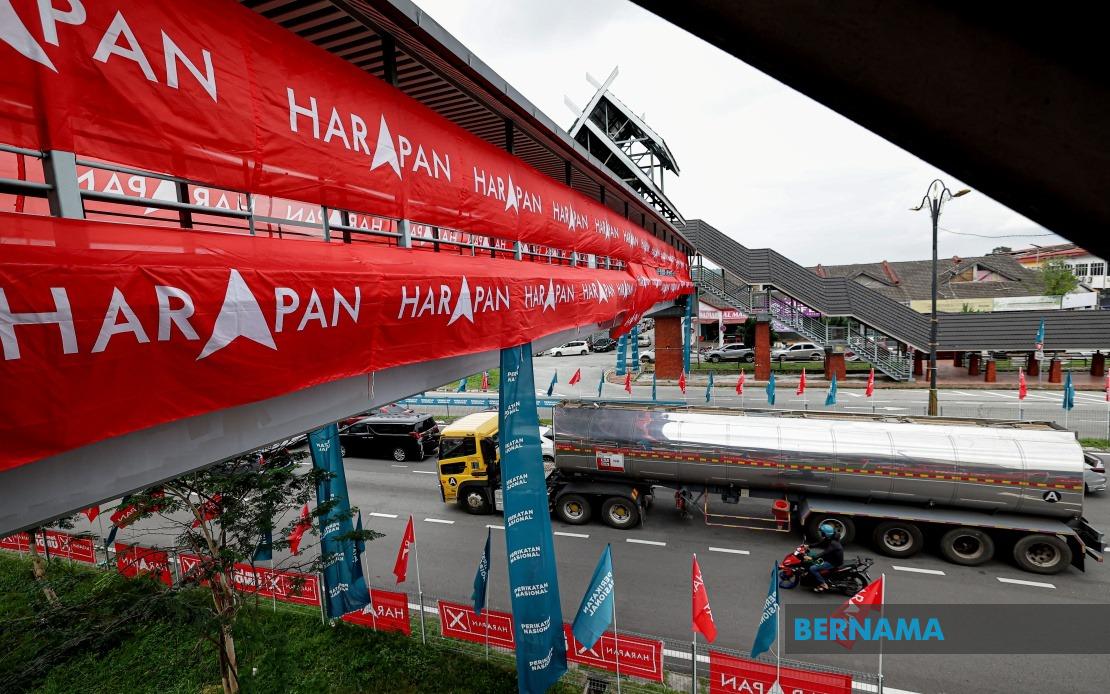
Negeri Sembilan is gearing up for an intensive early voting exercise tomorrow as approximately 22,339 security personnel and their spouses prepare to cast their ballots four days ahead of the main polling day on August 1. The Election Commission has orchestrated a comprehensive logistics operation to accommodate this sizable cohort, establishing 38 early polling centres distributed strategically throughout the state to ensure accessible participation across all districts. The military contingent comprises 16,884 personnel and their family members, while the police force contributes 5,455 eligible voters, reflecting the substantial presence of uniformed services across the state.
All designated early voting facilities will commence operations simultaneously at 8 am tomorrow, though closing times have been staggered to accommodate the varying operational schedules and geographical locations of each centre. Notable venues include the Army Basic Training Centre in Port Dickson, which serves as a hub for military voters, the Negeri Sembilan Contingent Police Headquarters and Nilai District Police Headquarters in Seremban, alongside the Sendayan Air Base. This decentralized approach aims to minimize congestion and allow personnel to vote without disrupting their security duties or regular work assignments.
Weather considerations present a variable challenge across the state for tomorrow's proceedings. The Malaysian Meteorological Department forecasts generally clear morning conditions across most of Negeri Sembilan, which should facilitate smooth operations during the early morning rush when many security personnel will seek to cast their votes before beginning their shifts. However, Port Dickson faces a notably different meteorological outlook, with heavy rain and thunderstorms anticipated in the morning hours, potentially complicating access to the Army Basic Training Centre. Afternoon conditions are expected to deteriorate significantly, with heavy rainfall forecast across virtually the entire state, suggesting that any personnel unable to vote in the morning may encounter challenging conditions if they attempt to participate later in the day.
The larger political context surrounding this election reflects intensifying competition for control of Negeri Sembilan, a state with significant symbolic importance as a traditionally competitive battleground. The state assembly was formally dissolved on June 5, setting in motion the electoral machinery that culminates in polling day on August 1. A total of 103 candidates will contest the 36 available state seats, representing a diverse spectrum of political ideologies and organizational structures that collectively demonstrate the fractured nature of Malaysian politics at the state level.
Pakatan Harapan maintains the broadest representation, fielding candidates across all 36 constituencies through its component parties: PKR provides 16 nominees, DAP contributes 11, and Amanah supplies nine. This comprehensive approach underscores the coalition's ambition to present itself as a viable alternative government throughout the state. Barisan Nasional, traditionally dominant in many Malaysian states, is adopting a more selective strategy, contesting only 25 seats through 16 UMNO candidates, seven from MCA, and two from MIC, suggesting either resource constraints or strategic calculations about electoral viability in certain constituencies.
Perikatan Nasional's participation demonstrates the continued relevance of this alliance despite its mixed electoral fortunes nationally. The coalition is fielding 11 candidates comprising five from PAS, four from Parti Wawasan Negara, and one each from Gerakan and the Malaysian Indian People Party. This configuration reveals the principal role played by the Islamic party within the PN framework at the state level. Meanwhile, Bersatu's decision to contest 24 seats as an independent entity rather than within any formal coalition highlights the fragmentation occurring within what was once a unified Mahathir-led political vehicle.
Smaller parties and newer political formations are also seeking representation, with Parti Orang Asli Malaysia fielding a single candidate to address indigenous concerns, Parti Sosialis Malaysia contesting one seat to provide a left-wing alternative, and Berjasa offering seven candidates representing Islamic-oriented voters seeking options beyond PAS. This proliferation of candidates and organizations reflects the democratization of Malaysian politics but also its increasing complexity, potentially creating scenarios where vote fragmentation becomes a decisive electoral factor.
The early voting mechanism for security personnel has become a standardized feature of Malaysian elections, recognizing that military and police duties often make standard polling day participation impractical for these essential personnel. By enabling advance casting roughly a week before the general population votes, the Election Commission ensures these voters can fulfill their democratic obligations without compromising national security or law enforcement operations. The scale of participation tomorrow—representing approximately 620 voters per centre on average—demonstrates the institutional challenge of managing electoral logistics in a country where security personnel represent a numerically significant voting bloc.
For Negeri Sembilan specifically, the outcome of this election carries implications extending beyond state-level governance into questions about federal coalition politics and the sustainability of current power arrangements. A strong showing by Pakatan Harapan could reinforce the coalition's narrative of recovery and relevance following its 2022 federal election losses, while Barisan Nasional gains would suggest the government coalition's continuing appeal in certain demographic and geographic contexts. The performance of Perikatan Nasional would indicate whether the PAS-led Islamic conservative movement can establish itself as a credible state-level alternative to both PH and BN.
The early voting exercise tomorrow will thus serve as a bellwether moment, offering preliminary insights into the political mood among a significant segment of the electorate even before the broader Negeri Sembilan population heads to the polls on August 1. The participation rates among military and police voters, though not publicly disclosed until after official polling concludes, will provide valuable intelligence to all competing parties about their respective performances among voters who are generally considered more conservative and security-conscious than the general population.

