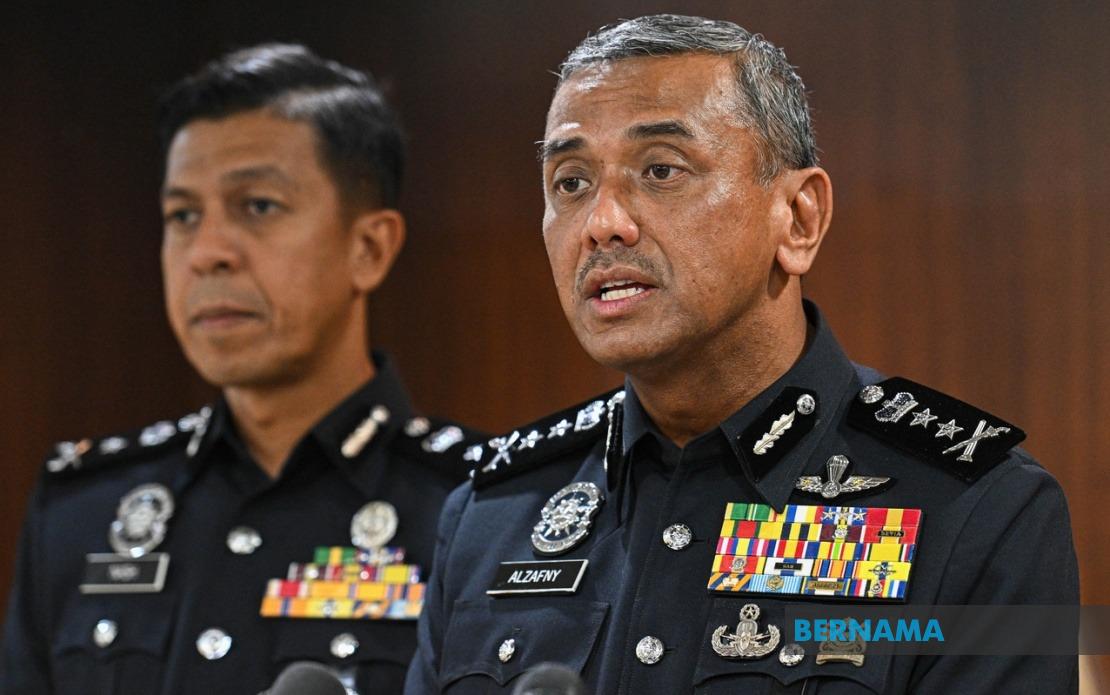
The 16th Negeri Sembilan state election will see substantial participation from the security forces during an accelerated voting process designed to accommodate uniformed personnel and their families. According to Negeri Sembilan police chief Datuk Alzafny Ahmad, a combined total of 22,339 eligible voters from the Royal Malaysia Police and Malaysian Armed Forces, including their spouses, will exercise their franchise during early voting sessions scheduled for July 28. This figure breaks down into 5,455 police officers and personnel, with the remaining 16,884 drawn from the armed forces ranks and their families.
The deployment of security personnel for electoral administration underscores the logistical complexity of managing a state-level election. Across early voting day alone, 1,796 officers and personnel will be stationed throughout designated zones to facilitate the process. This represents a carefully calibrated distribution designed to ensure smooth operations while maintaining adequate coverage across all polling locations. The election framework further contemplates significant personnel commitments across multiple phases, with 2,393 security personnel assigned to nomination duties on July 20, followed by 1,685 personnel maintaining presence during the campaign interval, and a substantial contingent of 4,788 deployed on the main polling day on August 1.
Election administration in Malaysia continues to evolve, with early voting provisions recognising the distinct operational demands placed on security forces. By separating their voting window from the general population, authorities attempt to prevent disruptions to normal electoral procedures while accommodating the irregular duty schedules characteristic of police and military work. The Negeri Sembilan arrangement reflects broader Election Commission protocols that balance representational inclusivity with practical security and administrative considerations.
Beyond logistical planning, police leadership has articulated clear expectations regarding political conduct during the campaign period. Datuk Alzafny emphasised that all participating candidates and their support networks must exercise restraint and discipline, ensuring that campaign activities remain within bounds of civility and legality. This directive carries particular weight in a Malaysian context, where elections occasionally become flashpoints for inter-communal tensions and heated partisan competition.
The police authority has specifically flagged concerns surrounding misinformation and divisive rhetoric, warning against false information distribution, defamatory statements, and hate speech. These categories represent growing challenges in contemporary electoral environments, where social media platforms enable rapid dissemination of unverified claims and inflammatory content. The police position reflects deepening recognition that electoral integrity depends not merely on procedural regularity but on the informational environment surrounding voter decision-making.
Particularly significant is the police emphasis on matters touching religion, race, and royal institutions—categories collectively referred to as the 3R framework in Malaysian governance discourse. This tripwire encompasses sensitive cultural and constitutional dimensions that authorities consider foundational to national stability. The proscription extends across multiple communication channels, encompassing formal political speeches, campaign literature, media statements, and increasingly important social media content. This comprehensive approach reflects the understanding that campaign discourse now permeates digital spaces where traditional regulatory mechanisms function imperfectly.
The prescribed electoral calendar provides clear temporal markers for the contest. Nomination proceedings commence on July 20, followed by the early voting opportunity on July 28, and culminating in the general poll on August 1. This compressed timeline—spanning just twelve days from nominations through final voting—concentrates political activity and reduces the extended campaign periods that sometimes characterise electoral cycles in other jurisdictions.
Law enforcement has additionally directed attention to post-election conduct, instructing all participants to accept declared results with maturity and composure. This guidance represents implicit acknowledgment that electoral contests can generate disappointment and frustration, particularly among candidates and supporters who anticipated different outcomes. By conditioning acceptance on official result announcements, authorities establish a clear procedural threshold beyond which legitimate contestation through legal channels remains available, but extra-judicial remedies or disruptive actions are prohibited.
For Malaysian voters and regional observers, the Negeri Sembilan election exemplifies how federal and state electoral processes integrate security force participation while maintaining democratic legitimacy. The arrangement respects the rights of uniformed personnel to participate in representative governance while recognising their distinct institutional roles. The security framework deployed by PDRM demonstrates commitment to orderly, peaceful administration—objectives that resonate across Southeast Asia, where electoral processes sometimes encounter challenges regarding procedural fairness, candidate safety, and democratic legitimacy.
The emphasis on eliminating provocation, controlling unauthorised gatherings, and preventing inflammatory discourse reflects maturation in Malaysia's electoral management. Rather than relying exclusively on post-incident enforcement, authorities have positioned themselves as stewards of campaign atmosphere, actively discouraging conditions that might provoke disorder. This preventative orientation acknowledges that election administration encompasses broader responsibilities extending beyond vote-counting mechanics.
For Negeri Sembilan residents and the broader Malaysian electorate, the security preparations underscore official seriousness regarding electoral integrity. The substantial deployment of personnel—totalling nearly 10,000 across the full electoral cycle—represents significant resource allocation devoted to ensuring peaceful, orderly competition. This commitment demonstrates that state and federal authorities treat electoral processes as fundamental to constitutional governance requiring protection through dedicated institutional investment.

