Malaysia's public institutions of higher learning have maintained substantial commitment to science, technology, engineering and mathematics education, with latest parliamentary data revealing that 326,419 students were enrolled in STEM programmes during the period spanning 2023 through March 2026. This figure, representing approximately 59 per cent of the 556,556 total diploma and first-degree cohort admitted across public universities during the same window, underscores the strategic priority given to technical disciplines in the country's higher education landscape.
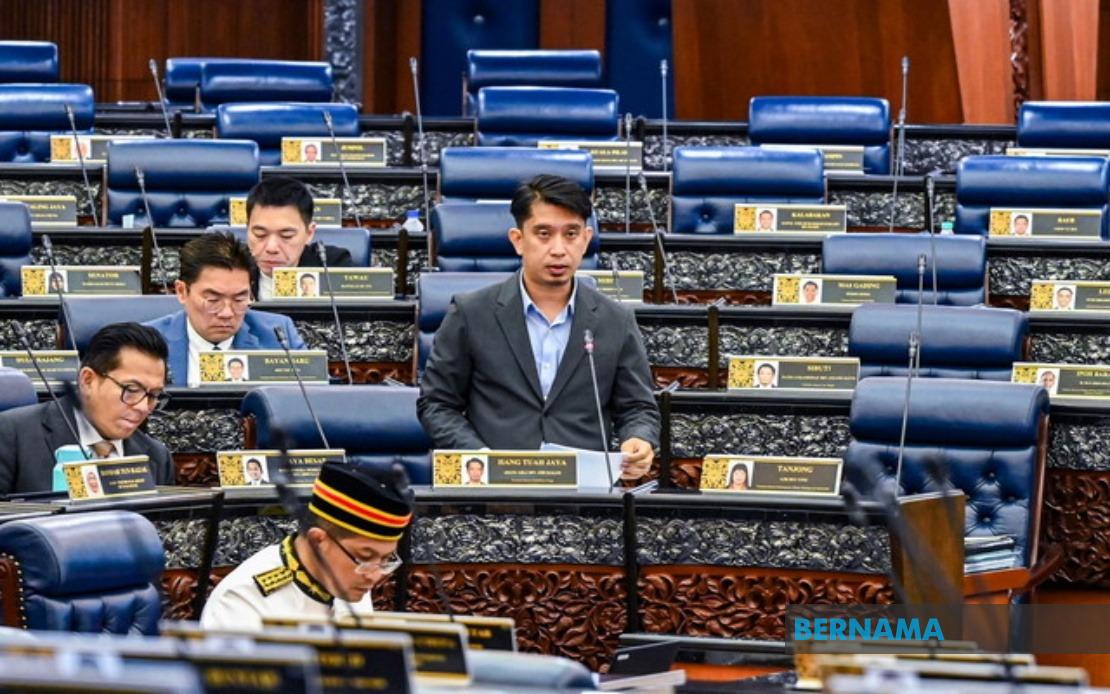
Deputy Minister of Higher Education Adam Adli Abd Halim presented these figures to the Dewan Rakyat on Tuesday, drawing on enrolment information maintained within the ministry's MyMOHES system. The remaining 230,137 students during this period pursued non-STEM disciplines including humanities, social sciences, business and education programmes. The breakdown reflects deliberate institutional planning aimed at equipping Malaysia's workforce with capabilities aligned to emerging economic sectors and technological advancement needs.
The emphasis on STEM disciplines within public universities responds to identifiable shifts in global labour markets and Malaysia's own economic transition. Government strategy increasingly recognises that high-value manufacturing, financial technology, renewable energy systems and advanced semiconductor production depend upon steady streams of technically qualified professionals. By concentrating roughly three-fifths of undergraduate and diploma intake within STEM fields, public institutions signal alignment with these industrial priorities while competing for talent with an expanding private higher education sector.
When responding to parliamentary questions from Datuk Dr Ku Abd Rahman Ku Ismail, a Kubang Pasu representative, the Deputy Minister contextualised these enrolment figures within the broader National Science, Technology and Innovation Policy spanning 2021 to 2030. Rather than establishing rigid numerical targets for specific engineering disciplines, this policy framework adopts what officials describe as a comprehensive approach centred on cultivating an integrated ecosystem encompassing researchers, scientists, engineers and technologists across multiple specialisations and career stages.
The DSTIN framework establishes workforce composition targets expressed as ratios rather than absolute headcounts. Specifically, the policy aims to achieve 200 research, science, engineering and technology personnel for every 10,000 workers across the national economy by the end of the current decade. Applied against Malaysia's projected workforce of approximately 17.06 million persons, this ratio calculation yields a requirement for roughly 341,200 RSET professionals by 2030. This metric provides measurable benchmarks against which to assess whether current educational output and skills development initiatives remain sufficient for economic demands.
The distinction between headcount targets and ratio-based goals reflects sophisticated policy thinking around labour force composition. Malaysia's working-age population will continue expanding, yet participation rates, retirement patterns, and sectoral shifts will reshape the denominator against which STEM professional requirements are calculated. A ratio-based approach therefore maintains flexibility while still establishing clear directional goals. However, questions persist regarding whether current graduation rates in disciplines like advanced engineering and software development will suffice to reach the 341,200 target, particularly given international competition for technical talent and the mobility of graduates to higher-wage jurisdictions.
During supplementary questioning, Onn Abu Bakar, representing Batu Pahat constituency, pressed the Deputy Minister on concrete measures to expand the teaching and research infrastructure supporting accelerating demand in emerging technical fields. He specifically highlighted artificial intelligence, semiconductor engineering and digital systems as priority areas requiring enhanced academic capacity. The intensity of industry and parliamentary focus on these sectors reflects their perceived centrality to Malaysia's long-term competitiveness and ability to capture high-value segments of global technology supply chains.
In response, Adam Adli identified the Malaysian Technical University Network as the focal point of current infrastructure investment and programme development. MTUN comprises four specialised institutions designated to concentrate technical and vocational education with particular depth in advanced engineering disciplines. Rather than attempting simultaneous expansion across Malaysia's broader public university system, this targeted approach concentrates resources and expertise within institutions specifically positioned to develop the specialised teaching laboratories, equipment ecosystems and research partnerships essential for credible programmes in cutting-edge fields.
The MTUN strategy reflects resource realities constraining simultaneous expansion across multiple campuses. Establishing world-class semiconductor fabrication laboratories or artificial intelligence research facilities demands substantial capital investment, sustained technical expertise among faculty, and partnerships with industry players who can provide equipment access and practical application contexts. By concentrating such infrastructure within a limited number of institutions, the government seeks to achieve the critical mass necessary for authentic excellence rather than diluting efforts across a larger institutional footprint.
Yet this concentration approach carries potential drawbacks for geographic equity and access. Students in Sabah, Sarawak and rural peninsular Malaysia may face barriers to engaging with leading technical programmes if capacity remains concentrated within Klang Valley and other economically developed regions. The reliance upon MTUN may inadvertently reinforce existing patterns of brain drain wherein graduates from underserved regions migrate to hubs offering superior technical education and employment ecosystems, thereby amplifying existing regional disparities in innovation capacity and economic development potential.
The government's commitment to maintaining strong STEM enrolment aligns with global trends visible across comparable Southeast Asian economies. Singapore, South Korea and Vietnam have similarly prioritised technical education expansion while managing the tension between increasing participation rates and maintaining academic standards. Malaysia's performance relative to these benchmarks remains an open question, particularly regarding whether its STEM graduates possess capabilities matching those emerging from peer nations' technical universities when assessed by international standards or industry demand.
Looking ahead, the alignment between the 326,000-plus students currently enrolled in STEM programmes and the projected 341,200 professionals required by 2030 appears roughly proportionate at the aggregate level. However, significant misalignment may persist at the discipline level. Graduated supply in civil engineering or traditional chemistry may exceed demand while critical shortages persist in quantum computing, advanced materials science, or specialised semiconductor design. The challenge confronting Malaysia's higher education system increasingly centres on granular labour market matching alongside aggregate volume expansion, requiring sophisticated feedback mechanisms between employers and universities regarding emerging skill requirements.

