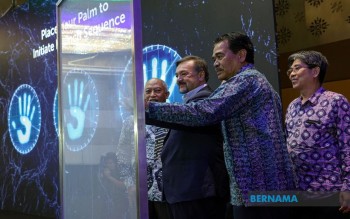
Pengurusan Aset Air Bhd (PAAB), a wholly owned subsidiary of the Minister of Finance (Incorporated), has unveiled a transformative sustainable Islamic finance framework designed to reshape how Malaysia funds its critical water infrastructure and environmental projects. The launch, held on June 30, represents three significant firsts for the country: it is Malaysia's inaugural sustainable Islamic finance framework, the first to incorporate blue finance mechanisms, and the first such framework to earn platinum-rated certification from independent validators. This milestone reflects the nation's growing recognition that conventional financing alone cannot adequately address the scale of investment needed to secure Malaysia's water future.
Developed in partnership with Maybank Investment Bank Bhd as sustainability structuring adviser and RAM Sustainability Sdn Bhd providing independent verification, the framework creates a comprehensive system for PAAB to align its financing operations with globally recognised sustainability standards while remaining faithful to Islamic financial principles. The dual focus on environmental responsibility and Islamic values represents an important convergence in global finance, particularly relevant for Muslim-majority economies seeking to marry religious values with climate imperatives. By establishing clear governance structures and transparent criteria for asset selection, PAAB has constructed a blueprint that other regional institutions may emulate.
The framework's most distinctive feature is its incorporation of blue finance, a specialised approach targeting investments in water security, aquatic ecosystems, and related infrastructure. This focus addresses one of Malaysia's most pressing national challenges: ensuring reliable water supply across an expanding population while managing competing demands from agriculture, industry, and urban centres. Water security has emerged as a critical vulnerability for the region, particularly given climate change impacts on rainfall patterns and increasing competition for shared water resources in Southeast Asia.
PAAB chairman Datuk Seri Jaseni Maidinsa outlined the tangible scale of the company's existing commitments, revealing that by December 31, 2026, the group had migrated and committed RM46.88 billion into Malaysia's water services sector. This substantial investment has yielded measurable infrastructure advances, including the completion of 21 water treatment facilities with combined daily processing capacity of 2.085 billion litres. The company has also overseen construction of 42 reservoirs holding 783 million litres in total storage capacity, representing significant progress in addressing Malaysia's chronic water shortage challenges during dry seasons and drought periods.
Beyond major infrastructure projects, PAAB's investments have extended to replacing ageing distribution networks, with 3,263 kilometres of new pipelines installed to reduce non-revenue water losses—a persistent inefficiency in Malaysian water supply that costs the nation substantially in wasted resources and unaccounted-for water. These infrastructure improvements directly translate to improved supply reliability for consumers and reduced wastage, yet financing such essential but unglamorous works remains persistently challenging within conventional banking frameworks that favour more profitable sectors. The sustainable Islamic finance framework addresses this gap by creating mechanisms to monetise long-term infrastructure investments while maintaining ethical standards.
Finance Minister II Datuk Seri Amir Hamzah Azizan, who formally inaugurated the framework, disclosed that PAAB plans to issue its inaugural blue sukuk by the third quarter of the year. This instrument is positioned to become globally significant: it will reportedly be the first blue finance sukuk worldwide to employ a taxonomy jointly developed by PAAB, Maybank, and RAM Sustainability under guidance from Malaysia's Securities Commission. Such taxonomies—essentially classification systems for identifying eligible green or blue investments—have proven essential globally for preventing greenwashing and ensuring funds genuinely support environmental objectives rather than projects merely claiming environmental credentials.
The blue sukuk structure innovatively leverages water assets as collateral, a mechanism that Minister Amir Hamzah described as opening new pathways for asset securitisation. Rather than relying solely on government budgets or conventional commercial loans, the framework enables water infrastructure to effectively finance itself through sukuk issuances backed by revenue streams from the assets themselves. This approach could prove transformative not only for PAAB but potentially for other Asian utilities facing similar infrastructure financing challenges, demonstrating how Islamic finance principles can address infrastructure gaps across the region.
The minister emphasised that insufficient investment in water assets carries serious consequences for Malaysia's economic and social stability. Water shortages directly constrain industrial development, increase costs for businesses, and create public health risks—externalities that ultimately prove far more expensive than proactive infrastructure investment. By facilitating increased capital flows toward water projects, the sustainable Islamic finance framework removes one structural barrier to prioritising investments that government planners recognise as essential but have struggled to finance at required scales. This represents a significant policy innovation in how Malaysia approaches critical infrastructure funding.
The platinum-rated certification carries particular weight, signifying that independent sustainability specialists have verified the framework's genuine commitment to environmental and social standards rather than merely nominal compliance. International investors increasingly demand such third-party validation, particularly institutional investors managing sovereign wealth or pension funds bound by environmental, social, and governance criteria. By securing this certification, PAAB enhances its attractiveness to global Islamic finance investors seeking authentic green finance opportunities, potentially lowering borrowing costs and expanding the investor base willing to fund Malaysian water infrastructure.
For Malaysian policymakers, the framework addresses a structural challenge that has constrained water infrastructure development: the difficulty of attracting private capital to long-duration, essential services that generate steady but modest returns. Water utilities globally face this tension between social importance and financial returns, making innovative financing mechanisms increasingly vital. The sustainable Islamic finance framework specifically targets this gap, demonstrating how blending Islamic principles with contemporary environmental finance thinking can mobilise capital for investments that might otherwise remain underfunded despite their national importance.
Looking forward, the framework's success will likely influence how other Southeast Asian countries approach critical infrastructure financing. Malaysia's experience with blue sukuk and sustainable Islamic finance mechanisms will provide valuable lessons for neighbouring nations facing similar water security challenges within Muslim-majority populations. The initiative also positions Malaysian Islamic finance institutions—particularly Maybank and the broader financial sector—as innovators in global sustainable finance, potentially expanding their market share among international investors seeking both environmental returns and Islamic compliance.
The framework ultimately represents more than a financing innovation; it reflects evolving recognition that Malaysia's water future depends on deploying multiple funding tools simultaneously. Government budgets alone cannot generate the capital required, yet private markets need structured frameworks ensuring investments serve public interest objectives. By combining Islamic finance principles, environmental standards, and asset securitisation techniques, PAAB has constructed a model that may prove adaptable across diverse infrastructure challenges facing Malaysia and the broader region in coming decades.

