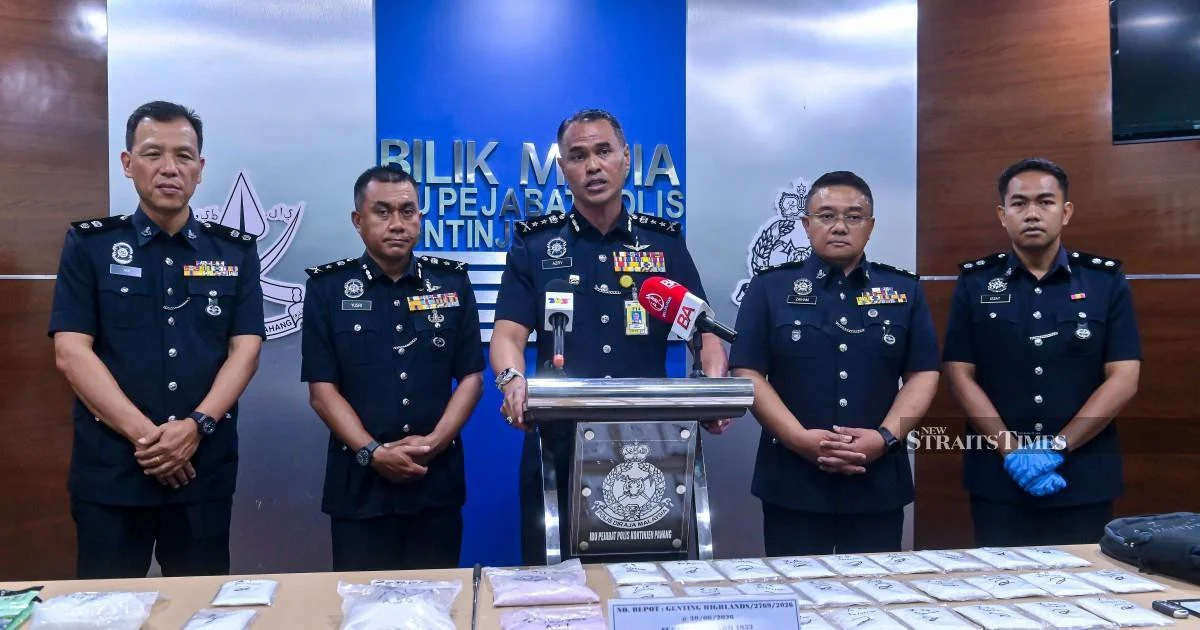
Law enforcement authorities in Pahang have concluded an intensive three-day anti-drug operation, dubbed Operation Hawk, that blanketed all 11 districts of the state and resulted in the arrest of 333 individuals on drug-related charges. The coordinated crackdown, which targeted known narcotics hotspots throughout the region, culminated in the seizure of drugs, currency and motor vehicles collectively valued at more than RM500,000.
The scale of Operation Hawk underscores Pahang's position as a critical battleground in Malaysia's ongoing war on drugs. With its sprawling geography encompassing both urban centres and rural areas, the state has long grappled with substance abuse issues affecting communities across its diverse landscape. The fact that enforcement teams deployed across all 11 districts simultaneously suggests a strategic approach aimed at dismantling drug distribution networks and preventing traffickers from simply relocating operations to less-scrutinised areas.
The monetary value of the seizures—exceeding RM500,000—reflects the significant scale of the drug trade operating within Pahang's borders. This includes not merely the street value of narcotics themselves but also the proceeds that traffickers had accumulated through their illicit activities. The confiscation of vehicles alongside drugs and cash indicates that authorities were targeting mid and upper-tier operators in the supply chain, rather than restricting enforcement action to small-time street dealers.
For Malaysian policymakers and law enforcement agencies nationwide, the Pahang operation provides concrete evidence of what coordinated, district-wide enforcement can achieve within a limited timeframe. The concentration of 333 arrests into just three days of operations suggests that intelligence gathering and pre-operational planning enabled police to identify and locate priority targets with efficiency. This model may inform how other states approach their own anti-narcotics campaigns, particularly those facing resource constraints.
The selection of Operation Hawk's name—with its connotations of predatory surveillance and swift action—reflects the police's messaging around the need for aggressive deterrence in combating drug supply. However, the sustainability of such operations depends on maintaining intelligence networks and securing sufficient personnel and budgetary allocations on an ongoing basis. A single three-day blitz, however successful in the short term, cannot permanently address the structural factors that enable drug markets to flourish.
From a regional perspective, Pahang's drug-trafficking challenges are inextricably linked to broader Southeast Asian patterns. The state's proximity to international trafficking corridors and its role as a transit point for narcotics destined for major Malaysian urban centres make it strategically significant in the narcotics supply landscape. The types and quantities of drugs seized during Operation Hawk would provide valuable intelligence about current trafficking trends affecting the region.
The enforcement effort also highlights the resource allocation decisions facing Malaysia's anti-drug apparatus. Operations of this magnitude require coordination across multiple police units, intelligence support, and logistical capability. The ability to sustain such operations regularly, rather than periodically, remains a critical challenge for authorities managing drug enforcement across a sprawling state like Pahang.
Public safety dimensions of Operation Hawk extend beyond simple drug seizure statistics. Communities in the 11 districts affected by the operation may experience tangible benefits in terms of reduced street-level drug activity and associated crime, at least temporarily. The visible presence of enforcement activity can also serve a deterrent function, signalling to traffickers and users alike that authorities maintain active surveillance and enforcement capacity.
However, law enforcement officials recognise that arrest numbers and seizure values alone do not constitute comprehensive drug control policy. The 333 individuals arrested during Operation Hawk will proceed through Malaysia's criminal justice system, potentially facing rehabilitation, imprisonment, or other sentencing outcomes depending on their roles in the drug trade. The downstream impact of these arrests on court backlogs and detention facility capacity represents another dimension of the operation's broader implications.
The outcome of Operation Hawk also underscores the importance of community reporting and intelligence sharing in identifying drug hotspots and trafficking activities. Police operations of this nature typically depend significantly on public tip-offs and neighbourhood awareness. Sustaining community engagement in anti-drug efforts requires ongoing relationship-building between enforcement agencies and residents in affected areas.
Looking forward, the success metrics for Operation Hawk should extend beyond the immediate arrest and seizure figures. Medium and long-term indicators—including changes in reported drug-related crime rates, shifts in drug availability in affected communities, and alterations in trafficking patterns—will provide more meaningful assessment of the operation's impact on Pahang's drug situation. Authorities will likely analyse the intelligence gathered during the sweep to inform subsequent enforcement priorities and resource deployment across the state.

