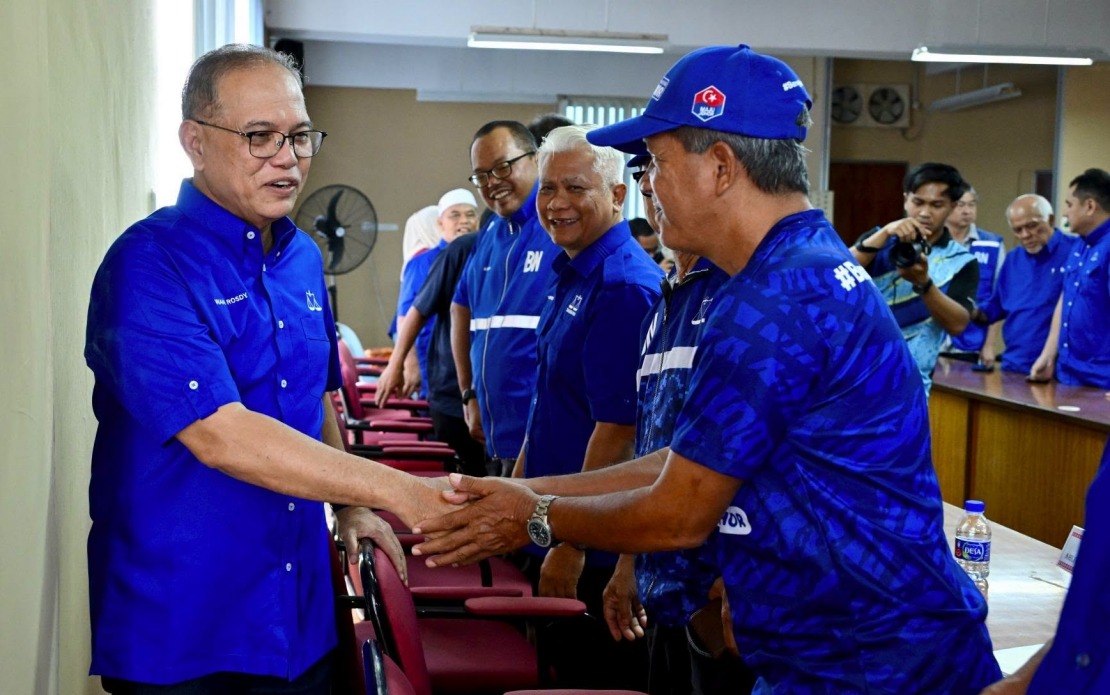
Pahang Barisan Nasional has committed substantial resources to the Johor state election campaign, directing its party machinery towards four strategically important state constituencies in a demonstration of inter-state coalition solidarity. State chairman and Menteri Besar Datuk Seri Wan Rosdy Wan Ismail revealed the deployment strategy on June 30, identifying Pekan Nanas, Pulai Sebatang, Benut, and Kukup as the focus areas for Pahang-based campaign efforts. These four seats collectively fall within the Tanjung Piai parliamentary constituency, suggesting a concentrated regional strategy to maximise the coalition's electoral prospects in this critical zone.
Wan Rosdy's involvement extends beyond coordination from the state capital, as he personally committed to visiting the Segamat FELDA area to strengthen party operations in the field. His undertaking to travel there following the week's major campaign events underscores the intensity with which the opposition-led Pahang government is lending its organizational muscle to support the federal coalition's efforts in Johor. This inter-state cooperation represents a noteworthy aspect of contemporary Malaysian politics, wherein governments led by different coalitions at state level maintain pragmatic working relationships on specific electoral contests.
The Menteri Besar expressed considerable optimism regarding Barisan Nasional's prospects in the upcoming Johor elections, grounding his confidence in direct observations from recent campaign activities. During a three-day visit beginning from nomination day, Wan Rosdy witnessed what he characterised as enthusiastic party activism and a demonstrable commitment from BN candidates to engage with constituents on policy and service delivery matters. The positive energy within the party machinery, according to his assessment, reflected organisational preparedness and candidate calibre that should translate into electoral performance favourable to the coalition.
The broader electoral context involves competition for 56 state seats across Johor with 172 candidates representing various parties contesting the contest. The compression of the campaign timeline means that parties must efficiently mobilise their resources and personnel to cover ground effectively. With polling day scheduled for July 11 and early voting permitted on July 7, the election represents a significant mid-term assessment of the state government's performance and national political dynamics affecting voter sentiment.
For Malaysia's federal coalition leadership, the Johor election carries particular significance given the state's economic importance, its substantial parliamentary representation at federal level, and its position as a traditionally coalition-friendly state. The mobilisation of Pahang's party apparatus reflects recognition that available manpower and organisational capacity from neighbouring states can meaningfully influence outcomes in competitive constituencies. This strategy also demonstrates how state-level party machinery, regardless of which coalition holds state power, can be leveraged for coalition objectives where aligned interests exist.
The deployment targeting the Tanjung Piai parliamentary zone suggests that coalition strategists have identified these four state seats as either competitive territories requiring additional support or as stronghold seats requiring reinforcement against perceived opposition challenges. The geographical concentration of effort allows for efficient resource deployment and coordinated messaging across a defined region. This tactical approach has become increasingly common in Malaysian electoral contests as parties seek to maximise impact per unit of campaign expenditure and volunteer hours.
Wan Rosdy's public statements about witnessing strong party spirit and candidate commitment carry particular weight given his position as a sitting Menteri Besar. His observations serve as implicit endorsements of coalition candidate quality and party organisational health in the targeted constituencies. In Malaysian politics, public statements from senior state figures regarding neighbouring state campaigns function as signals to voters about coalition confidence and unity at leadership levels.
The involvement of Pahang's BN machinery in Johor's election reflects the ongoing evolution of Malaysian coalition politics, where state governments pragmatically contribute resources to federal coalition objectives even when those states are not themselves undergoing elections. This represents a form of political insurance, as favourable outcomes in other states reinforce coalition cohesion and reinforce the political legitimacy of member parties. For Pahang's BN leaders, investing in Johor's outcome serves both immediate coalition interests and longer-term state-level positioning.
As the Johor campaign enters its final intensive phase before polling day, the continued commitment of external party resources from Pahang indicates that coalition strategists view the outcome as consequential enough to warrant this coordinated effort. The four targeted constituencies represent microcosms of broader voter behaviour patterns that will determine whether the coalition can maintain its electoral position in this strategically important state. The coming weeks will reveal whether the augmented campaign machinery translates into the electoral gains that Wan Rosdy and other coalition leaders confidently anticipate.

