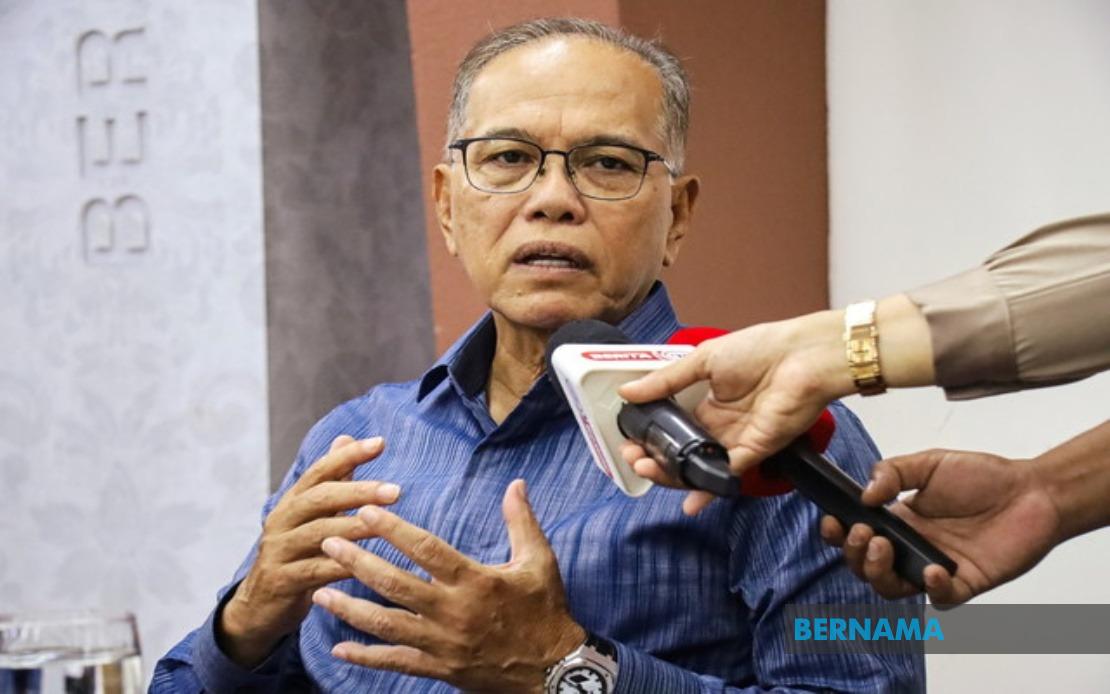
Pahang's Barisan Nasional leadership has signalled its intention to preserve the coalition arrangement with Pakatan Harapan that has governed the state since late 2022, with Menteri Besar Datuk Seri Wan Rosdy Wan Ismail declaring his commitment to maintaining the partnership until Malaysia's 16th General Election. The statement represents an effort by BN to anchor political stability in one of Malaysia's largest states, where the existing power-sharing formula has held since late 2022 following a period of considerable uncertainty.
Wan Rosdy's declaration comes as Malaysian politics enters a preparatory phase ahead of the next nationwide poll, expected within the next two years. By publicly recommitting to the Unity Government framework, Pahang's BN branch is positioning itself as a stabilising force within a coalition that, while successful at the federal level, faces ongoing tests of durability at the state level. The Menteri Besar made these remarks during an official function in Kuantan where the state government unveiled details of scholarship support for students pursuing tertiary education abroad, reflecting the breadth of governance issues occupying state leadership beyond electoral calculations.
The political arithmetic in Pahang remains instructive for understanding why both BN and PH have incentive to maintain their arrangement. In the 2022 general election, neither coalition secured an outright majority in the state legislative assembly, which comprises 42 seats. BN and Perikatan Nasional each obtained 17 seats, while PH won eight, creating a fragmented landscape that made cooperation essential for forming government. The Unity Government formula, endorsed by Tengku Hassanal Ibrahim Alam Shah Al-Sultan Abdullah Ri'ayatuddin Al-Mustafa Billah Shah in November 2022, emerged as the settlement mechanism that allowed governance to proceed without resorting to the kind of fluid, unpredictable alliances that characterised Malaysian politics in the preceding years.
For Pahang BN, maintaining this arrangement through GE16 offers strategic advantages. The coalition avoids the uncertainty of attempting to form government with alternative partners or risking a period of political instability following the election. It also demonstrates to federal BN leadership that the party maintains governability even in states where it lacks a legislative majority. Conversely, Wan Rosdy's assertion that BN remains open to cooperation with other parties for the general election itself suggests flexibility in negotiating broader electoral arrangements, a position that keeps options open as the political calendar approaches the campaign period.
The Pahang situation reflects broader patterns of coalition politics across Malaysia's states. Unlike the federal level, where BN and PH have managed a governing partnership that has delivered legislative agenda despite ideological differences, state governments operate under different pressure points and local dynamics. Pahang's arrangement has functioned for over eighteen months, suggesting that institutional mechanisms and political discipline have been sufficient to manage the partnership, though statements reaffirming commitment typically indicate ongoing internal discussions about its longevity and terms.
For Malaysian observers tracking political developments, Wan Rosdy's statement carries implications beyond Pahang itself. It signals that at least one significant state coalition partner believes the Unity Government framework remains viable and preferable to alternative configurations. This matters given discussions in national politics about the future direction of federal governance post-GE16. If state-level coalitions between BN and PH continue functioning credibly, it may encourage similar arrangements elsewhere or reinforce the federal partnership's stability.
The practical governance side of Wan Rosdy's remarks also warrants attention. During the same function, he announced RM118,000 in scholarships for 118 students from Pahang studying in Egypt and New Zealand, with additional support through Yayasan Pahang for students in Jordan and Morocco. The initiative reflects a state government maintaining its social policy agenda despite the complexities of coalition governance. The Menteri Besar emphasised that course selection prioritises fields with Islamic elements and vocational relevance, indicating conscious alignment with state-level development priorities and societal values.
The Makmur Pahang Initiative, of which the scholarship programme forms part, represents the kind of visible governance achievement that coalition governments use to justify their continued operation. By demonstrating capacity to expand social support mechanisms and adapt programmes to evolving student needs, Pahang's government projects an image of functionality despite its dependence on cross-coalition cooperation. This matters particularly in states where populations may harbour doubts about whether power-sharing governments can deliver effectively compared to single-party dominance.
Wan Rosdy's public commitment also carries a domestic political message to Pahang's BN membership and supporters. By affirming the party's intention to maintain the current arrangement, he seeks to prevent internal speculation or dissatisfaction that might emerge if the government's continuity appeared uncertain. In Malaysian politics, explicit reaffirmations of coalition commitment often serve as stabilising signals to party cadres and voters who might otherwise question their party's direction or worry about prospects for the next election.
Looking forward, the Pahang case will merit observation as the state government navigates the period between now and GE16. Political coalitions function through a mixture of formal agreements, mutual interest, and maintained confidence. Wan Rosdy's statement establishes public expectation that the Unity Government should continue, but actual performance in managing policy disagreements, allocating resources between coalition members, and navigating intra-coalition appointments will determine whether the partnership genuinely holds through the election cycle or encounters pressures that force revision before GE16 occurs. For now, Pahang presents itself as a functioning model of the broader coalition politics Malaysia has adopted.

