Pahang's administration has moved to counter criticism of its forest management practices by emphasising the rigorous framework guiding the removal of land from Permanent Forest Reserves, according to Menteri Besar Datuk Seri Wan Rosdy Wan Ismail. Speaking in Kuantan on August 30, he underscored that the degazettement process operates under carefully established safeguards and procedural requirements, rejecting any suggestion of ad hoc or unprincipled decision-making in how the state handles its forest estates.
The Menteri Besar's comments address growing scrutiny over Pahang's decision to forgo public inquiries as part of its forest degazettement procedures. He clarified that this choice reflects the state government's constitutional authority over land and forest governance within its boundaries, a power granted under Malaysia's federal system. Wan Rosdy emphasised that the state exercises its jurisdiction with deliberation and discipline, applying specific conditions and well-defined steps to any proposal affecting reserved forestland.
Rather than presenting Pahang as an isolated outlier in its approach, the Menteri Besar pointed out that multiple other Malaysian states have adopted similar methodologies when handling Permanent Forest Reserve removals. This broader pattern suggests that bypassing public inquiries in such processes reflects a wider state-level trend rather than a uniquely Pahang phenomenon. The observation carries weight in discussions about how different states interpret and implement forest management authority across the country.
Pahang's position stands in contrast to requirements introduced under the National Forestry Act (Amendment) 2022, which called for public inquiries and the provision of replacement land before degazetting Permanent Forest Reserves. The state has been identified as the fourth Malaysian state to diverge from these dual safeguards, indicating a deliberate policy choice rather than oversight. This divergence has generated concern among environmental advocates and observers who view public input and land compensation as essential checks on forest conversion.
The distinction between national legislation and state implementation underscores federalism's complex role in environmental governance across Malaysia. While the amended Forestry Act set national benchmarks for transparent and precautionary approaches to forest management, states retain considerable autonomy in their land and forestry decisions. Pahang's approach demonstrates how this constitutional arrangement permits significant variation in practice, even on matters traditionally associated with centralized environmental standards.
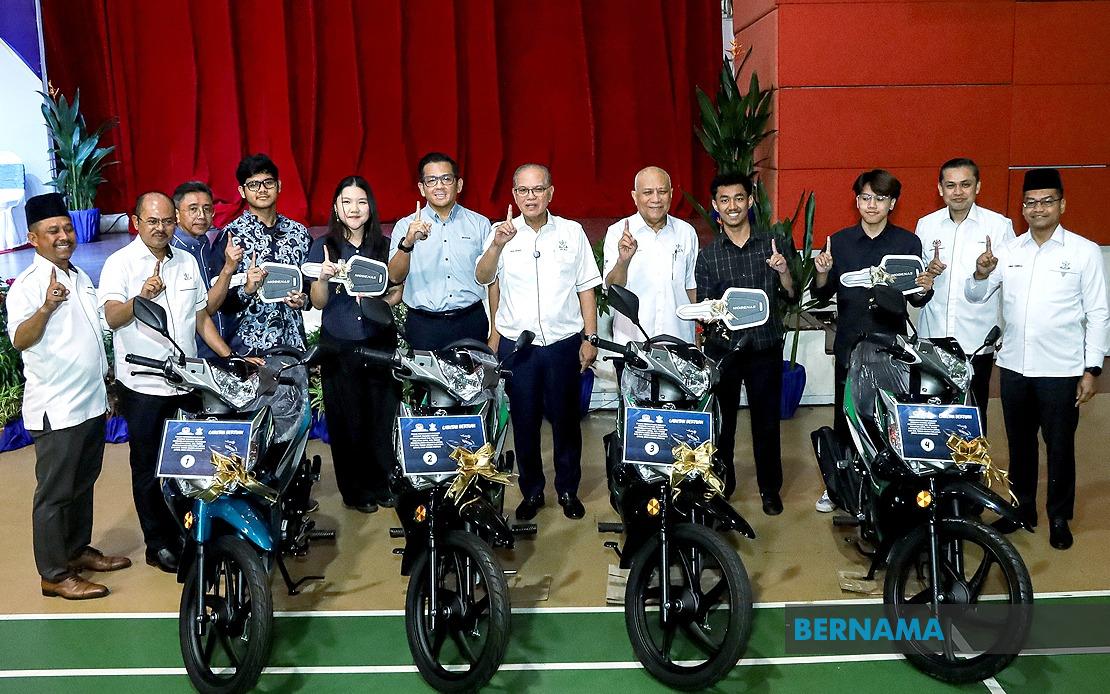
Beyond forest policy, Wan Rosdy announced an initiative addressing youth employment and financial access in Pahang. The state will introduce an interest-free loan scheme tailored for motorcycle purchases, targeting young people aged 18 to 21 enrolled in either public or private higher education institutions. The initiative reflects a strategic effort to ease the financial burden on students during their tertiary studies, acknowledging that transportation costs represent a meaningful barrier for many pursuing qualifications at institutions including public universities and private colleges across Malaysia.
The motorcycle loan programme, though modest in scope, signals Pahang's attention to youth economic mobility during the critical window when students build their independence and professional networks. By offering zero-interest financing rather than conventional commercial terms, the state removes a layer of debt burden that might otherwise accumulate during formative educational years. This approach aligns with broader policy trends across Southeast Asian governments seeking to support young populations through targeted, accessible financial instruments.
The Menteri Besar indicated that the motorcycle loan initiative will be formally presented as part of Pahang's 2027 Budget deliberations during the upcoming State Legislative Assembly session. This timeline suggests the scheme remains in developmental stages, with detailed implementation frameworks yet to be finalised and debated by elected representatives. The budgetary framework offers an opportunity for scrutiny and refinement of programme parameters, eligibility criteria, and funding allocation before rollout.
Paralleling the announcement of future youth support, Pahang celebrated immediate educational achievement through a ceremonial distribution of incentives to high-performing students. Over two thousand Pahang pupils who achieved excellence in national examinations—including the 2025 Sijil Pelajaran Malaysia (SPM), Sijil Tinggi Agama Malaysia (STAM), and Sijil Tinggi Persekolahan Malaysia (STPM)—received recognition and monetary rewards totalling RM2.4 million. This allocation demonstrates state investment in rewarding academic success at critical qualification levels that determine pathways into higher education and professional careers.
The ceremony underscored Pahang's dual commitment to immediate recognition of scholastic excellence and forward-looking support for students transitioning into tertiary study. While financial incentives for examination success acknowledge past achievement, the proposed motorcycle loan scheme addresses practical obstacles students encounter when commencing university or college life. Together, these initiatives reflect a comprehensive approach to youth development spanning recognition, encouragement, and targeted financial assistance.
The events in Kuantan illustrate how state governments in Malaysia integrate multiple policy priorities into public announcements and ceremonial occasions. Forest governance, youth finance, and educational achievement represent disparate portfolio areas, yet their bundling in a single Menteri Besar statement reflects how regional administrations balance environmental management questions alongside social and economic initiatives affecting resident populations. The approach reveals both the breadth of state-level responsibilities and the varying degrees of public attention they attract.
For observers tracking environmental policy evolution across Malaysia, Pahang's continued emphasis on state jurisdiction and procedural rigour suggests little immediate shift from its current forest management approach. The Menteri Besar's defence of existing practices, while noting peers follow similar paths, indicates administrative confidence in current frameworks even amid broader national discussions about forest protection. Whether this posture persists as environmental awareness and climate considerations gain policy prominence remains an open question for Pahang's governance trajectory.

