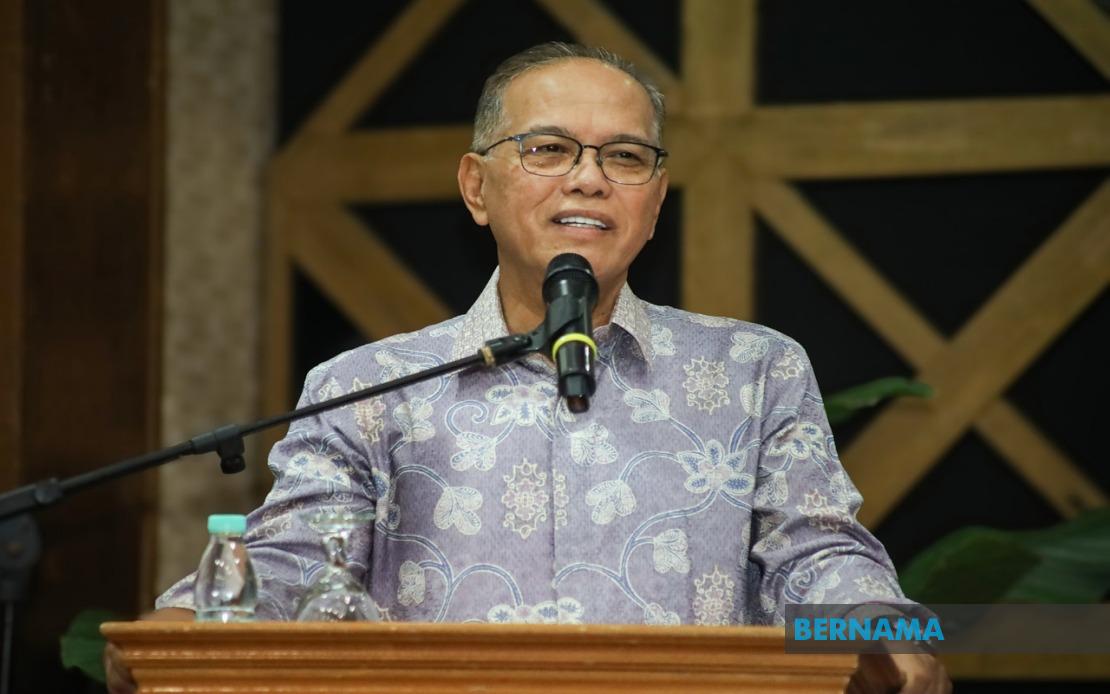
Menteri Besar Datuk Seri Wan Rosdy Wan Ismail has announced that Pahang will channel more than RM5 million during 2024 into expanding and reinforcing its Technical and Vocational Education and Training sector, marking a significant state-level commitment to workforce development in an increasingly competitive regional economy. The funding decision, disclosed during Politeknik Sultan Haji Ahmad Shah's 50th anniversary celebration in Kuantan, reflects the administration's conviction that deliberate human capital investment must precede rather than follow industrial expansion.
The allocated funds are being distributed across several strategic initiatives designed to create a comprehensive TVET ecosystem. Priority areas include physical infrastructure improvements, upgrades to training facilities operated through Pahang Skills and TVET Pahang Talent Development programmes, and construction and development of the Pahang Rail Academy. This multi-pronged approach signals recognition that vocational education requires not only curricular excellence but also modern, properly equipped learning environments that can mirror workplace conditions.
Wan Rosdy articulated a forward-looking philosophy during his address, emphasising that Pahang's strategy diverges from reactive workforce planning. Rather than waiting passively for multinational corporations and manufacturing clusters to announce investment before scrambling to train workers, the state government intends to cultivate a talent pool in anticipation of economic opportunities. This preventative stance acknowledges that when foreign direct investment and industrial projects do materialise—as they increasingly do across Southeast Asia's emerging manufacturing hubs—employers can immediately access graduates with relevant, market-aligned skills rather than endure costly retraining periods.
The Menteri Besar expressed particular confidence in Politeknik Sultan Haji Ahmad Shah as a cornerstone institution within this vision. Established in 1976, POLISAS has graduated 60,000 individuals over nearly five decades, creating an extensive alumni network distributed across Pahang's and Malaysia's broader economy. Wan Rosdy stressed that sustained partnership between government, the polytechnic, and private industry remains essential for narrowing the traditional chasm between classroom instruction and workplace application. He identified industry engagement as a mutual responsibility, suggesting that what students master theoretically must translate into genuine professional competence when they enter employment.
Beyond immediate TVET allocation, Wan Rosdy indicated that Pahang intends to press the federal government for enhanced consideration during Budget 2027 deliberations. His advocacy reflects a geographical reality: Pahang's vast territorial expanse, spanning from the South China Sea coastline through jungle and mountainous interior regions, demands infrastructure investments substantially exceeding those required by smaller, densely-populated states. The Menteri Besar contended that budget justifications should extend beyond traditional infrastructure categories like roads and healthcare facilities to encompass education, economic development, and social welfare programmes that directly impact living standards.
This budgetary positioning carries significance for Malaysian federalism and the broader Southeast Asian context. Pahang, long positioned as a resource-rich but economically peripheral state relative to Klang Valley-centred manufacturing and Kuala Lumpur's services sector, has in recent years pursued deliberate economic diversification. The TVET investment signals recognition that competitive advantage increasingly derives from human capital rather than raw material extraction or geographic proximity to existing economic centres. By developing a skilled workforce proactively, Pahang positions itself to capture manufacturing relocations from China, technology investment seeking lower-cost engineering talent, and regional supply chain developments.
The state government's budgetary intentions, scheduled for tabling in November during the State Legislative Assembly sitting, encompass education, economic development, welfare, infrastructure, and Islamic institutional advancement. Wan Rosdy committed that whatever federal allocations Pahang receives will be directed back to constituents, and that the forthcoming state budget will represent improvement over previous years' expenditure. This formulation, while politically standard, underscores competitive dynamics between Malaysia's states as each administration seeks to demonstrate superior financial stewardship and more effective resource deployment.
From a sectoral perspective, Pahang's TVET emphasis aligns with Skills Minister initiatives and broader regional trends. Vietnam, Thailand, and Indonesia have similarly prioritised vocational education as a counterweight to university degree proliferation that often produces graduates mismatched with employer needs. Malaysia's own Skills Development Fund and various state-level polytechnic systems reflect this continental movement toward practical competency-based education. However, Pahang's explicit commitment through budgetary allocation distinguishes it from rhetorical support offered by some other states.
The investment assumes particular importance given Malaysia's demographic transition. As the workforce growth rate moderates and aging accelerates, productivity gains depend increasingly on worker skills rather than labour quantity expansion. TVET pathways offer alternatives to expensive university education while providing careers offering genuine advancement and middle-class income prospects. For youth populations in Pahang's smaller towns and rural districts, accessible polytechnic programmes with employment linkages represent realistic pathways to prosperity that might otherwise require migration to Klang Valley or Penang.
Industry partnerships, which Wan Rosdy repeatedly emphasised, remain critical to TVET programme success. Manufacturing companies, construction firms, telecommunications operators, and tourism enterprises increasingly participate in curriculum design and provide apprenticeship placements. These arrangements benefit both educational institutions—which gain real-world insight into evolving skill requirements—and employers, who develop relationships with potential recruits and influence training quality. Strengthening such partnerships represents less tangible investment than physical infrastructure, yet proves equally important for ensuring TVET delivers employment rather than credentials.
The Pahang government's multi-year commitment to TVET development, crystallised in the RM5 million allocation and the Menteri Besar's advocacy for enhanced federal support, reflects understanding that state competitiveness depends on attracting and retaining investment through human capital provision. As Southeast Asia's regional economy becomes increasingly integrated through supply chains and cross-border investment flows, states offering skilled, employment-ready workforces gain substantive advantages. Pahang's deliberate positioning in this competitive landscape—developing talent before opportunities arrive—represents a calculated wager that proactive workforce preparation generates superior economic outcomes compared to reactive scrambling following industrial announcements.

