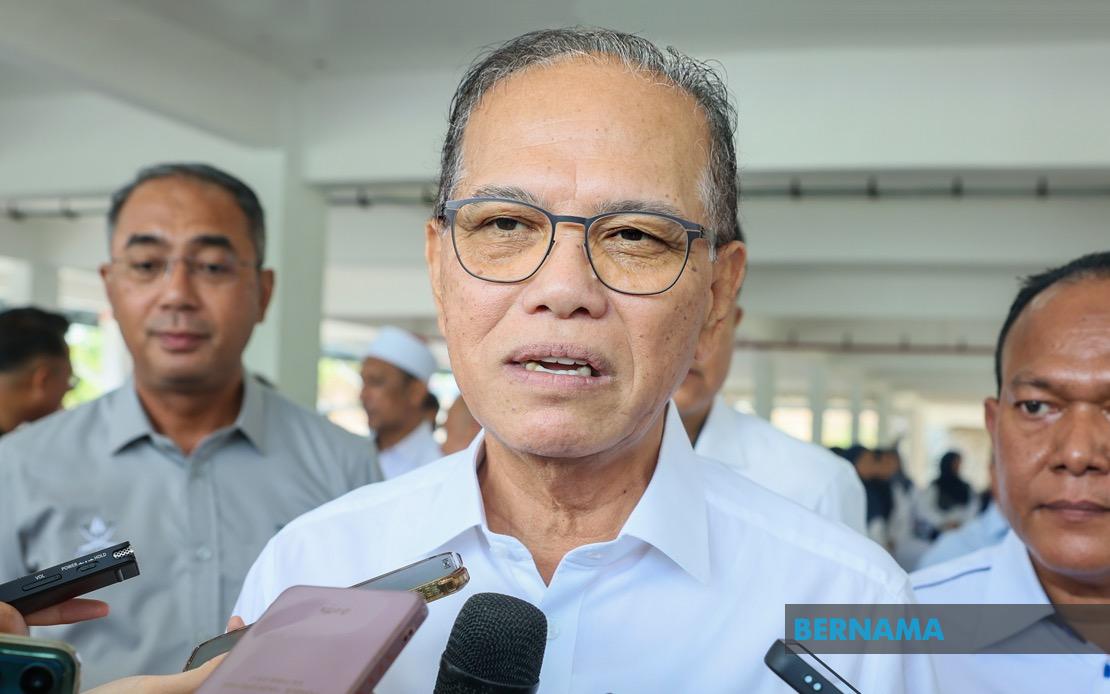
The Pahang state government is making a substantial financial commitment to reshape its sporting landscape, channelling RM3.5 million towards three key disciplines in a deliberate strategy to develop competitive athletes at the grassroots and elite levels. Menteri Besar Datuk Seri Wan Rosdy Wan Ismail announced the allocation during the closing ceremony of the Pahang 1st Netball League Championship at the Pahang Sports Complex on July 5, signalling a coordinated effort to establish the state as a genuine force in Malaysia's national sports arena.
The funding structure reveals distinct prioritisation within Pahang's sporting ambitions. Football receives the lion's share with RM2 million, reflecting the sport's cultural significance and widespread participation base across the state. Netball commands RM1 million, while sepak takraw, a traditional Southeast Asian sport with deep cultural roots, secures RM500,000. The allocation underscores a pragmatic approach: investing most heavily in the sport with the broadest appeal and highest visibility, whilst maintaining support for niche disciplines that command passionate followings and international competitive opportunities.
Wan Rosdy articulated a vision extending beyond immediate success, emphasising the importance of building sustainable development pathways from community level upward. He stressed that programme implementation must demonstrate seriousness and commitment, cautioning against superficial or half-hearted efforts that waste resources without producing results. This rhetorical framing suggests the Pahang government recognises that sports development requires structured, long-term investment rather than sporadic or symbolic spending.
The state's ambitious positioning becomes clearer when contextualised within Malaysia's competitive sporting hierarchy. Pahang historically has not dominated national championships across multiple disciplines, unlike states such as Selangor, Perak, and Sabah that have established strong traditions in various sports. By explicitly aiming to place Pahang "on par with other states that have long dominated the national sports arena," the government is essentially declaring an intention to narrow competitive gaps and challenge the established order. This requires not only financial resources but systematic talent identification, coaching excellence, and infrastructure development.
The netball investment carries particular strategic significance, especially given immediate expansion plans. The state government has already agreed to increase netball funding by RM500,000 next year, bringing the total to RM1.5 million. This escalation suggests confidence in netball's trajectory and recognition of the sport's growing competitiveness. For a sport dominated historically by states with longer institutional histories, Pahang's growing commitment reflects either promising recent performance or deliberate market positioning to capitalise on emerging competitive opportunities at regional and national levels.
Beyond athletic performance, Wan Rosdy articulated a broader social purpose for sports investment. He framed sports development as an essential platform for fostering unity, cooperation, and discipline across diverse communities regardless of socioeconomic or ethnic background. This rationale transcends trophy-chasing and appeals to the state government's broader governance objectives. Sports serve as a cultural vehicle for integration and social cohesion, particularly valuable in a multiethnic state context where shared sporting experiences can strengthen communal bonds.
The Pahang 1st Netball League Championship itself demonstrated the vibrancy of the state's sporting ecosystem, attracting forty-two participating teams and thereby creating a competitive environment essential for talent development. Semambu's championship victory and RM10,000 prize purse exemplified competitive stakes that motivate excellence. Large-scale league participation at state level creates the foundational pyramid upon which elite athletes emerge, making such grassroots championship structures invaluable investments alongside direct athlete and coaching support.
For Malaysian sports observers, Pahang's initiative reflects a broader national trend of state governments increasingly viewing sports development as a legitimate governance investment and marker of state identity. This follows the logic employed by successful sporting states that have built competitive advantages through sustained funding and institutional commitment. Pahang's explicit benchmarking against established states suggests healthy competitive dynamics within Malaysian sports federations and administrative structures.
The football allocation warrants particular attention given the sport's dominance in Malaysian sporting culture and the high visibility that football success generates. A RM2 million annual commitment provides meaningful resources for developing youth academies, coaching staff development, and competitive participation in leagues and tournaments. However, Malaysian football observers will note that RM2 million, whilst substantial at state level, remains modest compared to professional league investments or international club spending, suggesting this funding targets semi-professional and youth development rather than attempting to establish elite professional franchises.
Sepak takraw's inclusion deserves recognition as a deliberate preservation of Southeast Asian sporting heritage. The sport commands passionate followings throughout Malaysia and broader Southeast Asia, with established international championship structures. By allocating dedicated resources to sepak takraw development, Pahang positions itself as a custodian of regional sporting traditions whilst simultaneously pursuing medal opportunities at Southeast Asian Games and world championships where the sport features prominently.
The timing of this allocation announcement carries political implications worth noting. State government sporting investments frequently feature prominently in public communications as visible demonstrations of development prioritisation and governance competence. By presenting organised, substantial sporting investments during high-profile championship events, Wan Rosdy's administration signals administrative capability and forward planning to Pahang constituents.
Implementation will ultimately determine whether this allocation achieves stated objectives. Sports development requires not merely funding but institutional capacity to deploy resources effectively. Coaching quality, facility standards, talent identification methodologies, and competitive opportunity structures all determine whether allocated funds translate into athletes capable of delivering national success. Pahang's government will face scrutiny regarding how effectively these resources are managed and whether competitive improvements materialise within reasonable timeframes.
This initiative positions Pahang within Malaysia's evolving sports federalism, where state governments increasingly function as important drivers of athletic development and national competitiveness. As Malaysian sports stakeholders monitor implementation over coming years, Pahang's investment in football, netball, and sepak takraw will serve as a test case for whether substantial but not overwhelming funding allocations can meaningfully improve a state's competitive standing in Malaysia's multi-disciplinary sporting landscape.

