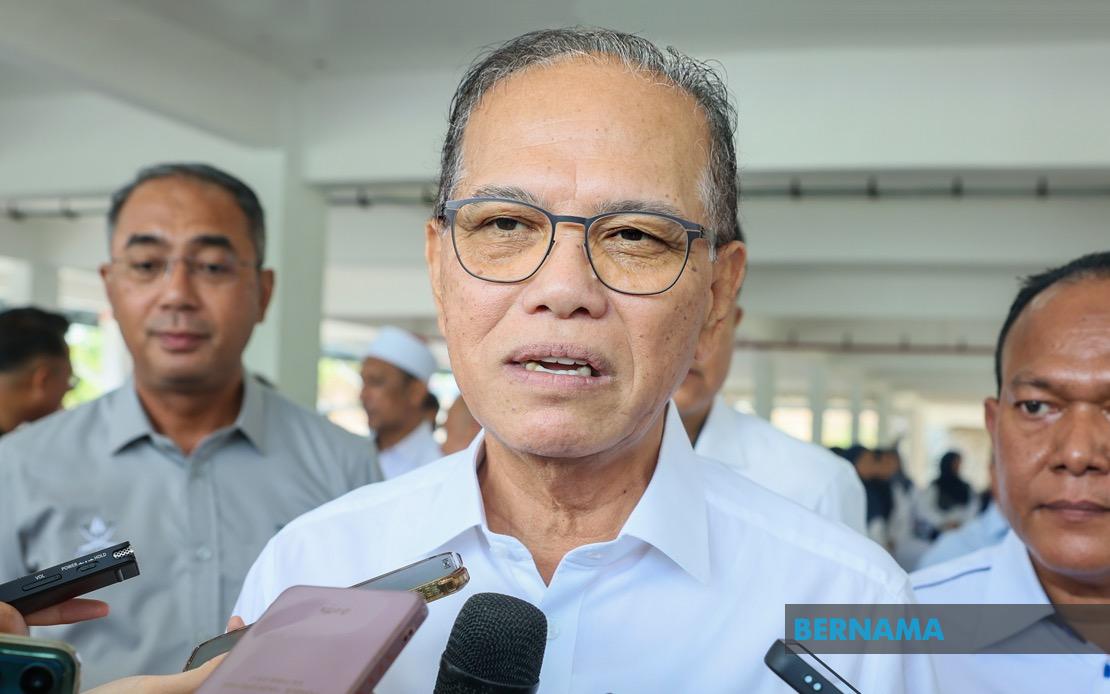
Datuk Seri Wan Rosdy Wan Ismail, Pahang's Menteri Besar, has made a passionate call for Orang Asli youths across the state to pursue Technical and Vocational Education and Training (TVET) and higher education opportunities as a means to unlock better employment prospects and tackle the persistent challenge of school dropouts within their communities. His remarks came during a convocation ceremony at the Sultan Haji Ahmad Shah Silver Jubilee Hall in Kuantan, where he emphasized the critical importance of equipping young Orang Asli with marketable skills in an increasingly competitive economy.
The Menteri Besar's intervention underscores a growing recognition among Malaysian policymakers that the Orang Asli population, numbering approximately 90,000 in Pahang alone, faces systemic barriers to educational advancement and economic mobility. High dropout rates among indigenous youth have long been documented as a significant socioeconomic challenge, perpetuating cycles of poverty and limiting access to formal employment. By championing TVET as a legitimate and valuable educational pathway, Wan Rosdy is attempting to reframe vocational training from a secondary option into a gateway for genuine career advancement and entrepreneurial opportunity.
During the ceremony celebrating 388 graduates from YP Advanced Skills' various programmes, the Menteri Besar articulated a vision in which skilled Orang Asli individuals would return to their villages as living examples of success. This multiplier effect strategy relies on peer influence and community role models to motivate younger generations to remain engaged with formal education systems. The mechanism is rooted in the recognition that indigenous communities often lack visible local examples of educational achievement, making aspirational messaging from within-community graduates particularly potent in driving behavioural change among youth.
Wan Rosdy's emphasis on the modern relevance of skills training reflects a broader shift in how Malaysia's leadership conceptualizes educational pathways. Skills qualifications, he argued, are no longer subordinate to traditional academic credentials but rather represent a pragmatic and increasingly necessary avenue for securing stable livelihoods. This messaging carries particular weight in addressing the skepticism some Orang Asli families harbor toward mainstream education institutions, which historically have not adequately served or culturally affirmed indigenous learners.
The YP Advanced Skills convocation itself demonstrated the tangible outcomes of vocational education, with the institution successfully producing graduates characterized by strong work ethic and high employability metrics. These employment outcomes are crucial marketing points for institutions seeking to attract indigenous students who must often convince parents and families that investing time in education will yield concrete economic returns. Employment readiness, in this context, becomes a critical differentiator between conventional education and skills training programmes.
Wan Rosdy further encouraged graduates to pursue continuing education whenever feasible, recognizing that combining technical skills with additional qualifications creates compounding career advantages. This stratified approach to education—beginning with foundational TVET credentials and progressively building toward advanced qualifications—offers a practical pathway for students from disadvantaged backgrounds who might struggle with the financial demands or academic prerequisites of purely academic higher education programmes. It democratizes access to professional advancement.
The Menteri Besar also highlighted the dual pathways available to skills graduates: entrepreneurship or formal employment. This distinction matters considerably for Orang Asli communities, where self-employment and small-scale business activities have historically provided economic sustenance. By positioning skills training as preparation for either path, policymakers acknowledge the diverse economic realities and aspirations within indigenous populations, moving beyond a narrow employment-focused narrative.
YP Advanced Skills' success in producing graduates with both technical competence and strong character suggests that effective vocational institutions address not only job-specific training but also broader personal development. For Orang Asli youth particularly, this holistic approach may help overcome social barriers and discrimination they face in mainstream labour markets, equipping them with both credentials and confidence necessary for labour market participation.
The Pahang initiative reflects a recognition that addressing Orang Asli educational disparities requires targeted strategies calibrated to community needs and circumstances. Unlike mainstream populations with established educational infrastructure and social networks supporting university pathways, indigenous youth benefit from specialized programmes offering culturally appropriate training, flexible scheduling that accommodates economic realities, and clear employment linkages. TVET providers serving Orang Asli communities increasingly position themselves as understanding these unique constraints.
However, the success of this educational expansion ultimately depends on complementary interventions addressing downstream employment discrimination and ensuring that Orang Asli graduates encounter equitable hiring practices. Skills training alone cannot overcome systemic barriers in the job market. Employers across Malaysia must actively participate in recruitment initiatives targeting indigenous graduates, moving beyond rhetoric to substantive workforce diversity commitments.
Wan Rosdy's convocation address signals Pahang's commitment to treating Orang Asli educational advancement as a governance priority, elevating the issue to ministerial level and attaching state government prestige to TVET promotion. Whether this political endorsement translates into sustained resource allocation, curriculum improvements, and employer engagement remains to be seen, but the messaging undoubtedly chips away at the stigma that has historically surrounded vocational education within Malaysian society.
For Southeast Asia broadly, the Pahang model offers lessons in disaggregated approaches to education policy. Indigenous and marginalized populations across the region face similar educational challenges, and evidence that TVET can meaningfully address dropout rates and employment prospects holds relevance for policymakers across Thailand, Vietnam, and Cambodia. Malaysia's willingness to experiment with indigenous-focused education pathways may inform regional conversations about inclusive economic development and educational equity.

