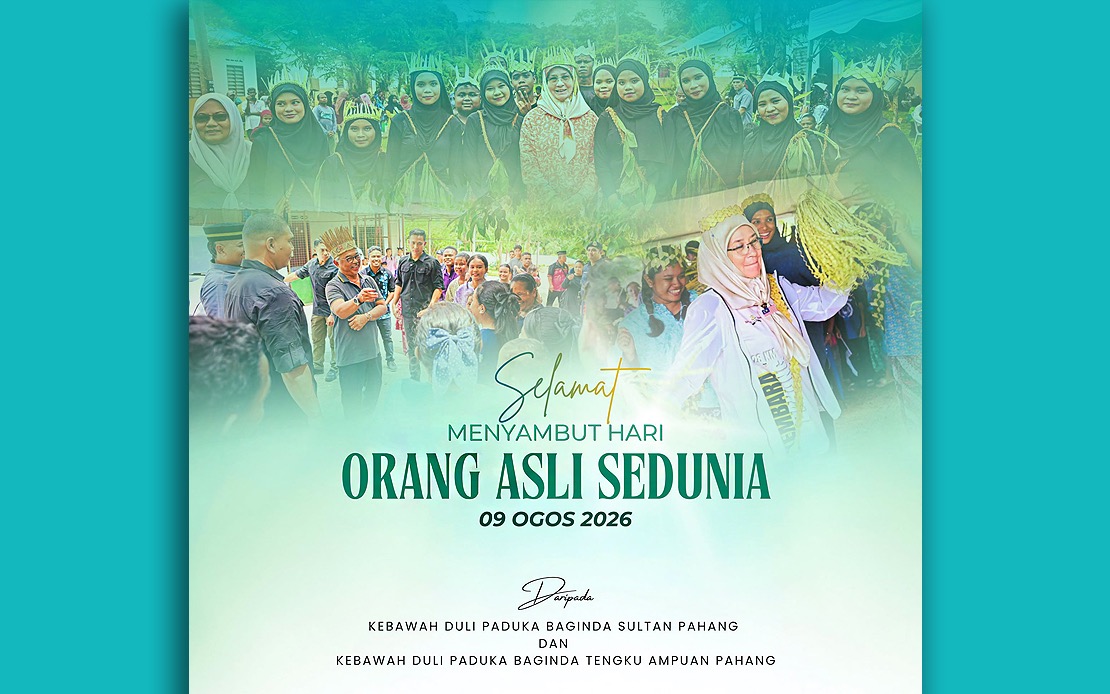
Sultan Al-Sultan Abdullah Ri'ayatuddin Al-Mustafa Billah Shah and Tengku Ampuan Pahang Tunku Azizah Aminah Maimunah Iskandariah have issued a formal statement recognising the Orang Asli community's profound contributions to preserving and enriching Pahang's cultural tapestry. The royal acknowledgement, shared via the Kesultanan Pahang's official social media channels, represents a significant affirmation of indigenous peoples' role in shaping the state's identity and heritage landscape.
At the heart of their message lies a call for tangible progress in supporting Orang Asli communities. Rather than offering symbolic recognition alone, the royal couple has emphasised the need for expanded opportunities that would meaningfully improve living standards across multiple dimensions. This approach signals that appreciation for cultural contributions must translate into concrete action addressing systemic inequalities that indigenous populations continue to face in Malaysia.
Education emerges as a cornerstone priority in the royal statement. The Sultan and Tengku Ampuan have specifically highlighted the necessity of enhancing educational access and quality for Orang Asli children and young people. In a nation where educational disparities often correlate with geographic remoteness and socioeconomic disadvantage, this explicit focus underscores recognition that knowledge advancement remains fundamental to breaking cycles of marginalisation that have historically constrained indigenous communities.
Economic development constitutes the second pillar of their outlined vision. The royal family's emphasis on creating economic opportunities reflects an understanding that cultural preservation cannot be sustained in isolation from material wellbeing. Indigenous communities require pathways to sustainable livelihoods that respect their traditional knowledge systems while providing access to modern economic participation—a balance that requires deliberate policy design and investment.
Skills training and human capital development feature prominently in the royal messaging. This terminology acknowledges that Orang Asli populations possess inherent capabilities and potential that requires cultivation through targeted programmes. By framing development in terms of skills and human capital rather than charity or welfare, the statement positions indigenous communities as agents of their own progress rather than passive recipients of governmental benevolence.
Crucially, the royal statement establishes a protective framework around Orang Asli cultural identity. The emphasis that "their identity, customs and heritage, which are central to their cultural identity, are not overlooked" represents an important safeguard against assimilationist development approaches that have historically eroded indigenous distinctiveness. This conditional framing—that development must occur without sacrificing cultural essence—reflects contemporary understanding of indigenous rights principles.
The timing of this statement, issued in conjunction with commemorations of the 2026 International Day of the World's Indigenous Peoples, connects Pahang's royal leadership to global indigenous advocacy movements. Malaysia's participation in international indigenous recognition frameworks carries significance for how the nation positions itself regarding minority rights and cultural pluralism, particularly as Southeast Asian countries navigate balancing national cohesion with respect for ethnic and cultural diversity.
For Pahang specifically, this royal endorsement carries substantial political weight. As the constitutional monarchy of one of Malaysia's largest states, the Sultan's voice carries considerable influence within state governance, particularly regarding cultural and social policy priorities. Royal statements on indigenous affairs can shape resource allocation debates and influence how state institutions approach programmes targeting Orang Asli populations.
The call for "unity, respect and cooperation" that concludes the royal message addresses broader societal relationships. By invoking these values explicitly in connection with indigenous communities, the Sultan and Tengku Ampuan are encouraging non-indigenous Pahang residents to view indigenous peoples not as peripheral populations requiring management, but as integral community members whose prosperity contributes to collective state wellbeing. This reframing carries implications for social cohesion and intercommunal relations beyond Pahang's borders.
For Malaysian policymakers, this high-level royal attention to indigenous affairs presents both opportunity and expectation. State governments and federal agencies now face implicit pressure to demonstrate tangible progress on education, economic development, and skills training initiatives serving Orang Asli communities. The specificity of the royal statement—identifying particular policy domains rather than offering vague platitudes—establishes benchmarks against which governmental performance can be measured.
Regionally, Pahang's royal family positioning on indigenous rights contributes to Malaysia's broader standing within Southeast Asia on minority protection issues. As other regional monarchies and governments increasingly address indigenous and minority concerns, Malaysia's approach influences how international observers assess the country's commitment to inclusive development and cultural respect.
The statement also implicitly acknowledges historical complexities surrounding Orang Asli marginalisation within Malaysian society. By explicitly calling for preservation of heritage and culture as "shared legacy," the royal message rejects narratives that position indigenous traditions as obstacles to modernisation, instead casting them as valuable resources benefiting the entire state. This ideological repositioning, though symbolic, carries potential to shift public discourse around indigenous peoples from framing them as problems requiring solutions toward recognising them as contributors with distinctive knowledge and cultural assets worthy of protection and celebration.

