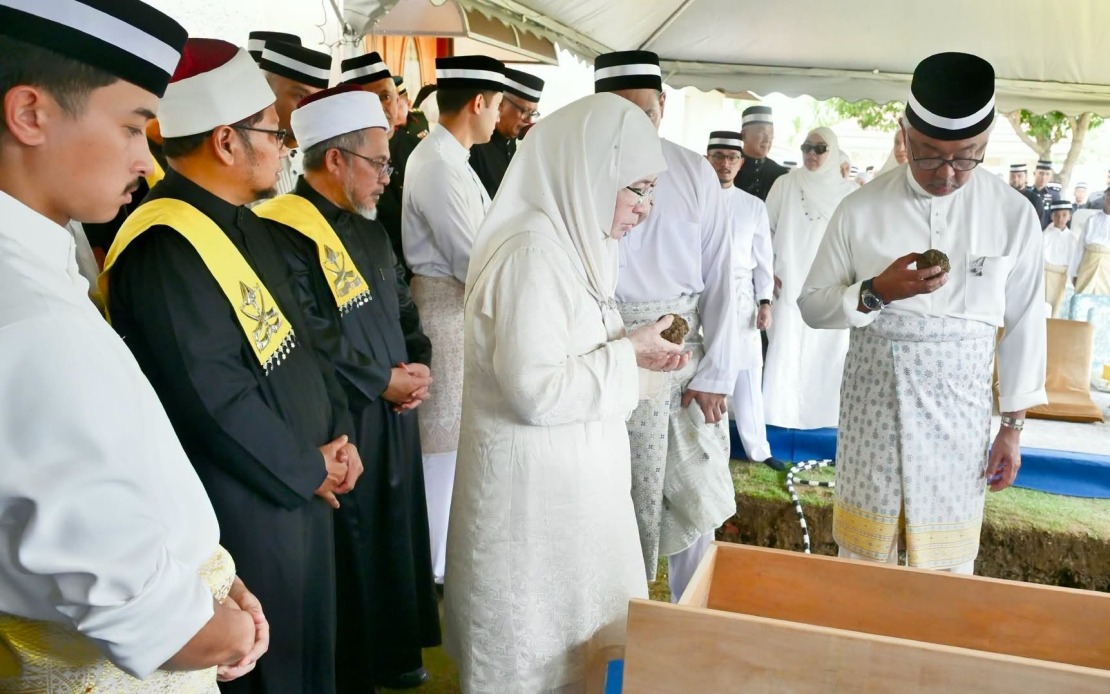
The Sultan of Pahang, Al-Sultan Abdullah Ri'ayatuddin Al-Mustafa Billah Shah, has directed members of the Pahang royal household to observe three days of formal mourning in the wake of his elder sister's passing. Tengku Puteri Seri Kemala Tengku Datuk Seri Aishah, whose death represents a significant loss to one of Malaysia's oldest sultanates, died at a Kuala Lumpur hospital on Wednesday evening at 9.15 pm. Her remains were subsequently interred at the Royal Mausoleum in Pekan on the same day.
The mourning directive, announced through Comptroller of the Royal Household of the Sultan of Pahang Maj Gen Datuk Mohamed Zahari Yahya, commenced on Wednesday and will extend through Saturday. During this period, members of the royal family are bound by protocol to dress in white, a significant departure from the colourful regalia typically associated with royal occasions in Malaysia. Male members of the household face additional requirements, including the observance of specific dress codes befitting the solemnity of the occasion.
The loss of Tengku Puteri carries particular weight for Al-Sultan Abdullah and his consort, Tengku Ampuan of Pahang Tunku Azizah Aminah Maimunah Iskandariah. As the Sultan's elder sister, she held a respected position within the principality's royal hierarchy and was recognised as an integral figure in the royal family's affairs. Her death represents not merely a family bereavement but also a symbolic moment for the Pahang sultanate, one of the longest-established monarchical institutions in Malaysia with roots extending back centuries.
Maj Gen Datuk Mohamed Zahari Yahya's official statement emphasised that the three-day observance was intended to afford the royal family an opportunity to grieve collectively whilst maintaining the dignified protocols expected of Malaysia's royal houses. The prescribed white attire serves both as a visible symbol of mourning and as a means of focusing public attention on the significance of the occasion.
Beyond the immediate royal household, the Comptroller extended an invitation to the broader Pahang population to participate in the mourning observance through spiritual means. Members of the public have been encouraged to recite Al-Fatihah, a foundational chapter of the Quran commonly recited during Islamic funeral observances, and to offer prayers on behalf of the deceased. This inclusive approach reflects the traditional role of Malaysian royal families as spiritual and cultural custodians of their respective states.
The request for public prayers underscores a key dimension of Malaysian royal culture—the intertwining of the sultanate's ceremonial functions with the religious practices of Islam. By inviting the Pahang population to pray for Tengku Puteri's soul to receive forgiveness, mercy, and a place in paradise, the royal household positioned the mourning period as a shared spiritual exercise rather than a purely private family matter.
The circumstances surrounding Tengku Puteri's death, whilst not elaborated upon in official statements, have prompted reflection on the mortality of members of Malaysia's royal families. The Pahang sultanate, as one of Malaysia's nine hereditary monarchies, operates within a carefully maintained system of succession and protocol that guides not only matters of governance but also family observances such as this one. The death of a senior family member carries implications for both the symbolic functions the sultanate performs and the internal dynamics of the royal household.
The three-day mourning period represents a compressed but significant observance by Malaysian royal standards. Whilst prolonged mourning practices characterised certain historical periods in the sultanates, contemporary royal protocols tend to balance traditional Islamic observances with modern state functions. The Pahang court's decision to establish a clearly demarcated three-day window reflects this contemporary approach whilst ensuring adequate recognition of the deceased's standing.
Tengku Puteri's burial in the Royal Mausoleum in Pekan, the state capital, confirmed her position within the hierarchy of Pahang's most prominent figures. The mausoleum serves as the final resting place for members of the Pahang royal family of particular significance and historical importance. Her interment there places her amongst other notable figures from the sultanate's history, ensuring that her memory remains connected to Pahang's institutional continuity.
For Malaysian readers observing these developments from outside Pahang, the royal mourning period offers insight into how Malaysia's sultanates maintain cultural continuity and ceremonial dignity during moments of loss. The protocols observed by the Pahang royal household reflect traditions that span multiple sultanates across Malaysia, demonstrating the consistency of these practices across the nation's federal structure.
The Comptroller's statement, whilst formal in tone, conveyed a sense of the personal impact on the Sultan and his family. By explicitly naming Tengku Ampuan Tunku Azizah Aminah Maimunah Iskandariah alongside Al-Sultan Abdullah, the announcement recognised the conjugal grief whilst affirming the resilience and continuity of the sultanate's institutional functions. Even as the royal household observed mourning, the underlying implication remained that the machinery of state governance would continue uninterrupted.
Looking forward, the completion of the three-day mourning period will mark a transition point for the Pahang royal family, one that maintains respect for Tengku Puteri's memory whilst allowing the sultanate to return to its ordinary ceremonial and administrative rhythms. The observance itself, however modest in duration compared to historical precedents, demonstrates the enduring significance of ritual and protocol in Malaysia's federal monarchy system.

