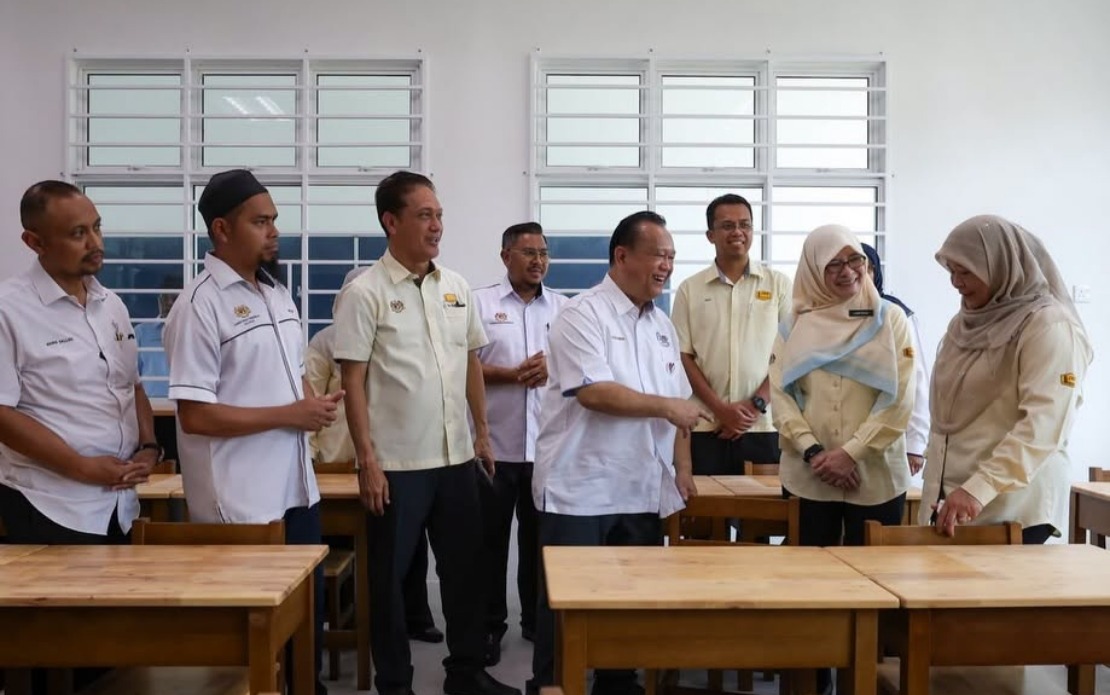
The reconstruction of a severely deteriorated building at Sekolah Kebangsaan FELDA Kota Gelanggi 1 in Jerantut has been handed over to the school administration following completion nearly a year before the scheduled deadline, delivering improved educational infrastructure to its student population. Works Minister Datuk Seri Alexander Nanta Linggi announced the milestone during a handover ceremony, underscoring the project's efficiency and its contribution to enhancing the learning environment for the institution's pupils.
Commencing on 13 January last year, the RM7.998 million initiative reached full completion on 26 June, substantially outpacing the originally projected delivery date of 2 May 2027. This represents a significant achievement of more than 300 days of acceleration, accomplished without requiring any extension of time from the original contractual arrangements. Nanta characterised the delivery timeline as reflective of sound project management and effective implementation practices within Malaysia's government infrastructure programme.
The reconstruction scope encompassed the development of a new academic block containing three classrooms dedicated to general instruction, a dedicated science laboratory, and a comprehensive health facility to address pupil wellness requirements. Complementing these additions, contractors also constructed a Special Education Integration Programme block—referred to locally as PPKI—furnished with specialised resources and infrastructure tailored for students with diverse learning and developmental needs. This dual-purpose approach reflects contemporary educational standards that increasingly emphasise inclusive learning environments within mainstream school settings.
Approximately 17 pupils currently enrolled at the institution who require specialised educational support are positioned to benefit substantially from the new facilities, which include adapted learning spaces, therapeutic resources, and equipment specifically designed for their requirements. The integration of special needs provision within the main school campus rather than through isolated programmes represents an important shift toward inclusive education philosophy, enabling these students to participate more fully in the school community whilst receiving targeted support tailored to their circumstances.
The Jerantut project forms part of a broader maintenance and renewal initiative across Pahang addressing multiple educational institutions where building stock had deteriorated beyond acceptable standards. Nanta indicated that additional similar projects targeting other dilapidated school structures across the state remain actively under implementation, expressing confidence that these too would demonstrate comparable acceleration in completion timelines. The sequential approach to addressing infrastructure deficits suggests a systematic methodology for identifying and prioritising facilities requiring urgent intervention.
During his remarks, Nanta issued directives to contracting partners emphasising the necessity for prompt and thorough resolution of any construction defects identified during the defect liability period—the contractually defined window during which contractors remain responsible for rectifying identified faults. This oversight mechanism serves to protect public assets and ensure that facilities deliver the intended functionality and durability over their intended lifespan. Such stipulations reflect increasing emphasis on accountability within government procurement frameworks.
The Public Works Department has been tasked with sustained post-handover monitoring responsibilities designed to verify that all installed systems, structures, and amenities maintain required safety standards, remain in serviceable condition, and continue meeting the technical specifications established during project conception. This ongoing surveillance function extends beyond the initial handover ceremony, recognising that sustainable asset management requires continuous attention to maintenance needs and potential deterioration that may emerge following occupancy. The emphasis on departmental oversight demonstrates recognition that initial completion represents commencement rather than conclusion of lifecycle management responsibilities.
For Jerantut's educational community, the project completion delivers tangible improvements to learning conditions that had been constrained by physical infrastructure limitations. Students previously accommodated in ageing structures now have access to contemporary educational spaces with improved lighting, ventilation, and environmental controls conducive to concentration and engagement. The dedicated science facilities enable more comprehensive practical learning opportunities, whilst the health room addresses on-campus wellness requirements that previously necessitated external referrals.
The successful delivery of this project against an accelerated timeline offers instructive lessons for Malaysia's broader school improvement agenda, particularly across rural and semi-rural districts where infrastructure deficits remain pronounced. Early completion without quality compromise suggests that appropriately selected contractors, clear accountability frameworks, and effective project oversight can realistically achieve efficiency gains beyond conventional industry expectations. For education planners and administrators across Southeast Asia facing similar infrastructure challenges, the Jerantut experience provides evidence that determined resource allocation combined with robust management can meaningfully expedite facility upgrades that directly enhance educational delivery capacity and student wellbeing.

