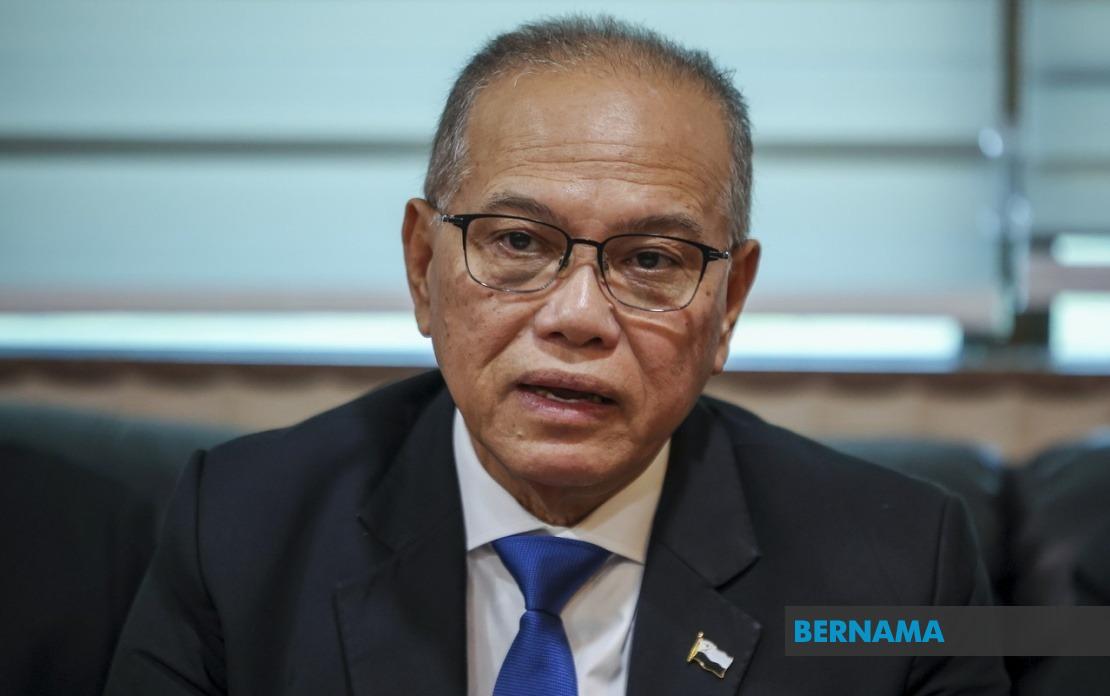
Pahang's fiscal position continues to strengthen, with the state government accumulating RM921.72 million in revenue collections by August 26, placing the east coast state firmly on course to surpass its annual revenue targets. Menteri Besar Datuk Seri Wan Rosdy Wan Ismail disclosed the encouraging financial performance during the state legislative assembly sitting at Wisma Sri Pahang in Kuantan, positioning the achievement as a testament to the administration's prudent fiscal management and steady revenue generation across various economic sectors.
The collected sum represents 72 per cent of Pahang's total state revenue target of RM1.279 billion for 2026, suggesting the state needs only to secure an additional RM357.28 million over the remaining months to achieve its objective. This substantial progress indicates that current revenue streams—likely derived from taxation, land revenues, licensing fees, and other government charges—are flowing at a sustainable pace. For Malaysian observers, Pahang's trajectory offers an instructive comparison point, as the state's ability to maintain consistent revenue growth reflects both effective tax administration and the underlying vitality of its economic base.
The strong revenue collection backdrop aligns with Pahang's broader macroeconomic momentum. The state's Gross Domestic Product expanded from RM68.8 billion in the preceding year to RM71 billion in 2025, demonstrating resilience in manufacturing, agriculture, tourism, and services sectors that characterise the eastern seaboard economy. This three per cent expansion, while modest in global terms, signals steady productivity gains and continued investor confidence in the state's business environment, particularly significant given regional economic uncertainties affecting Southeast Asian growth trajectories.
Pahang's investment landscape presents another dimension of economic strength. The state government has recorded RM11.47 billion in committed investments as of August 2026, reflecting corporate and government pledges to develop projects ranging from industrial parks to agricultural modernisation initiatives. More tangibly, realised investments—those that have actually materialised and begun generating economic activity—reached RM1.044 billion, indicating substantial capital deployment into productive ventures. The gap between committed and realised investments suggests a healthy pipeline of future projects awaiting implementation, potentially driving employment creation and tax revenue expansion in subsequent years.
The financial stability achieved through robust revenue and investment performance has enabled the Pahang state government to expand direct assistance programmes to constituents. This fiscal flexibility represents a critical benefit for households across the state, particularly in rural communities where government transfers often constitute a substantial income source. By translating economic growth into tangible welfare benefits, the administration demonstrates how development gains can be distributed beyond corporate profits and government coffers, addressing the income expectations of ordinary citizens who form the electorate.
Central to the government's distribution strategy is the Makmur Pahang Initiative, a comprehensive programme designed to deliver prosperity benefits across the state. Between 2024 and 2026, the initiative has been allocated RM173.93 million, reflecting the government's commitment to sustained development spending despite inevitable budget constraints. The allocation progression reveals increasing emphasis, with RM38.8 million deployed in 2024, RM50.54 million in 2025, and a significant jump to RM84.59 million in 2026. This escalating investment pattern suggests either enhanced programme scope, expanded geographic coverage, or increased unit allocations per beneficiary, each outcome indicating intensifying government engagement with development objectives.
The Makmur Pahang Initiative encompasses diverse policy domains, likely including infrastructure improvements, skills training, entrepreneurship support, and direct cash assistance targeted at vulnerable populations. For regional observers, such programmes reflect a broader Southeast Asian trend toward state-directed welfare mechanisms that complement market mechanisms in addressing income inequality and regional development disparities. The substantial allocation increase planned for subsequent years signals political commitment to maintaining constituency support, particularly important in Malaysia's competitive electoral environment where state governments must demonstrate tangible delivery to retain public confidence.
Looking ahead, Pahang's government has signalled intentions to further expand the Makmur Pahang Initiative allocation through the upcoming state budget, suggesting that development spending will continue accelerating. This forward commitment, contingent upon maintaining current revenue collection trajectories, reflects confidence in sustained economic performance and political determination to prioritise direct benefit distribution. The initiative thus becomes a bellwether for state government priorities, with budget allocations serving as concrete measures of executive commitment to welfare objectives beyond mere rhetoric.
The financial dynamics outlined by Menteri Besar Wan Rosdy occur within Malaysia's broader federal structure, where state governments compete for investor attention and resident loyalty. Pahang's demonstrated revenue strength and investment attraction position it competitively within the federation, particularly relative to other non-oil producing states that lack petroleum revenue windfalls. The state's economic diversification, evident in its multi-sector GDP composition, reduces vulnerability to commodity price fluctuations that historically buffeted Malaysian regional economies, conferring longer-term stability advantages.
Moreover, Pahang's fiscal performance carries implications for federal-state financial relations. States that generate substantial independent revenue face different intergovernmental dynamics than those dependent primarily on federal transfers. Enhanced revenue generation capacity theoretically expands state autonomy in budgetary priorities, though federal tax policies and transfer mechanisms ultimately constrain fiscal independence. Pahang's progress toward revenue targets thus reflects not merely administrative efficiency but also the state government's policy framework and regulatory environment that shapes economic activity generating the revenue base.
For Malaysian investors and business communities, the state's revenue and investment statistics offer reassurance regarding institutional stability and forward growth trajectories. Governments that successfully collect forecast revenues typically maintain credibility with suppliers, contractors, and employees, facilitating operational reliability necessary for sustained economic activity. Conversely, revenue shortfalls often presage reduced development spending, delayed payments, and administrative disruptions that discourage investment and employment expansion.
The Pahang state government's financial position, as articulated through August collections and year-to-date achievements, demonstrates that the state's macroeconomic foundations remain sound despite regional uncertainties. The continuation of this performance depends upon maintaining investor confidence, sustaining productivity levels across key economic sectors, and effectively implementing development projects that translate committed investments into operational capacity. These interdependencies suggest that Pahang's fiscal trajectory, while currently positive, requires sustained attention to economic fundamentals and strategic sector development priorities that underpin future revenue and investment growth.

