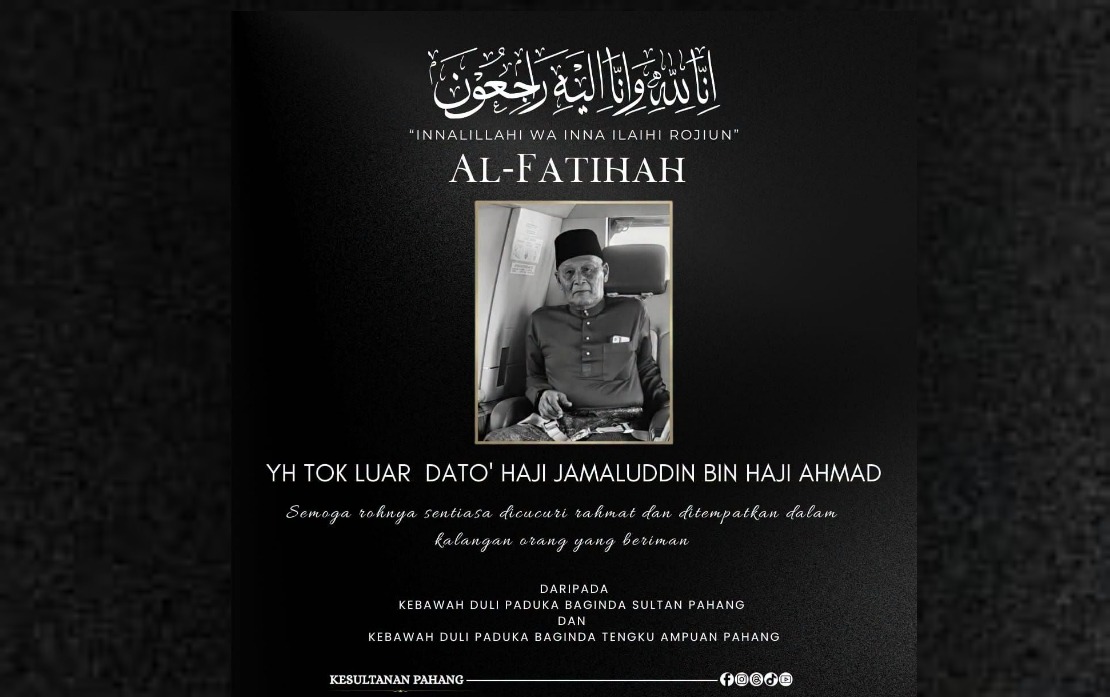
The Sultan of Pahang Al-Sultan Abdullah Ri'ayatuddin Al-Mustafa Billah Shah and Tengku Ampuan of Pahang Tunku Azizah Aminah Maimunah Iskandariah have conveyed their sympathies following the passing of Tok Luar Datuk Jamaluddin Ahmad, who died on Thursday morning at Tengku Ampuan Afzan Hospital in Kuantan.
In a statement released through the official Kesultanan Pahang Facebook page, the royal couple expressed profound sorrow at his death and paid tribute to his dedication to the Pahang Sultanate institution over the years. The expression of royal condolences underscores the significance of his role within the state's administrative and cultural framework, reflecting the deep connections that often exist between the palace and senior figures in the state apparatus.
According to the palace statement, Their Royal Highnesses offered prayers on behalf of the deceased and his bereaved family. The formal pronouncement sought divine mercy upon his soul, forgiveness for his earthly transgressions, acceptance of his righteous deeds, and his placement among Allah's faithful and virtuous servants. Such spiritual acknowledgments form an integral part of Islamic tradition and demonstrate the royal family's adherence to religious protocols in times of loss.
Tok Luar Datuk Jamaluddin Ahmad breathed his last at 6:48 am on the morning of June 28, succumbing at the state's premier medical facility. While specific details regarding the cause of death were not disclosed in the royal statement, his passing at Tengku Ampuan Afzan Hospital, one of Pahang's most significant healthcare institutions, reflects both the gravity of his condition and the respect accorded to his status within the community.
Beyond immediate condolences, the Sultan and Tengku Ampuan extended heartfelt wishes to Jamaluddin's immediate family members during this period of bereavement. The royal couple prayed that Allah would grant his relatives the emotional fortitude, inner resilience, and spiritual patience necessary to navigate the profound grief accompanying such a loss. This aspect of the condolence message highlights the royal family's recognition of the emotional toll that such deaths exact on families and their commitment to offering emotional and spiritual support.
The palace reiterated its prayers for divine compassion toward the deceased's soul and his ultimate elevation among the righteous in the afterlife. The concluding invocation of Al-Fatihah, the opening chapter of the Quran often recited for the deceased in Islamic tradition, serves as a profound spiritual gesture and demonstrates the religious solemnity with which the royal household approaches matters of mortality and the hereafter.
In Malaysian society, expressions of condolence from the royal family carry particular weight and significance. Such formal acknowledgments serve multiple functions beyond mere sentiment, including affirming the deceased's contributions to state institutions, honoring their legacy, and demonstrating the continuity of institutional memory. For families experiencing loss, receiving royal recognition provides not only spiritual comfort but also public validation of their loved one's importance and standing within society.
The timing and manner of royal condolences, particularly those issued through official palace social media channels, reflect contemporary practices of formal communication while maintaining traditional dignity. This modern approach to disseminating official statements ensures rapid and widespread dissemination while preserving the ceremonial gravity appropriate to such occasions.
Tok Luar Datuk Jamaluddin Ahmad's characterization as a loyal supporter of the Pahang Sultanate institution suggests a career dedicated to service within the state's governance structure. Such roles typically involve advising the ruler on matters of state, maintaining ceremonial duties, and serving as a liaison between the palace and government apparatus. His described loyalty over what was presumably an extended period indicates a lifetime of institutional commitment.
The passing of long-serving state figures often prompts reflection on institutional continuity and succession planning within Malaysia's monarchy and administrative systems. As Pahang navigates the transition following Jamaluddin's death, questions may emerge regarding the mechanisms through which such senior advisory positions are filled and how institutional knowledge is transferred to successive generations of state officials.

