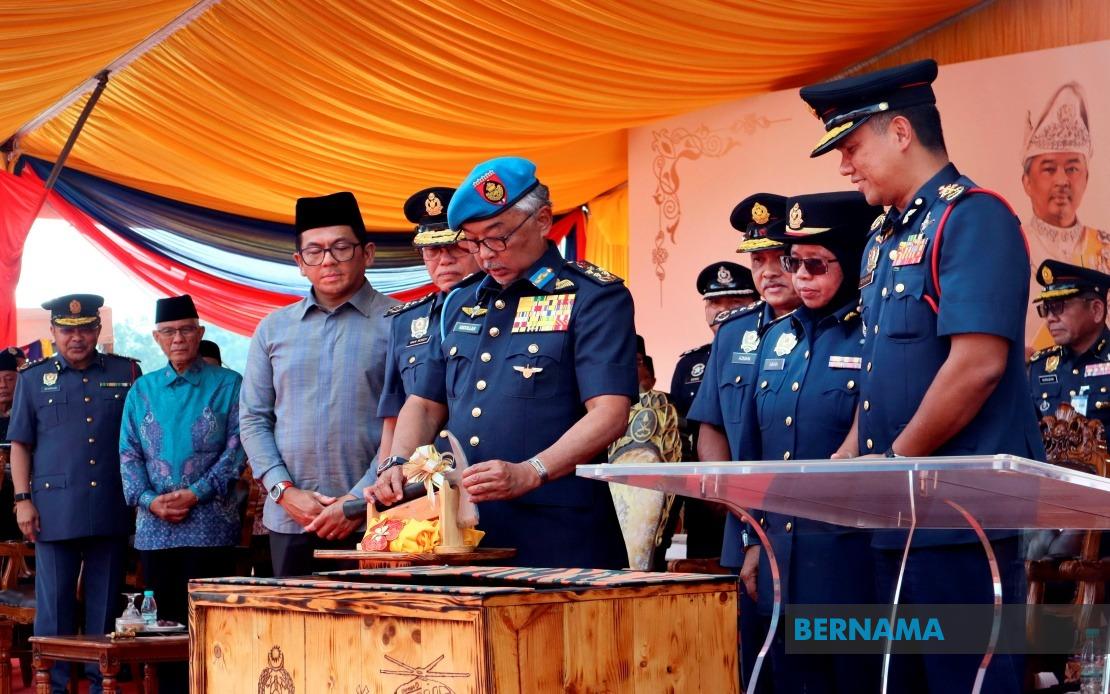
The Sultan of Pahang, Al-Sultan Abdullah Ri'ayatuddin Al-Mustafa Billah Shah, has publicly acknowledged the combined efforts of the federal and state governments in channelling resources toward infrastructure projects that directly benefit Pahang's residents. Speaking at the official opening of the Sungai Lembing Fire and Rescue Station in Kuantan on July 2, His Royal Highness underscored the significance of government spending on major undertakings, particularly those addressing environmental and public safety concerns that demand considerable financial commitment.
Flood mitigation initiatives featured prominently in the Sultan's remarks, reflecting their critical importance to the state's development agenda. Sungai Lembing, a township in Kuantan district, holds particular significance as a bellwether for flooding risk across the broader Kuantan area during the annual monsoon season. The locality experiences recurring inundation when heavy rainfall occurs, often serving as an early warning indicator of potential flooding threats to downstream communities. By prioritizing flood management infrastructure in this strategic location, both tiers of government are addressing a longstanding vulnerability that has repeatedly disrupted residents' lives and economic activity.
The Sultan's intervention to order the deepening of waterways adjacent to populated zones reflects a pragmatic approach to reducing overflow incidents during periods of intense precipitation. This directive suggests that existing drainage and river systems may be operating below optimal capacity, a situation that monsoon-induced rainfall routinely overwhelms. Infrastructure upgrades of this nature typically involve substantial earthmoving operations, dredging, and reinforcement work, requiring sustained funding and engineering expertise. For Pahang, where monsoon patterns have historically caused significant economic losses and displacement, such interventions represent essential preventive measures rather than discretionary spending.
Several senior government officials participated in the station opening ceremony, reflecting the multi-level coordination required for such initiatives. Pahang Menteri Besar Datuk Seri Wan Rosdy Wan Ismail, Deputy Housing and Local Government Minister Datuk Aiman Athirah Sabu, and Deputy Economy Minister Datuk Mohd Shahar Abdullah, who also represents Paya Besar as Member of Parliament, were all present. The attendance of both state and federal representatives underscores the collaborative nature of major infrastructure projects, where responsibility and funding sources often span multiple administrative jurisdictions.
Beyond flood mitigation, the Sultan extended formal recognition to the men and women of the Fire and Rescue Department for their consistent performance across multiple emergency categories. His Royal Highness noted the daily news reports highlighting rescue personnel responding to fires, traffic accidents, and other disaster scenarios, emphasizing their dedication to safeguarding public welfare. This acknowledgment carries particular weight in a constitutional monarchy where the sovereign plays a ceremonial and symbolic role in affirming citizen-servants' contributions to national wellbeing. The Sultan's appreciation signals public endorsement of the emergency services sector, potentially influencing resource allocation debates at both state and federal levels.
The Sultan has established a personal practice of visiting fire incidents and disaster sites to provide comfort and encouragement to affected communities and rescue workers. He reiterated his commitment to maintaining this direct engagement with emergency personnel, viewing such visits as an essential recognition of their professional sacrifices and exposure to hazardous conditions. This hands-on approach to royal engagement distinguishes the Pahang monarch's style and creates tangible connection between the institution of constitutional monarchy and frontline public servants.
A notable gap in the state's emergency response infrastructure prompted the Sultan to propose establishing a volunteer fire brigade in Kampung Bantal, a settlement within Ulu Tembeling in Jerantut district. The remoteness of this location means that response times for professional fire services remain problematic during emergencies, potentially resulting in preventable loss of property or life. Volunteer-based fire brigades have proven effective in rural and geographically isolated communities across Southeast Asia and globally, combining local knowledge with rapid initial response before professional resources arrive. The Sultan's advocacy for such a facility acknowledges the reality that centralized emergency services, however well-equipped, cannot uniformly serve all population centers in states with dispersed settlement patterns.
For Malaysian policymakers and regional observers, the Sultan's public statements carry important implications regarding development priorities and fiscal commitments. The royal seal of approval on infrastructure spending suggests broad alignment between the monarchy and the elected government on addressing shared vulnerabilities. In Pahang specifically, where monsoon flooding recurs with predictable regularity, the emphasis on river management and drainage infrastructure reflects lessons learned from past inundation events. The integration of flood mitigation with emergency services improvements demonstrates recognition that preventing disasters and responding effectively to them represent complementary strategies rather than competing priorities.
From a Southeast Asian perspective, Pahang's experience with seasonal flooding and infrastructure challenges mirrors patterns visible across the region, where climate vulnerability, uneven urban development, and geographic constraints create recurring emergency scenarios. Investment in both permanent infrastructure solutions and rapid-response capacity building represents a regional best-practice model increasingly adopted by governments confronting similar environmental risks. The Sultan's advocacy for dispersed emergency capacity through volunteer brigades acknowledges that centralized service delivery models have inherent limitations in heterogeneous territories.
The official opening of the Sungai Lembing Fire and Rescue Station itself represents visible manifestation of the government investment the Sultan praised. Such facilities provide not only immediate emergency response capability but also training grounds for personnel and staging areas for equipment deployment. For communities in flood-prone zones, the presence of a dedicated, purpose-built emergency facility offers both practical capability and psychological reassurance. The timing of this facility's inauguration, coupled with ongoing flood mitigation projects and the proposed volunteer brigade initiative, suggests sustained governmental commitment to closing capacity gaps identified through experience with previous disaster events.
Looking forward, the Sultan's remarks establish a framework for accountability regarding infrastructure delivery in Pahang. By publicly acknowledging government spending and requesting further investments in underserved areas, His Royal Highness creates informal pressure for sustained budgetary attention to state-level development needs. This dynamic, while subtle in nature, carries weight in Malaysia's constitutional system where the monarchy commands significant cultural authority and where royal preferences often influence political decision-making. The Sultan's evident satisfaction with existing spending levels, combined with his specific recommendations for additional facilities, signals both support for current trajectories and expectations for continued progress on identified priorities.

