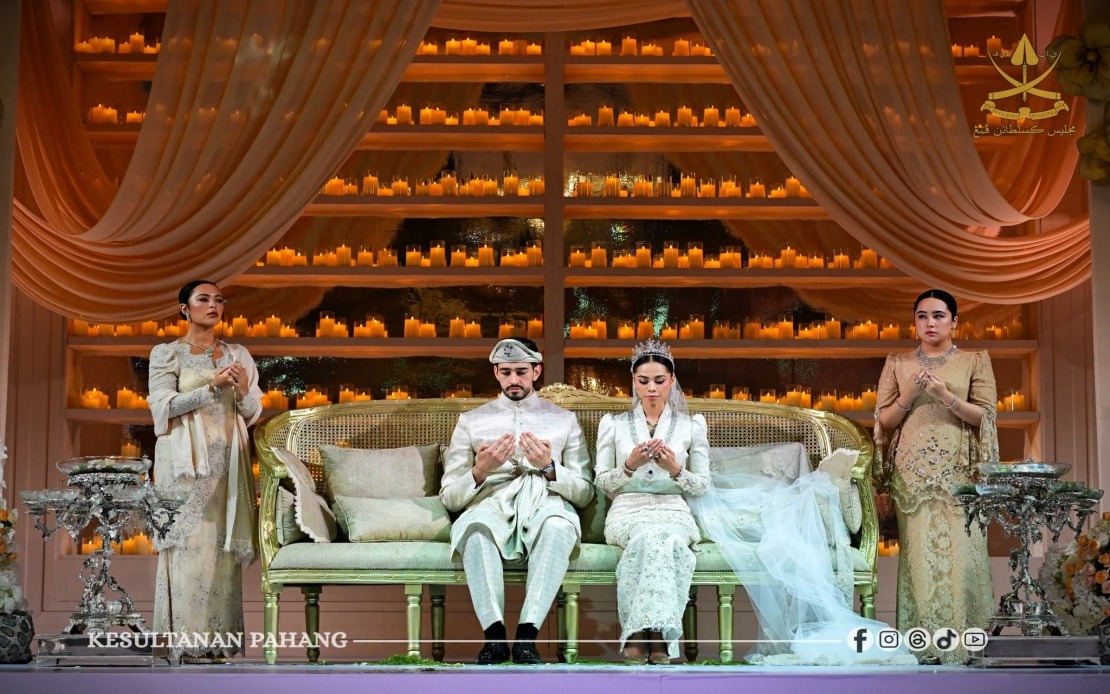
Pahang's reigning Sultan, Al-Sultan Abdullah Ri'ayatuddin Al-Mustafa Billah Shah, graced the wedding reception of his daughter Tengku Puteri Raja Tengku Puteri Ilyana Alia at a Kuala Lumpur hotel, underscoring the significant ceremonial dimensions that characterise royal matrimonial occasions in Malaysia's constitutional monarchy system. The high-profile gathering showcased the fusion of modern celebration practices with time-honoured Malay-Muslim ceremonial traditions that remain integral to royal family events across the peninsula.
The Sultan's presence at the celebration, accompanied by Pahang's Regent Tengku Hassanal Ibrahim Alam Shah alongside numerous members of the extended royal household, demonstrated the formal significance invested in the union between Tengku Puteri Ilyana Alia and her husband Christopher Lionel Froggatt. The attendance of senior state dignitaries, including Pahang Menteri Besar Datuk Seri Wan Rosdy Wan Ismail, reflected the statewide importance accorded to events within the ruling household, a pattern consistent with constitutional arrangements in Peninsular Malaysia's sultanates.
The reception's international dimension merits particular attention. The presence of Shaikh Mohammed Hamad Tahnoon Al Nahyan, representing the President of the United Arab Emirates, points to deepening diplomatic and familial ties between Malaysia's royal families and Gulf monarchies. Such high-level representation at private royal functions indicates expanding networks of engagement between Southeast Asian and Middle Eastern ruling establishments, reflecting broader geopolitical and commercial connections that increasingly characterise relations in the region.
The ceremonial programme adhered meticulously to established protocols governing royal weddings in Malaysia's Malay-Muslim cultural context. The dais arrangement, whereby the newlyweds occupied the central ceremonial space, represents a foundational element in Malay wedding traditions, particularly within royal circles where such visual positioning carries symbolic weight regarding hierarchy and family structure. This staging remained consistent with precedents established across Malaysia's various sultanates, suggesting standardised approaches to royal matrimonial ceremony across the different states.
The 'Istiadat Menyuap Nasi Semangat' ceremony, conducted by Tengku Puteri Seri Lela Wangsa Tengku Tan Sri Meriam Sultan Ahmad Shah, constitutes a traditional element wherein senior female relatives ceremonially feed the newlyweds symbolic sustenance. This practice, deeply embedded in Malay cultural and Islamic traditions, serves multiple functions: it formally acknowledges the bride's integration into her husband's family structure, invokes blessings for the marriage, and reaffirms extended family bonds across generations. Within royal contexts, such ceremonies carry additional significance as public demonstrations of dynastic continuity and cultural preservation.
The subsequent 'Istiadat Bersanding dan Merenjis' segment, during which the Sultan himself performed traditional spraying gestures following the initial ceremony conducted by other family members, represented a particularly notable element. The Sultan's direct participation in this blessing ceremony elevated the spiritual and symbolic dimensions of the occasion, as his involvement as reigning monarch and father of the bride conferred additional ceremonial weight and authority to the ritual acts. This hands-on participation distinguishes royal wedding ceremonies from standard celebrations, marking the event as occasions where sultans actively exercise their traditional custodial roles regarding family and cultural continuity.
The 'Istiadat Meletakkan Panca Bicara', performed by the Sultan as an explicit gesture honouring the newlyweds, represents another significant ceremonial component. The panca bicara, traditionally understood as five foundational principles, carries deep historical resonance within Malay governance and social frameworks. By performing this ritual specifically to bless the marriage, the Sultan effectively invoked these foundational principles as spiritual anchors for the couple's union, thereby placing their relationship within the broader context of Malay-Islamic values and governance structures that the monarchy exemplifies.
The involvement of Pahang Mufti Datuk Dr Asmadi Mohamed Naim in reciting concluding prayers underscores the integration of Islamic religious authority within royal ceremonial frameworks. In Malaysia's constitutional monarchy system, sultans function simultaneously as constitutional heads of state and as custodians of Islam within their respective territories. This dual role becomes visibly manifest during significant family occasions, where religious specialists participate formally in proceedings, affirming that contemporary royal celebrations remain rooted in Islamic principles and values despite their modern aesthetic dimensions.
For Malaysian observers, particularly those from royal and aristocratic backgrounds, such wedding ceremonies serve as important markers of how traditional cultural practices adapt to contemporary contexts. The gathering of international dignitaries, the formal ceremonial sequence, and the careful documentation through social media platforms exemplify how Malaysia's royal families navigate between preservation of heritage and engagement with modern communication modalities. These events become occasions where tradition and contemporaneity intersect, demonstrating that royal ceremonialism need not exist in opposition to globalised lifestyles or international relationships.
The broader context of this event reflects ongoing patterns within Southeast Asian monarchies regarding cross-border royal connections and the diplomatic dimensions embedded within family celebrations. As regional sultanates increasingly connect with external powers through matrimonial alliances and formal state visits, the symbolic importance of royal weddings extends well beyond immediate family concerns. Such occasions become venues for reinforcing regional relationships, demonstrating dynastic strength, and affirming continuity of governance structures that remain central to Malaysia's political identity.
The meticulous documentation of ceremonial proceedings, particularly through official social media channels like the Kesultanan Pahang's Facebook platform, illustrates how contemporary Malaysian royal households employ digital communication to engage their constituencies. This approach allows broader public participation in occasions traditionally accessible only to invited guests, thereby democratising knowledge of royal ceremonies while maintaining their formal ceremonial character. For Malaysian citizens invested in understanding their constitutional monarchy's functioning and values, such transparency provides meaningful insights into how royal families understand and articulate their roles within modern Malaysian society.

