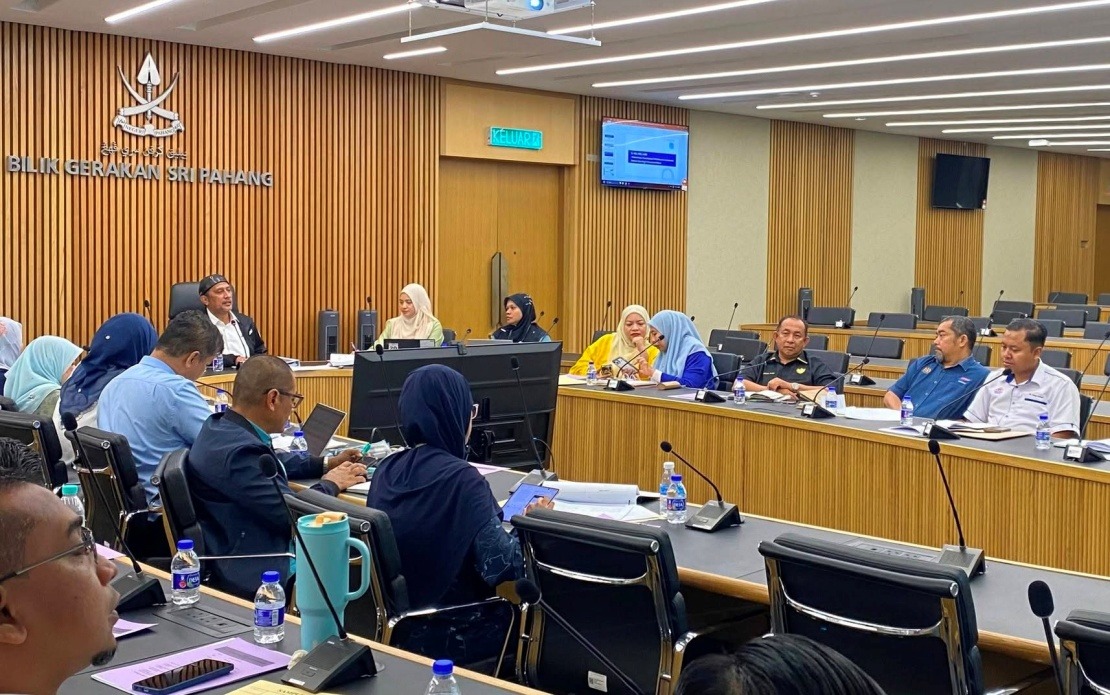
The Pahang state government has announced plans to engage the Department of Orang Asli Development (JAKOA), the state Land and Mines Office (PTG), and local district authorities to examine potential remedies for an ongoing land dispute involving the Orang Asli community in Kampung Sungai Cot, Maran. The move represents an attempt by the state to navigate the complex administrative and legal terrain surrounding indigenous land rights in a dispute that has attracted public attention and concern among indigenous advocacy groups.
Datuk Seri Syed Ibrahim Syed Ahmad, who chairs the Pahang state committee overseeing Islamic religious affairs, rural development, and Orang Asli matters, emphasised that the state government intends to resolve the issue through careful adherence to legal frameworks and collaborative consultation with all stakeholders. He stressed that the approach would prioritise finding solutions that serve the interests of everyone involved, signalling the state's desire to move beyond the polarised positions that have characterised the dispute.
The core issue centres on competing claims to the same parcel of land. According to Syed Ibrahim, twelve Orang Asli individuals had submitted written claims to JAKOA for cultivation rights in the area. However, the identical land was subsequently approved for use by a commercial company through a decision made by the 32nd State Executive Council on November 4, 2015. This temporal overlap and competing approvals have created the administrative knot that now requires untangling by multiple government entities.
The Pahang government's statement attempted to provide context and nuance regarding the dispute, suggesting that reporting by outside parties had oversimplified or misrepresented the situation. By framing the matter as more complex than initial portrayals, the state sought to establish grounds for a measured, deliberative approach rather than yielding to immediate pressure for a particular outcome. This framing is significant for how such disputes are resolved in Malaysia's federal structure, where state governments retain substantial discretion in land matters.
Further complicating the picture is the fact that JAKOA's preliminary discussions with the Orang Asli representatives revealed a narrowed group of active claimants. Of the original twelve individuals who had filed claims, only six continue to pursue their land claims through JAKOA's formal processes. During these consultations, the six remaining claimants asserted that the disputed land constitutes their ancestral territory, yet government authorities have been unable to substantiate these claims through documentary evidence or official records available to relevant agencies. This gap between oral history and bureaucratic documentation represents a persistent challenge in indigenous land rights disputes throughout Southeast Asia.
The broader context reveals that Pahang has made substantial institutional progress in recognising Orang Asli land rights in recent years. The state is home to 264 registered Orang Asli villages with a combined population exceeding 90,000 residents. Among these, thirty villages have been formally gazetted under the relevant sections of the Orang Asli Act 1954 and the National Land Code, conferring legal recognition and protection to their territorial claims. Additionally, the state government has approved land ownership transfer to the Orang Asli community across sixteen villages, utilising Section 76 of the National Land Code as the legal mechanism.
The pipeline of pending applications demonstrates both the scale of outstanding claims and the administrative capacity constraints facing JAKOA and state authorities. Seventy-five applications for land gazettement on behalf of Orang Asli communities are currently in various stages of processing. Of these, thirty-one applications have completed the technical assessment phase and await consideration by the State Executive Council. A more significant challenge involves forty-four applications that are stalled because they involve overlapping land claims—situations where multiple parties hold competing legal or customary rights to the same territory, similar to the Kampung Sungai Cot dispute.
An additional 143 applications remain at the initial survey and measurement phase conducted by JAKOA, indicating a considerable backlog of unresolved claims. This bottleneck suggests that the Kampung Sungai Cot case, while individually significant, reflects systemic challenges in how Malaysia's government machinery processes indigenous land claims. The machinery requires technical surveys, historical documentation searches, consultation processes, and reconciliation between different legal frameworks—all of which consume considerable time and resources.
The approach taken by the Pahang government reflects Malaysia's mixed record in balancing indigenous rights with development interests and competing property claims. Federal policy generally seeks to protect Orang Asli land rights through legal mechanisms, yet implementation at the state and local levels often encounters practical obstacles. These include unclear historical records, overlapping approvals issued at different times by different agencies, and the challenge of verifying customary land rights claims that predate modern administrative systems.
For the broader Malaysian context, the Kampung Sungai Cot case serves as a test of how seriously state governments will pursue the gazettement and recognition of Orang Asli territories when such recognition might require reversing or modifying earlier commercial approvals. The outcome could influence expectations among Orang Asli communities elsewhere regarding the willingness of authorities to prioritise indigenous claims. In Peninsular Malaysia, where most Orang Asli communities are concentrated and land values have increased substantially, such disputes are likely to become more frequent rather than rarer.
The involvement of multiple federal and state agencies suggests that no single entity bears sole responsibility for the outcome, which may facilitate compromise but could also diffuse accountability. The consultative approach announced by Syed Ibrahim aligns with contemporary best practices in indigenous affairs governance, yet success ultimately depends on whether the agencies involved can move beyond their institutional positions and develop creative solutions that accommodate the state's development objectives while respecting Orang Asli rights. The coming months will reveal whether this collaborative framework can deliver meaningful resolution or merely defer difficult decisions.

