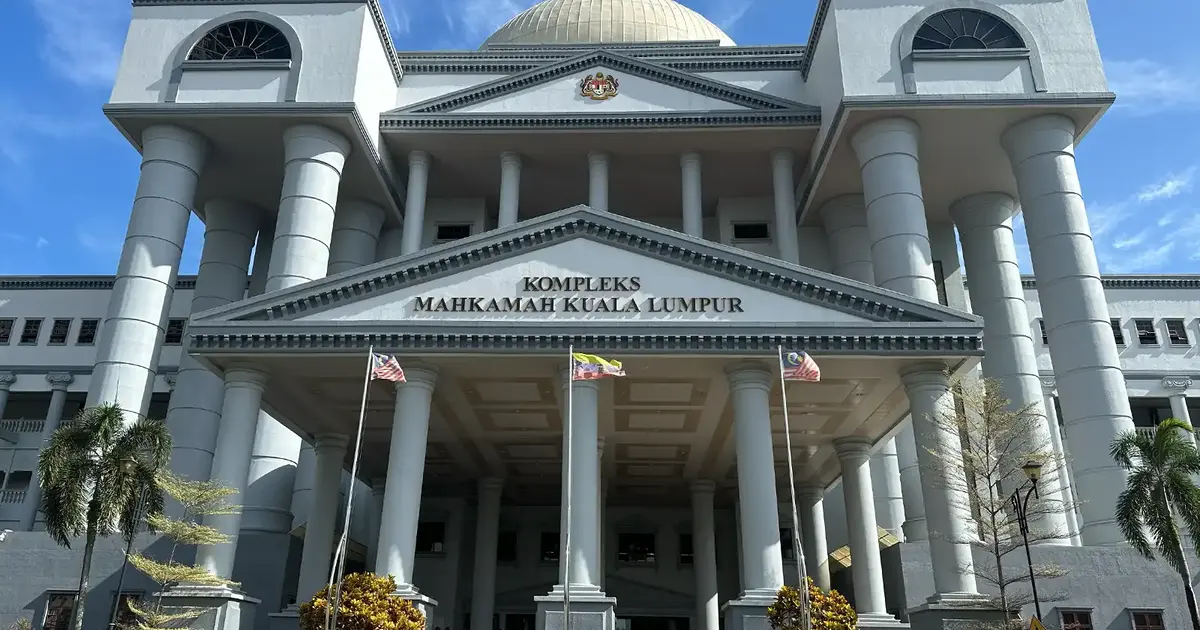
A Pahang-born woman has been denied Malaysian citizenship in a significant High Court decision that hinges on whether her parents were legally married. Judge Norliza Othman ruled that without proof of a valid marriage between her Malaysian father and Indonesian mother, the plaintiff cannot claim citizenship by operation of law under the Federal Constitution.
The case underscores the complex intersection of immigration law, family status, and constitutional citizenship in Malaysia. Under Article 14 of the Federal Constitution, children born to a Malaysian father before independence or during the constitutional period acquire citizenship automatically, but only if the child's parents were validly married at the time of birth. This foundational requirement has become contentious in cases where documentation is unclear or incomplete, particularly involving mixed marriages.
Judge Norliza's reasoning reflects a strict interpretation of documentary evidence. The plaintiff bore the burden of proving that her parents had undergone a legal marriage ceremony recognised by Malaysian law. Her failure to produce marriage certificates, registration documents, or credible witness testimony meant the court could not accept the marriage as established fact. Without this proof, the judge concluded, there was no basis to trigger the automatic citizenship provisions that would otherwise apply to a child born on Malaysian soil to a Malaysian citizen.
This decision carries implications for many Malaysian-born individuals with similar family circumstances, particularly those born during the 1960s and 1970s when marriage registration practices were less rigorous and cross-border unions were less formally documented. Many families in border regions such as Pahang, Perak, and Johor experienced informal arrangements that, while socially accepted, left scant legal trace. For descendants seeking to regularise their status decades later, such judicial interpretations create an almost insurmountable barrier.
The ruling also reflects how Malaysian courts have increasingly applied stringent evidentiary standards to citizenship claims. Rather than accepting circumstantial evidence or oral testimony from elderly relatives, judges now demand contemporaneous documentation. This approach aims to prevent fraudulent claims but inevitably disadvantages legitimate applicants whose families lacked the resources or knowledge to maintain proper records. For individuals born into working-class or marginalised communities, the absence of paper trails becomes a de facto citizenship penalty.
By determining that the plaintiff inherited her mother's Indonesian citizenship status instead, the judgment raises questions about the nature of citizenship acquisition for mixed-parentage children born in Malaysia. While the plaintiff was born within Malaysian territory, the court's logic suggests that bloodline and parental legal status supersede birthright considerations in the absence of clear constitutional pathways. This distinction between jus soli (birthright) and jus sanguinis (bloodline) citizenship has long been a feature of Malaysian law, but this case highlights how strictly courts will enforce it.
The implications extend beyond individual cases to broader questions about Malaysia's treatment of stateless individuals and those caught in legal limbo. Women whose fathers were Malaysian but whose marriages were never formally registered face particular challenges, as do their descendants. The burden placed on applicants to reconstruct historical family records creates a system that inadvertently penalises the poor and marginalised, who are least likely to have retained or accessed formal documentation from decades past.
This judgment may also influence how Malaysia approaches citizenship verification in future cases, potentially prompting the government to clarify what forms of evidence it will accept as proof of parental marriage. Currently, applicants navigating the citizenship bureaucracy have limited guidance about acceptable documentation, leading to inconsistent outcomes across different High Court divisions and states. A national framework establishing acceptable evidence standards could help reduce such disparity, though any such move would require legislative or executive action.
For the plaintiff and others in similar circumstances, options remain limited. She may pursue an appeal to the Court of Appeal, arguing that the judge placed unreasonable evidentiary demands on her or misinterpreted the constitutional citizenship provisions. Alternatively, she could petition the government through the Ministry of Home Affairs for administrative citizenship recognition, though such applications are notoriously difficult to succeed. Some applicants have also pursued international routes, seeking recognition in their mother's country of origin while navigating the complexities of dual or multiple citizenship claims.
The case also reflects broader Southeast Asian patterns in how countries treat the children of cross-border unions and mixed marriages. Thailand, Indonesia, and the Philippines all grapple with citizenship documentation challenges in their own border regions, yet Malaysia's constitutional framework creates particularly rigid pathways. Unlike some regional counterparts, Malaysia does not offer straightforward naturalisation processes for long-term residents or second-generation descendants of foreign spouses, leaving affected families without clear alternatives.
Meanwhile, the decision stands as a cautionary tale for Malaysian families with international connections. Parents who marry across borders are now on notice that without formal, documented marriage recognition, their children may face citizenship obstacles regardless of birthplace. The judgment suggests that for individuals born in Malaysia to mixed couples, the failure to secure proper marriage documentation does not merely create administrative inconvenience but can result in permanent exclusion from citizenship status. This creates powerful incentives for families to ensure legal marriage registration, yet offers little help to those whose historical circumstances have already made such documentation elusive.

