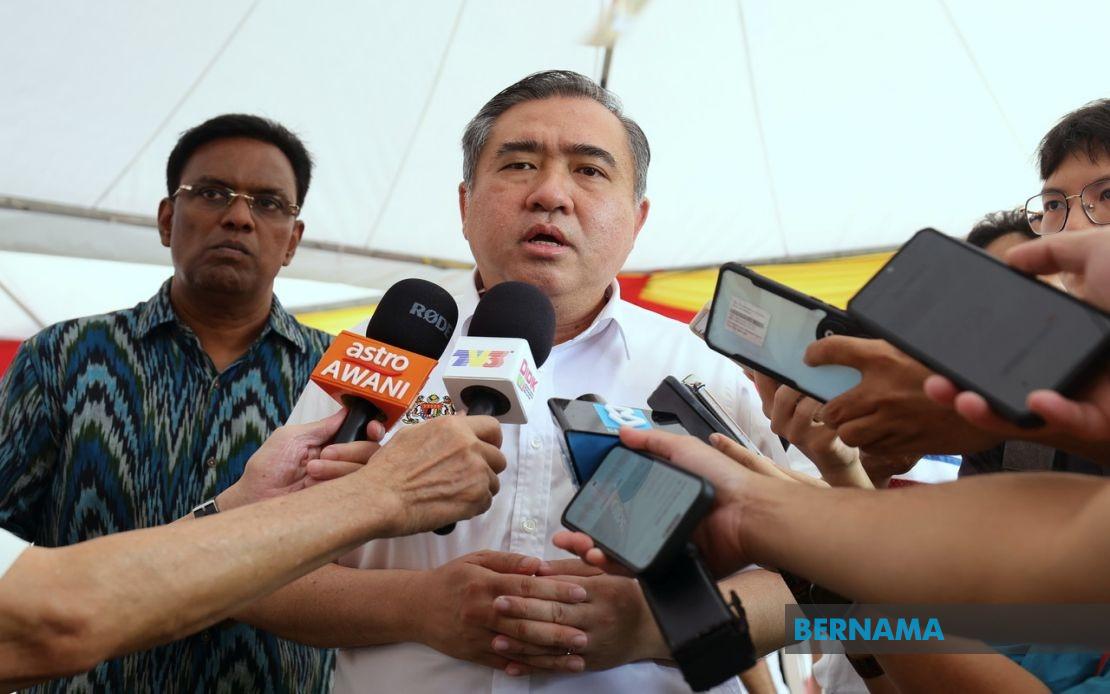
Pakatan Harapan has signalled it will not be deterred by potential political alliances between rival blocs ahead of the Negeri Sembilan state election, with senior coalition figures dismissing speculation about opposition manoeuvres while vowing to concentrate on strengthening their own electoral machinery. DAP secretary-general Anthony Loke made the declaration in Seremban on July 16, suggesting that any strategic partnerships forged by Barisan Nasional and Perikatan Nasional would be met with a confident, unified PH campaign focused on delivering results in contested constituencies.
Loke's remarks come as speculation mounts about potential seat-sharing arrangements between BN and PAS ahead of the state poll, with negotiations reported to be underway on constituency distribution. Rather than engage in tactical commentary about opposition moves, the DAP leader chose to frame the contest as fundamentally dependent on the decisions of voters themselves, a rhetorical shift that reflects confidence in PH's ground organization and message discipline. The assessment draws from recent experience during the Johor state election, where PH navigated similar challenges posed by rival coalitions without significant electoral damage.
The Negeri Sembilan election represents a critical test for PH's durability as a governing coalition, particularly given demographic shifts and reported concerns about erosion of support among Chinese voters in some constituencies. MCA has been actively campaigning in the state, attempting to reclaim support that shifted to DAP and other PH components in 2018. Loke acknowledged the competitive environment but resisted detailed comment on voter migration patterns, arguing that public claims about support levels should ultimately be measured against actual election outcomes rather than pre-poll assertions from competing parties.
Central to PH's campaign strategy in Negeri Sembilan will be the track record of the state government under Menteri Besar Datuk Seri Aminuddin Harun, who has helmed the administration since 2018. Loke identified this performance in office as the coalition's primary asset in persuading voters to grant continued mandate, suggesting that governance achievements and infrastructure development will feature prominently in PH messaging. The emphasis on executive performance underscores PH's pivot toward defending its record rather than attacking opponents—a tactical choice that may reflect confidence in incumbent advantage but also acknowledges the need to demonstrate tangible deliverables to justify continued support.
The internal cohesion of PH's component parties has emerged as a central preoccupation for coalition leaders as election preparations intensify. Loke stressed repeatedly that unity among PH partners would be decisive in securing victory across contested seats, implicitly acknowledging that fractious relationships between DAP, PKR, Amanah, and other coalition members could prove damaging if they manifest visibly to voters. The emphasis on coalition solidarity carries particular weight given recent tensions highlighted by Melaka DAP's withdrawal from the state administration over disagreements about nominated assembly member appointments.
Loke addressed the Melaka situation during his remarks, confirming that DAP's decision to exit the state government remained final and that the matter had been settled following administrative adjustments by the state administration. The Melaka episode, though geographically removed from Negeri Sembilan, carries political significance across Peninsular Malaysia as it signals both the brittleness of PH arrangements and the willingness of component parties to act decisively when they perceive their interests have been compromised. How the coalition manages such tensions while maintaining the unified front necessary for electoral success will substantially influence perceptions of PH's sustainability as a governing force.
Questions about whether opposition parties, particularly MCA, might capture increased Chinese voter support in Negeri Sembilan reflect broader anxieties within PH about demographic realignment in Malaysian politics. MCA has been emphasizing community concerns and attempting to rebuild its image after years of declining electoral fortunes. Loke's response—that voter decisions ultimately depend on their own judgment—appears designed to avoid defensive posturing while signalling confidence that PH's appeal transcends any single demographic group. However, the explicit mention of these concerns suggests they remain live issues within coalition strategy discussions.
The political context for the Negeri Sembilan election extends beyond immediate state-level competition, touching on broader questions about Malaysia's two-bloc system and the durability of coalition arrangements on both sides of the political divide. The reported willingness of BN and PN to coordinate, despite their historical antagonism following the 2022 general election, demonstrates how state-level contests remain powerful incentives for realigning political partnerships. For PH, success in Negeri Sembilan would reinforce the viability of the coalition as a governing option; failure or significant setbacks could trigger internal recriminations and accelerate the defections that have periodically weakened the bloc.
While Loke focused commentary on Negeri Sembilan's electoral contest, he also utilized the occasion to highlight PH's MADANI development initiatives, including village improvement programmes implemented by the Ministry of Transport. These interventions, targeting rural infrastructure and community facilities, form part of PH's broader effort to demonstrate government effectiveness and tangible benefits flowing from its administration. Loke dismissed suggestions that such initiatives were merely election-season manoeuvres, instead characterizing them as continuations of policies implemented since 2025. The framing reflects a strategic calculation that demonstrating competent governance and service delivery represents a more persuasive election argument than tactical political moves.
The selection of specific communities like Kampung Mantin for village adoption and school improvement initiatives illustrates the granular approach PH is taking in attempting to rebuild rural support bases that have proven volatile in recent election cycles. Rural constituencies have increasingly tilted toward opposition parties in recent years, driven by perceptions that development benefits flowed disproportionately to urban areas and that government services failed to reach remote communities adequately. PH's rural development emphasis in pre-election messaging suggests internal polling has identified particular vulnerabilities in the state's less densely populated areas.
As Negeri Sembilan approaches its electoral contest, the positioning by both PH leadership and opposition blocs reveals a competition increasingly focused on demonstrating governance competence and development delivery rather than ideological differentiation. Loke's refusal to engage extensively in commentary about opposition tactics, combined with emphasis on PH's internal unity and policy achievements, represents a deliberate choice to elevate the contest onto terrain where incumbency carries inherent advantages. Whether this strategy succeeds will depend substantially on whether voters reward PH for governance performance or instead opt to refresh the political mix through support for rival coalitions, a calculation that extends well beyond Negeri Sembilan's borders to shape Malaysia's broader political trajectory.

