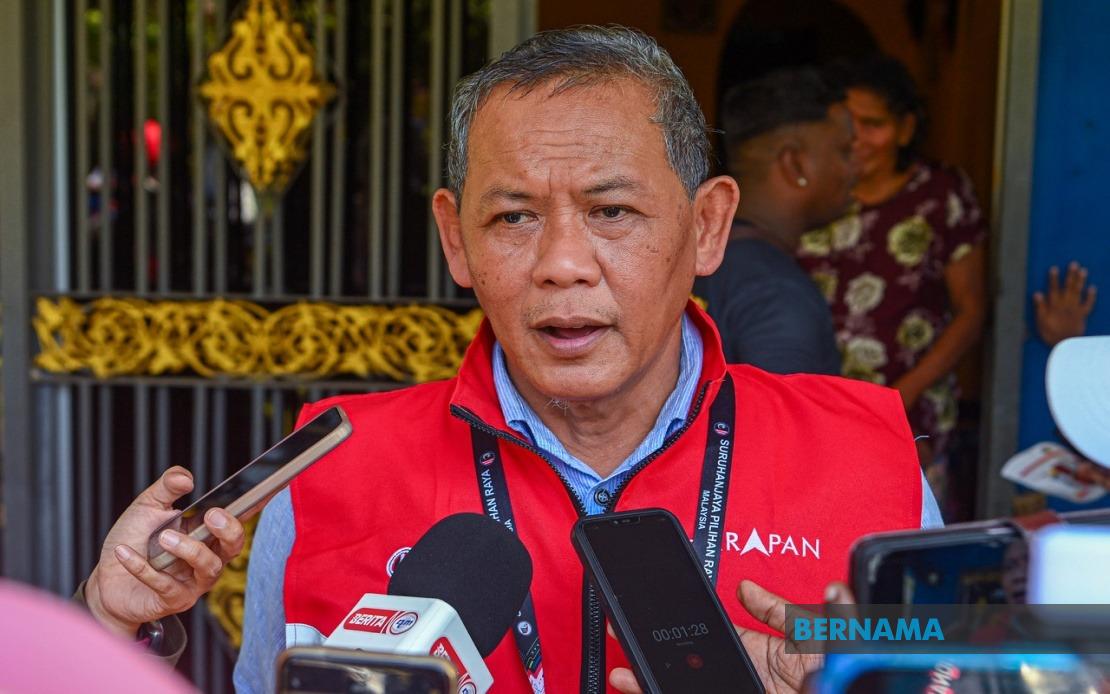
Pakatan Harapan has shifted its electoral strategy for the upcoming Negeri Sembilan state election by crafting a manifesto designed to resonate beyond its traditional base, explicitly extending support programmes to the middle-income M40 segment alongside lower-income B40 households. The coalition's decision to broaden its appeal reflects a recognition that electoral success increasingly depends on building coalitions that encompass multiple income tiers, a lesson Malaysian parties have learned through successive electoral cycles where swing voters in the middle-income bracket have proven decisive.
The manifesto, titled "Negeri Sembilan Kekal Harapan" and centring on ten core pledges, represents a calculated pivot from PH's previous focus on exclusively targeting the poorest 40 percent of households. State Pakatan chairman Datuk Seri Aminuddin Harun articulated this recalibration during a community engagement session in the Linggi constituency, emphasising that initiatives across education, welfare, and access to public services would be recalibrated to benefit a substantially larger cross-section of the state's population. This expansion signals PH's assessment that maintaining support requires acknowledging the economic pressures faced by middle-income families, who have increasingly become vulnerable to cost-of-living pressures despite technically exceeding the B40 threshold.
The timing of this manifesto launch carries significance within the broader Malaysian political context. With the Negeri Sembilan State Legislative Assembly dissolved on June 5 and polling day set for August 1, the coalition moves into this contest seeking to retain control of a state it has governed since 2018. Aminuddin, contesting the Linggi seat as Menteri Besar against Barisan Nasional incumbent Datuk Mohd Faizal Ramli and Bersatu's Zamri Md Said in a three-cornered contest, occupies a particularly exposed position as the chief executive facing dual opposition challenges. His personal electoral fortunes are thus intertwined with the broader coalition's performance, making the credibility of manifesto commitments particularly consequential for PH's overall campaign messaging.
Central to PH's campaign positioning is an explicit emphasis on its delivery record rather than mere rhetorical promises. Aminuddin stressed that the coalition's governance experience since 2018 demonstrates substantive commitment to translating campaign pledges into tangible policy outcomes. This framing attempts to differentiate PH from opposition parties by arguing that the electorate should evaluate parties not on aspirational promises but on demonstrated capacity to execute them. Within Malaysia's increasingly sophisticated electorate, particularly among urban and semi-urban voters in Negeri Sembilan, this appeals to pragmatism and accountability—voters in this state have experienced direct governance under both PH and BN administrations and can compare performance claims against observable reality.
The educational initiatives mentioned as benefiting M40 families represent a particularly strategic component of this manifesto. Education has historically been a policy domain where state governments can demonstrate tangible impact through scholarship programmes, improved school infrastructure, and expanded access to vocational training. By explicitly extending such initiatives to middle-income households, PH acknowledges that education costs represent a significant burden even for families whose income technically places them above the poverty line. This addresses a genuine policy gap, as most welfare programmes concentrate exclusively on the poorest segments, leaving middle-income families feeling overlooked despite facing genuine financial pressures.
The decision to seek a mature electoral campaign that avoids inflammatory issues reflects heightened sensitivities around communal harmony in Negeri Sembilan's diverse population. Aminuddin's appeal carries particular resonance given that the community engagement event occurred at Sekang Estate in Linggi, an area with significant Indian estate worker populations whose electoral preferences have historically been pivotal in marginal constituencies. By emphasising responsible campaign conduct early, PH signals awareness that identity-based appeals or religiously charged messaging could fragment the broad coalition it seeks to assemble across ethnic and religious lines. For a state where political competition has occasionally veered into communal sensitivities, establishing norms around campaign civility early carries strategic value.
The inclusion of ten specific commitments in the manifesto provides measurable benchmarks against which PH's performance can be evaluated. Unlike vague campaign rhetoric, enumerated pledges create accountability mechanisms that opposition parties can invoke if PH fails to deliver. This suggests the coalition has calculated that its actual performance on previous commitments is sufficiently strong to withstand scrutiny, or alternatively, that establishing such specific commitments demonstrates seriousness to voters fatigued by empty promises. The precise policy content of these ten commitments will likely become campaign focal points, with both PH and opposition parties debating the feasibility and appropriateness of proposed initiatives.
From a Malaysian political economy perspective, PH's strategic pivot reflects broader demographic and electoral shifts. The middle-income class has expanded substantially over recent decades, creating an electoral constituency that is neither wealthy enough to benefit from trickle-down economic growth nor poor enough to qualify for targeted welfare programmes. These voters increasingly swing between parties based on economic performance and perceived policy responsiveness. By explicitly targeting this group, PH acknowledges their electoral centrality while attempting to capture votes from those who may feel neglected by conventional two-tier welfare approaches that distinguish sharply between B40 and non-poor populations.
The electoral mathematics of the August 1 Negeri Sembilan contest involve a state with 36 state assembly seats, where PH currently holds a majority formed through coalition partners beyond its core PKR base. Aminuddin's personal contest in Linggi, where he faces twin opposition challengers, exemplifies the potential volatility of three-cornered contests that can reward either leading contender depending on vote splitting patterns. PH's manifesto strategy of broadening appeal to M40 households represents an attempt to consolidate its base while expanding its reach, though the effectiveness of this approach depends substantially on whether middle-income voters perceive the proposed initiatives as adequately addressing their specific concerns.
The manifesto's emphasis on education, welfare access, and development initiatives reflects conventional state-level governance priorities, yet its explicit reframing to encompass middle-income households marks a deliberate strategic shift. Whether this repositioning generates electoral advantage for PH depends partly on whether opposition parties can effectively counter by proposing more ambitious middle-income support programmes, or whether they attempt to mobilise their own constituencies around different issues entirely. The campaign period from manifesto launch through August 1 polling will reveal whether PH's broadened approach resonates with a state electorate increasingly focused on economic security and quality-of-life improvements across income tiers.

