Pakatan Harapan has mounted a vigorous challenge to claims that only one political grouping can authentically represent the interests of Malaysia's Malay-Muslim voters, contending that such assertions fundamentally misrepresent the coalition's composition and values. Speaking during campaigning for the Negeri Sembilan state election in July, party officials emphasised that the narrative of exclusive political representation contradicts both the empirical reality of their own leadership structure and the pluralistic principles upon which the nation was founded. The intervention represents a direct rebuttal to messaging from rival political factions that have sought to position themselves as the sole custodians of Malay-Muslim interests in Malaysian politics.
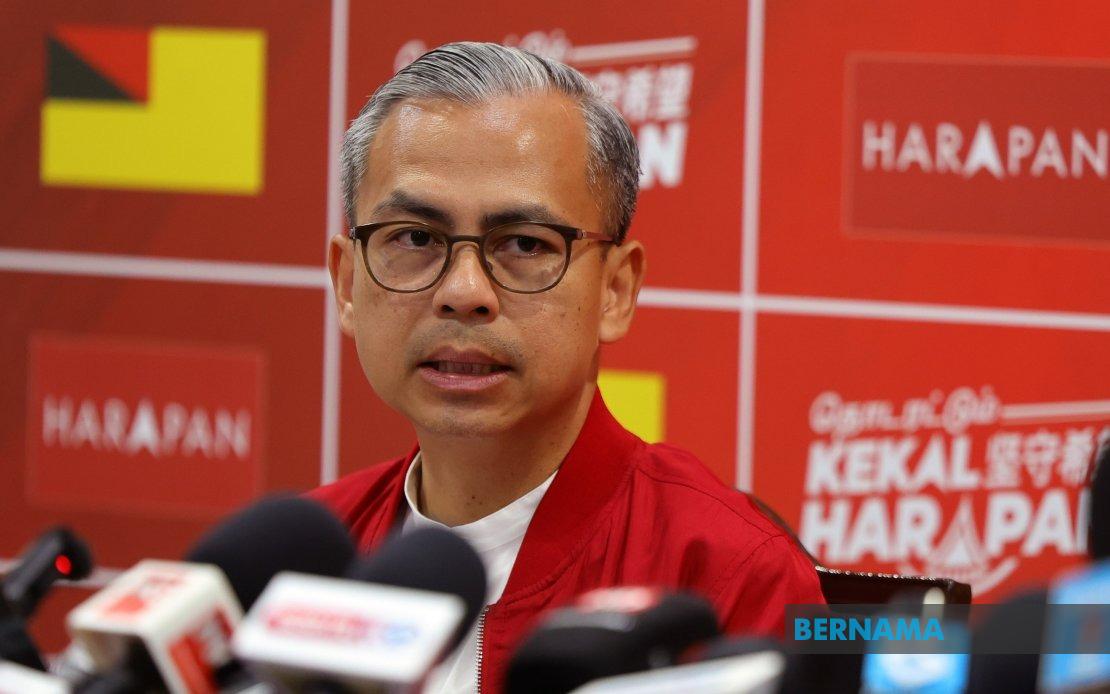
Datuk Seri Fahmi Fadzil, who holds multiple prominent positions as Pakatan Harapan communications director, PKR information chief, and Communications Minister, articulated the coalition's position with pointed specificity during a press conference in Seremban. Fahmi questioned the logical coherence of claims that Malay-Muslims cannot be adequately represented within Pakatan Harapan's ranks, invoking himself and fellow Amanah leader Khalid Abdul Samad as concrete examples of senior Malay-Muslim figures operating within the coalition. This personalised framing transformed an abstract political debate into a tangible challenge to the factual accuracy of opposition narratives, grounding the argument in identifiable individuals occupying substantial leadership roles.
The core of Pakatan Harapan's counter-argument rests on a fundamental distinction between two competing visions of Malaysian political life. The coalition articulates a model of representation predicated on shared ideals and communal objectives that transcend ethnic and religious boundaries, as opposed to what officials characterise as exclusionary approaches that attempt to monopolise particular demographic constituencies. Fahmi explicitly articulated this alternative vision, stating that Pakatan Harapan envisions different ethnic communities uniting within their own broader categories while simultaneously standing together as Malaysians in pursuit of collective good rather than narrow sectarian advantage. This rhetorical strategy positions the coalition as the defender of Malaysia's foundational multicultural compact against what it depicts as ethno-nationalist fragmentation.
The timing of these statements during the Negeri Sembilan state election campaign reflects a strategic calculation that perceptions of marginalisation among Malay-Muslim voters represent a significant electoral vulnerability for Pakatan Harapan. By directly confronting such narratives rather than permitting them to circulate unchallenged, party leadership sought to inoculate their support among this crucial demographic against oppositional messaging. The fact that multiple senior figures—including Khalid Abdul Samad representing Amanah and Cha Kee Chin representing the DAP—appeared jointly at the press conference underscored the coalition's desire to present a unified front on this sensitive matter.
To substantiate their claims of inclusive governance, Pakatan Harapan officials pointed to the record of the Negeri Sembilan state administration under Menteri Besar Datuk Seri Aminuddin Harun. The coalition highlighted concrete policy achievements deemed significant to the Malay-Muslim community, particularly the expansion of religious infrastructure and enhancement of Islamic charitable mechanisms. Fahmi specifically cited an increase in mosque construction and reported nearly two-and-a-half fold growth in zakat collections under the current administration compared with its predecessor. These metrics, officials argued, constituted empirical evidence that Malay-Muslim interests have received genuine priority within the Pakatan Harapan governance model.
The invocation of mosque construction and zakat administration as key performance indicators reveals how political coalitions navigate the terrain of religious and cultural concerns in Malaysian electoral competition. Rather than dismissing such matters as peripheral to broader governance questions, Pakatan Harapan positioned these traditionally significant communal investments as central to demonstrating its commitment to Malay-Muslim welfare. The emphasis on quantifiable increases—particularly the substantial growth in zakat collections—attempted to transform religious community support from a matter of political positioning into one of measurable administrative accomplishment. This approach acknowledges that substantial portions of the Malay-Muslim electorate evaluate political performance partly through the lens of religious institutional development and support.
The broader political context surrounding this exchange involves long-standing competition within Malaysia's Malay-Muslim electoral base between different coalitions and parties. Rival political actors have historically sought to establish themselves as the authentic voice of this significant demographic constituency, sometimes employing narratives suggesting that competing political groupings either lack genuine Malay-Muslim leadership or insufficiently prioritise community concerns. Pakatan Harapan's explicit rejection of such exclusionary framing represents an attempt to reclaim what the coalition views as a false dichotomy imposed by opponents. The party's argument essentially contends that Malaysian voters can and should reject the notion that political choice must be constrained by arguments about which bloc has greater authenticity within particular ethnic-religious communities.
For Malaysian observers seeking to understand contemporary political dynamics, these statements illuminate persistent tensions within the country's multiethnic, multireligious democracy. The debate over representation and community prioritisation reveals how political actors continue to navigate the intersection of Malaysia's plural composition and communal identities that remain politically salient. Pakatan Harapan's assertion that inclusive, values-based politics need not marginalise Malay-Muslim interests challenges a particular strain of electoral messaging while simultaneously asserting an alternative model of how Malaysian politics might function. Whether such arguments prove persuasive to voters remains ultimately an empirical question answerable only through electoral outcomes.
The Negeri Sembilan state election, with early voting scheduled for July 28 and polling day set for August 1, would provide a direct test of these competing narratives' resonance among voters. The state represented a significant battleground where questions of representation and communal confidence in different political coalitions would be resolved through ballot outcomes. For Pakatan Harapan, successfully persuading Malay-Muslim voters that the coalition authentically represents their interests constitutes a crucial challenge to opposition claims of exclusive representation. The explicit, high-profile nature of the party's rebuttal suggested that officials considered the stakes substantial enough to warrant direct leadership engagement rather than allowing such narratives to remain uncontested in the electoral marketplace of ideas.

