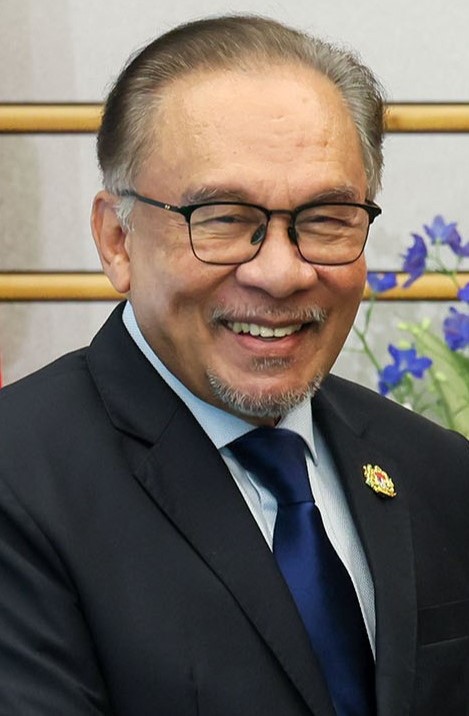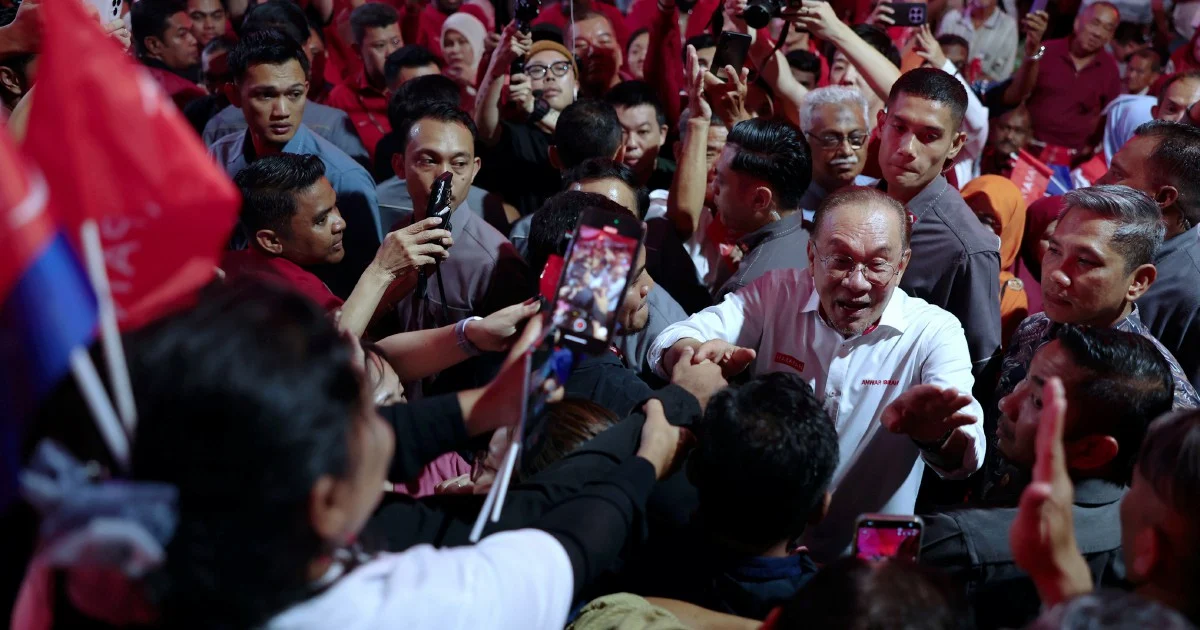
Pakatan Harapan mounted a formal challenge to state power in Johor by unveiling its complete roster of 56 candidates for the July 11 election, a move that signals the coalition's determination to wrest control of Malaysia's second-largest state from the Barisan Nasional-led government. At a campaign rally in Tangkak, PH chairman Datuk Seri Anwar Ibrahim presented the full slate, representing a carefully calibrated effort to contest every available seat and position the coalition as a viable alternative administration.
The candidacy announcement carries significant weight for Johor, a state that has remained a Barisan stronghold and financial powerhouse despite the federal government's transition to PH leadership in 2022. The state's economic importance—its contributions to national revenue and strategic position as a neighbour to Singapore—makes Johor a prize contested fiercely by both coalitions. By fielding candidates across all seats, PH signals confidence in its organisational readiness and policy platform among Johor voters.
Johor has traditionally been governed by Barisan Nasional, with the ruling coalition enjoying institutional advantages, established networks, and substantial political machinery throughout the state. The presence of a fully-fledged PH challenge reshapes the political landscape, forcing both sides to mobilise resources and engage voters on substantive issues rather than default to incumbent comfort. The July 11 election becomes a referendum on PH's ability to translate federal influence into state-level support and on whether voters in Johor view the coalition as offering genuinely different governance.
Anwar Ibrahim's personal involvement in presenting the candidates underscores the strategic importance PH places on this election. As prime minister, his public backing lends legitimacy and national profile to what might otherwise be viewed as a purely local contest. However, this national-level focus also exposes PH to criticism that it is prioritising electoral expansion over consolidating its federal agenda, a tension that has existed since its 2022 electoral victory.
The composition of the candidate slate—reflecting considerations of gender representation, ethnic diversity, and regional balance—reveals how PH approaches coalition management across different constituencies. Johor's diverse demographics, including substantial Chinese, Indian, and Bumiputera populations in different areas, necessitate candidates capable of articulating relevant concerns to each community. The candidate selection process therefore becomes a window into PH's understanding of Johor's political fault lines and its assessment of which personalities and platforms resonate most effectively.
For Southeast Asian observers, the Johor election demonstrates how Malaysia's federal system allows state-level contests to become proxies for broader political competition. Unlike systems with overwhelming national centralisation, Malaysia's states retain meaningful revenue collection powers, legislative authority, and administrative capacity, making state governments consequential rather than ceremonial. A PH-governed Johor would diversify the coalition's territorial holdings and provide additional platforms for policy experimentation and governance demonstration.
The election timing itself merits consideration. Held separately from federal elections, state polls allow voters to render judgments specifically on state-level governance rather than bundling such decisions with federal choices. This separation creates distinct campaign narratives and allows parties to calibrate messaging around state-specific concerns—infrastructure development, local business support, housing affordability, and administrative responsiveness—rather than national-level partisan identity politics.
Opposition to PH's slate will likely organise around concerns regarding coalition stability, as PH itself comprises multiple parties with distinct ideological emphases and regional bases. Barisan Nasional can deploy arguments about proven governance continuity and established state administration, messaging that resonates particularly among voters who prioritise stability and predictability over change. The campaign will test whether PH's programmatic platform and anti-corruption positioning prove sufficiently compelling to overcome incumbent advantages.
The broader Malaysian political context shapes this election's significance. Since the 2022 federal transition, PH has governed through coalition arrangements that require constant negotiation and compromise, a reality that becomes especially acute in state-level contests where regional parties possess greater leverage. The Johor election provides an opportunity for PH to demonstrate that its federal-level arrangements translate into viable state governance models and that coalition partners can work coherently at subsidiary governmental levels.
International dimensions also warrant attention. Singapore's physical proximity to Johor and the substantial economic interdependencies between the two jurisdictions mean that state election outcomes carry cross-border implications. Investors, traders, and neighbouring governments monitor Malaysian state elections for signals about political stability, infrastructure investment commitments, and regulatory consistency. A change in Johor's government would likely trigger reassessment of bilateral relationship management and cross-border project continuity.
The comprehensive candidacy slate suggests PH intends to campaign intensively throughout Johor rather than concentrating resources on winnable seats. This strategy reflects confidence in achieving breakthrough support in traditionally Barisan-voting areas, though it also diverts campaign resources across a broader geographic footprint. The effectiveness of this dispersed approach will become apparent through campaign dynamics in the coming weeks.
As Johor voters prepare to cast ballots on July 11, they will confront a genuine choice between competing visions of state governance and administration. The PH candidate announcement transforms the election from an anticipated challenge into a formalised contest, with both coalitions now fully mobilised and the campaign framework definitively established. The results will reverberate across Malaysia's political system and influence calculations regarding PH's capacity to govern beyond its current federal strongholds.