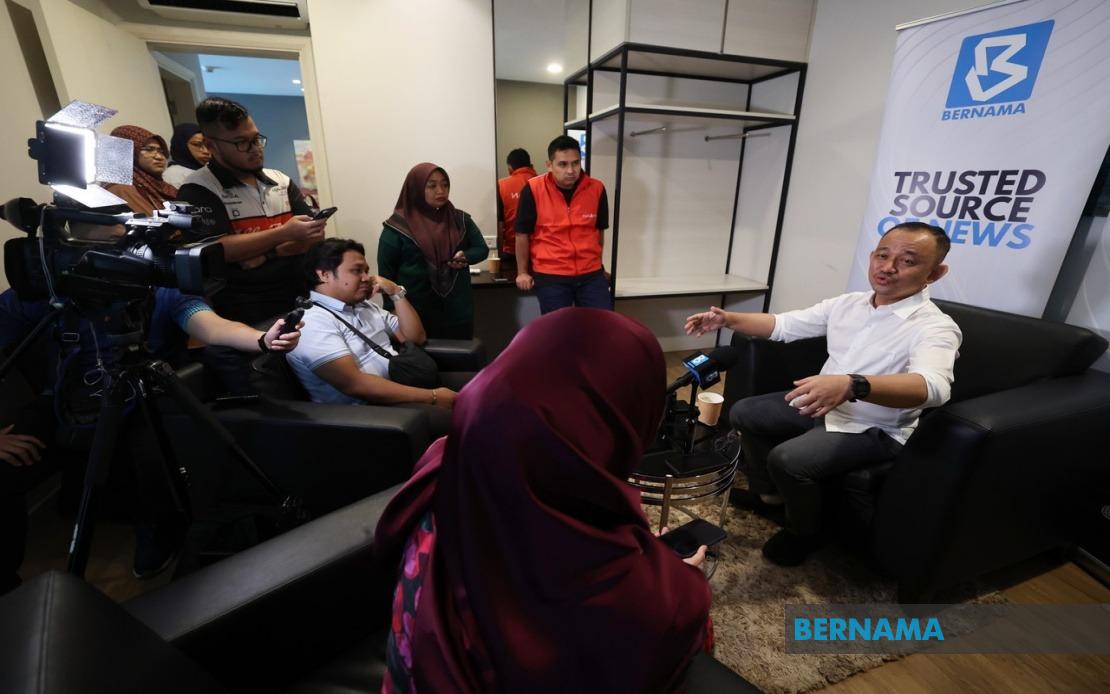
As the 16th Johor state election approaches, Pakatan Harapan has made clear its position on one of the most consequential outcomes of a potential electoral victory: the appointment of the state's chief executive. The coalition will not intervene in the selection of the Menteri Besar, instead leaving that decision wholly to the Sultan of Johor, according to Maszlee Malik, the PH candidate contesting the Puteri Wangsa state seat.
Maszlee's statement represents a calculated acknowledgement of constitutional reality in Malaysia's federal system, where the Rulers retain significant ceremonial and discretionary powers within their respective domains. The Sultan of Johor, under the state constitution, possesses the prerogative to appoint the Menteri Besar—a power that is not merely symbolic but carries real institutional weight. By publicly conceding this authority, PH is positioning itself as a coalition that respects the constitutional separation of powers and the traditional role of the monarchy within state governance structures.
The timing of Maszlee's remarks is notable, coming amid swirling social media speculation that has positioned him as a potential frontrunner for the Menteri Besar role should his coalition perform successfully at the ballot box on July 11. Such speculation is common in Malaysian politics ahead of major elections, with various party figures, observers, and internet users routinely circulating names and theories about who might occupy key positions. By publicly stating that PH has not discussed the Menteri Besar portfolio internally, Maszlee appears to be deflating such conjecture while simultaneously reinforcing his party's commitment to constitutional propriety.
What emerges from his comments is a deliberate strategic positioning by PH: the coalition is characterising itself not as hungering for executive power in its own right, but rather as a team-oriented outfit focused on delivering governance to the people of Johor. This framing attempts to shift public discourse away from horse-trading and internal power dynamics—matters that can breed cynicism among voters—toward the substance of what PH intends to accomplish in office. The emphasis on teamwork and collective responsibility, rather than the elevation of any single individual, reflects a communication strategy designed to appeal to voters fatigued by perceived personality-driven politics.
PH's approach here carries implications for understanding how opposition coalitions in Malaysia navigate the relationship between electoral victory and the exercise of state power. Unlike parliamentary systems where the winning party or coalition automatically forms the government and selects its own leadership, Malaysia's constitutional monarchy creates space for the Rulers to exercise discretion. This is particularly pronounced at the state level, where the Sultan retains more tangible control over matters of governance and personnel. Maszlee's public deference to this reality demonstrates how PH intends to manage the transition from opposition to government—if it occurs—in ways that acknowledge and respect institutional actors beyond the electoral process itself.
The 56 candidates fielded by PH across all contested seats in Johor represent, in Maszlee's characterisation, a collective political force rather than vehicles for individual ambition. By invoking the metaphor of an "Avengers" team, he attempts to imbue the campaign with a sense of shared purpose and complementary capabilities. This rhetorical move also serves a practical function: it allows individual candidates to campaign vigorously without the distraction of constant speculation about who among them might rise to the top position. For voters considering PH, the message is that they are voting not for a party organised around a would-be Menteri Besar, but rather for a platform and a collection of representatives dedicated to collective service.
The constitutional backdrop against which this drama unfolds matters significantly for Malaysian and Southeast Asian observers of state-level politics. Johor, as one of Malaysia's largest and most economically significant states, sets precedents that reverberate across the federation. The way opposition coalitions interact with constitutional authorities at the state level, and the extent to which they respect and defer to the Rulers' traditional prerogatives, influences public perceptions of democratic norms and the health of institutional checks within the system. PH's stance here suggests a coalition conscious of these broader implications and determined to avoid the appearance of either arrogance or disrespect toward constitutional traditions.
Election day itself is scheduled for July 11, with early voting taking place on July 7, giving voters a week to decide between the incumbent government and PH's alternative vision. Johor has historically been regarded as a stronghold of Barisan Nasional and its predecessor coalitions, making any shift toward opposition rule a significant political realignment. The state's economic importance, combined with its strategic location and the prestige associated with governing the home state of the royal house, makes the Johor election a major event in Malaysia's political calendar. The outcome will likely influence calculations across other states and shape the trajectory of national politics in the medium term.
Maszlee's explicit disavowal of internal discussions about the Menteri Besar position also signals confidence—or at minimum, a willingness to project confidence—that PH expects to win. Parties that anticipate defeat do not typically concern themselves with post-election power distribution; the very fact that PH is clarifying its position on how it will handle the appointment process suggests the coalition believes victory is within reach and that such clarifications become operationally relevant. This implicit confidence, reflected in how the party is framing its approach to governance, may serve to energise PH supporters who see in such statements a sign that their coalition is moving into a position of strength.
Ultimately, Maszlee's comments encapsulate a broader political reality in Malaysia: electoral victory, while necessary, is not sufficient to guarantee the composition of the state cabinet or the selection of its chief minister. The Sultan's constitutional prerogative remains a factor that political actors cannot ignore or bypass. By acknowledging this openly and deliberately positioning PH as respectful of it, the coalition is attempting to navigate a path that maximises its electoral appeal while demonstrating institutional literacy and constitutional respect. Whether this approach proves electorally advantageous or becomes seen as an abdication of legitimate political power will depend largely on what happens on and after July 11.

