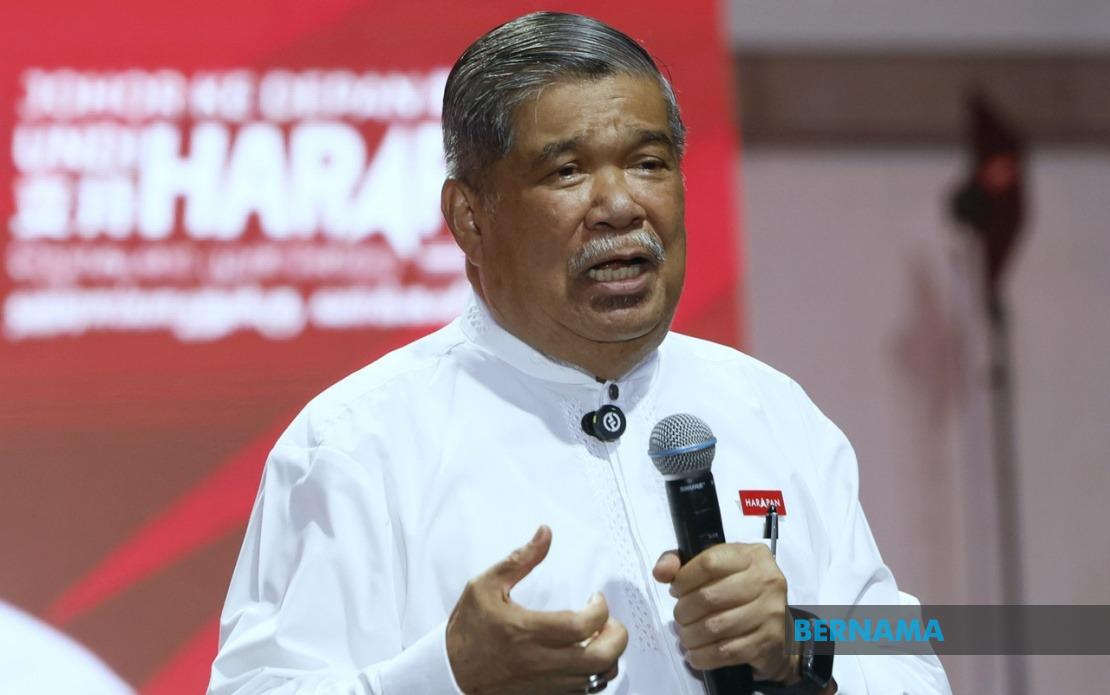
The Pakatan Harapan coalition has brushed aside what it views as a strategic manoeuvre by PAS to bolster Barisan Nasional prospects in the Johor state election, with party leaders expressing confidence that the directive will not derail their campaign momentum. Speaking after a PH rally in Permas Jaya, Amanah president Datuk Seri Mohamad Sabu, who also serves as Minister of Agriculture and Food Security, dismissed suggestions that the PAS instruction would unsettle the opposition coalition's machinery heading into polling day on July 11.
The PAS directive, which instructed party supporters to cast their votes for BN candidates in constituencies where PAS is not running, represents an attempt to consolidate anti-PH sentiment across the state. However, Mohamad Sabu characterised the move as a distraction rather than a credible threat, emphasising that PH would maintain its scheduled campaign activities without deviation or apprehension. He articulated this position while reinforcing the coalition's core argument that its strength derives not from tactical manoeuvres but from a fundamentally different political foundation built on multiracial and multi-religious unity.
Central to PH's messaging is the assertion that such inclusive cooperation provides the bedrock for sustained political stability and underpins long-term economic prosperity. This framing positions the coalition as offering a philosophical alternative to what it portrays as narrower, factional approaches to governance. Mohamad Sabu argued that voters ought to evaluate candidates through the prism of competence, demonstrated service record, and dedication to equitable governance rather than allowing themselves to be swayed by appeals rooted in ethnic or religious identity. The implicit contrast here is between a results-oriented, values-based approach and what PH characterises as divisive messaging.
For PH, the broader strategic calculus in Johor involves securing administrative coherence between state and federal governments, which the coalition contends is essential for expediting major development initiatives. The party has identified several concrete areas where such alignment would yield tangible benefits for residents. Modernisation of public transportation networks, enhancement of infrastructure at international border crossings, and efforts to attract foreign direct investment represent the project pipeline that PH believes justifies voter endorsement. These priorities reflect an understanding that Johor, as Malaysia's economically dynamic southern gateway and a state deeply integrated with Singapore's economy, requires governance focused on maintaining competitiveness and attracting quality employment opportunities.
DAP strategic director Liew Chin Tong, who doubles as Deputy Finance Minister, introduced a demographic dimension to PH's election analysis by identifying younger voters as the pivotal constituency. He pointed to the 2022 Johor state election as instructive, noting that reduced voter participation had ultimately benefited BN, particularly because many Johor residents employed across the border in Singapore faced insurmountable obstacles in returning home to cast ballots during the COVID-19 pandemic. This observation carries implications for the current contest, as campaign strategies increasingly target youth mobilisation as a means to shift electoral dynamics in PH's favour.
Liew advocated for the second phase of campaigning to transcend purely partisan rivalry and instead emphasise substantive policy offerings with direct bearing on quality of life. He identified employment quality as paramount, articulating a clear concern that unless Johor generates sufficient high-paying job opportunities, younger residents will continue migrating to Singapore for work, representing a brain drain that undermines state development. This argument resonates particularly within the state's younger demographic, many of whom face limited local opportunities despite living in Malaysia's fourth-largest economy by gross domestic product.
The suite of policy issues Liew enumerated reflects contemporary governance challenges across urban and suburban Johor. Public transportation deficiencies have long complicated daily life for commuters across the state, while persistent flooding and inadequate maintenance of drainage infrastructure affect both urban and rural communities. The impending demographic shift towards an ageing population presents a looming challenge requiring proactive planning for healthcare and social support systems, yet childcare infrastructure gaps immediately affect working parents and family economic security. These interconnected issues suggest that voter concerns extend beyond headline promises to encompass the granular mechanics of service delivery that shape lived experience.
Central to resolving these challenges, according to PH's framing, is institutional coordination between federal and state administration. This emphasis reflects Malaysia's federal structure, wherein certain policy domains fall under state purview while others remain federally controlled, necessitating cooperative implementation. The Johor-Singapore Special Economic Zone, which represents a cornerstone of Johor's contemporary economic ambitions, exemplifies the class of initiative requiring seamless cooperation across governmental levels. PH argues that such cooperation would accelerate development of the JS-SEZ, thereby generating the high-calibre employment opportunities that Liew identified as critical to retaining young talent within the state.
The contest itself encompasses all 56 state legislative seats, with early voting scheduled for July 7 preceding the main polling date. PH's campaign, despite dismissing PAS's manoeuvre as tactically insignificant, operates within an environment where coalition management and messaging coherence remain operationally essential. The alliance's ability to present unified messaging across its constituent parties while maintaining distinct brand identities continues to shape how voters perceive its viability as a governing force. For Malaysian observers, particularly in Johor, the election serves as a test of whether multiracial coalitions can maintain political momentum amid strategic pressure from competitors willing to deploy more narrowly targeted appeals.
The stakes for PH extend beyond Johor itself. Federal-state alignment under a PH government would signal continued momentum for the coalition following its 2022 federal election victory, while a BN recapture would represent a significant reversal that could embolden rivals to challenge PH's grip on federal power. Conversely, a PH Johor victory would fortify the coalition's position ahead of a potentially competitive electoral cycle and reinforce the narrative that Malaysian voters favour inclusive governance models over factional alternatives. The election thus operates simultaneously as a local contest and as a microcosm of broader tensions within Malaysia's contemporary political landscape.

