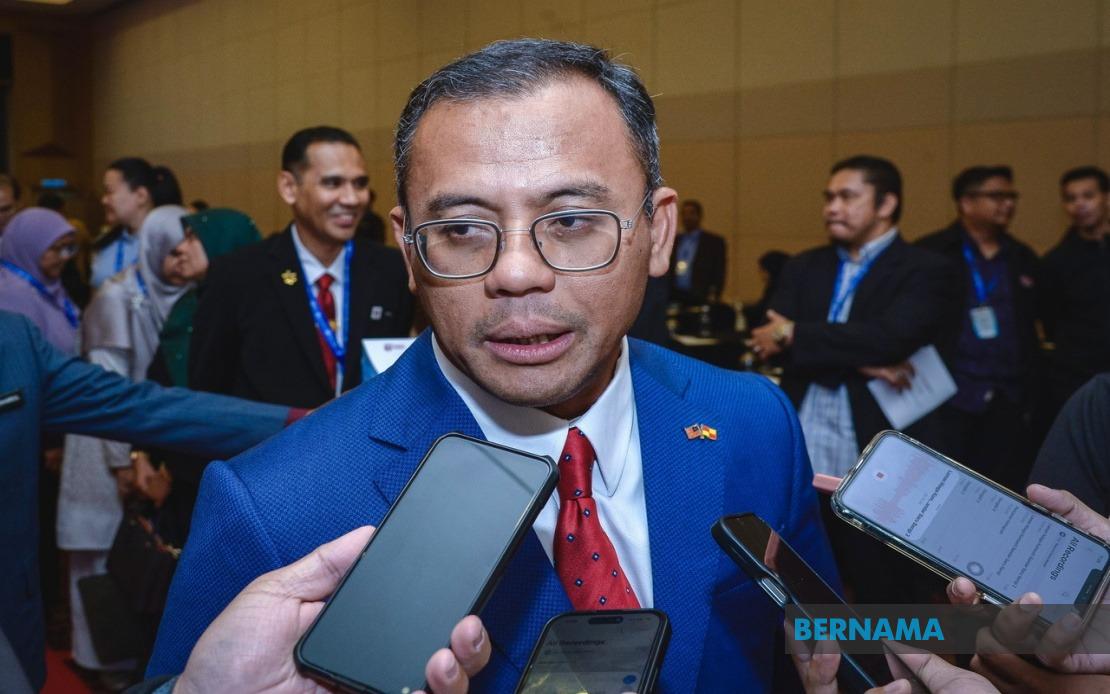
Pakatan Harapan has signalled its readiness to explore political cooperation with rival parties and coalitions, provided that any such arrangements are firmly anchored to principles of political stability and advancement of public welfare. This position was articulated by Datuk Seri Amirudin Shari, a member of the PH Presidential Council and PKR vice-president, during remarks made in Bangi on August 10. His comments come amid ongoing speculation about potential alignments ahead of significant electoral contests, reflecting the fluid political landscape that continues to reshape Malaysian coalition dynamics.
Amirudin's statement broadens the potential scope of PH's political negotiations beyond specific parties, suggesting that the coalition would evaluate collaboration opportunities with any political entity willing to adhere to these foundational principles. The emphasis on stability and people-centric governance marks an attempt to frame potential cooperation as principled rather than merely transactional. This approach signals that PH is prepared to be pragmatic in its political alliances while maintaining that such decisions cannot be made unilaterally by individual state-level leaders but must involve the coalition's central decision-making apparatus.
Specific reference to Bersatu and Perikatan Nasional in Amirudin's remarks reflects recent media speculation about possible Selangor-level arrangements between PH and Bersatu. However, Amirudin categorically denied that any formal cooperation or understanding had been established between these parties at the state level. He stressed that no substantive discussions or binding decisions had taken place, characterising recent reports as stemming from external commentary rather than internal party negotiations.
The Selangor Menteri Besar emphasised that any genuine cooperation would require careful evaluation conducted rationally at the national level, where broader considerations including election timing and prevailing political circumstances could be properly weighed. This insistence on centralised decision-making reflects the complexity of managing coalition dynamics across multiple tiers of government and the potential complications arising from state-level arrangements that might conflict with national strategy. It also underscores the tension between flexibility at state level and the need for coherent national positioning.
Amirudin acknowledged that while individual state leaders like himself might identify opportunities or receive suggestions for cooperation, such matters cannot be resolved independently. Instead, they must be escalated to the central leadership, where strategic implications can be assessed alongside other political considerations. This hierarchical approach to decision-making seeks to prevent fragmented political maneuvering that could undermine the coalition's overall coherence and negotiating position.
The backdrop to these comments involves reports from the previous Friday suggesting that Selangor PH was receptive to potential collaboration with Bersatu, particularly targeting state-level operations. Such alignment was interpreted as a strategic response to ensure both parties maintain relevance and demonstrate sufficient electoral strength before approaching general elections and state contests, notably the Melaka state election. This context highlights how Malaysian political parties are positioning themselves in anticipation of electoral contests that could significantly alter the balance of parliamentary and state-level power.
For Malaysian readers and observers, these developments reflect broader patterns in contemporary Malaysian politics where ideological boundaries between coalitions have become increasingly permeable, replaced by pragmatic calculations about electoral viability and governing capacity. The willingness of PH to consider working with parties like Bersatu, which emerged from UMNO's internal divisions and later joined PN, demonstrates how Malaysian political alignments continue to evolve based on shifting power dynamics rather than rigid factional loyalties.
The emphasis on "political stability" as a cornerstone principle merits scrutiny. In Malaysian political discourse, this term frequently encompasses ensuring that no single coalition achieves overwhelming dominance, thereby necessitating coalition-building and power-sharing arrangements. For PH, stability may entail preventing PN or other blocs from consolidating excessive control, which would justify cross-coalition cooperation as a stabilising mechanism. This framing allows PH to present potential alignments as defensive measures protecting pluralistic governance rather than opportunistic power consolidation.
The requirement that decisions be made at the central level reveals the internal complexity of managing coalition politics in Malaysia's federal structure. PH itself comprises multiple parties with differing ideological positions and state-level interests, making unified decision-making challenging. The Selangor situation is particularly sensitive given the state's economic importance and its role as a key electoral battleground. Any arrangement that appears to favour one coalition over another could trigger internal PH tensions, particularly between parties like DAP and PKR that might have divergent interests regarding potential Bersatu cooperation.
Looking forward, Amirudin's comments establish parameters within which PH is willing to negotiate but do not commit the coalition to specific arrangements. This strategic ambiguity allows PH to pursue opportunistic alignments while maintaining flexibility and preserving options as political circumstances evolve. However, such openness also carries risks, as it could invite perceptions of inconsistency or suggest that PH lacks clear principles beyond electoral calculation.
The implications for Southeast Asian politics extend beyond Malaysia's borders. As regional democracies navigate complex coalition politics, the willingness of established coalitions to cooperate across traditional dividing lines reflects how electoral competition increasingly drives pragmatic realignments. This pattern suggests that ideological consistency may matter less than electoral positioning in shaping contemporary political behaviour across the region.
Moving into the election cycle ahead, PH's flexibility on cooperation will likely be tested repeatedly as various scenarios materialise. The coalition's challenge lies in maintaining internal cohesion while pursuing external partnerships, ensuring that cooperation genuinely serves stated principles of stability and public welfare rather than becoming mere vehicles for power acquisition. How PH navigates these pressures will significantly influence not only its electoral prospects but also broader patterns of coalition governance in Malaysian politics.

