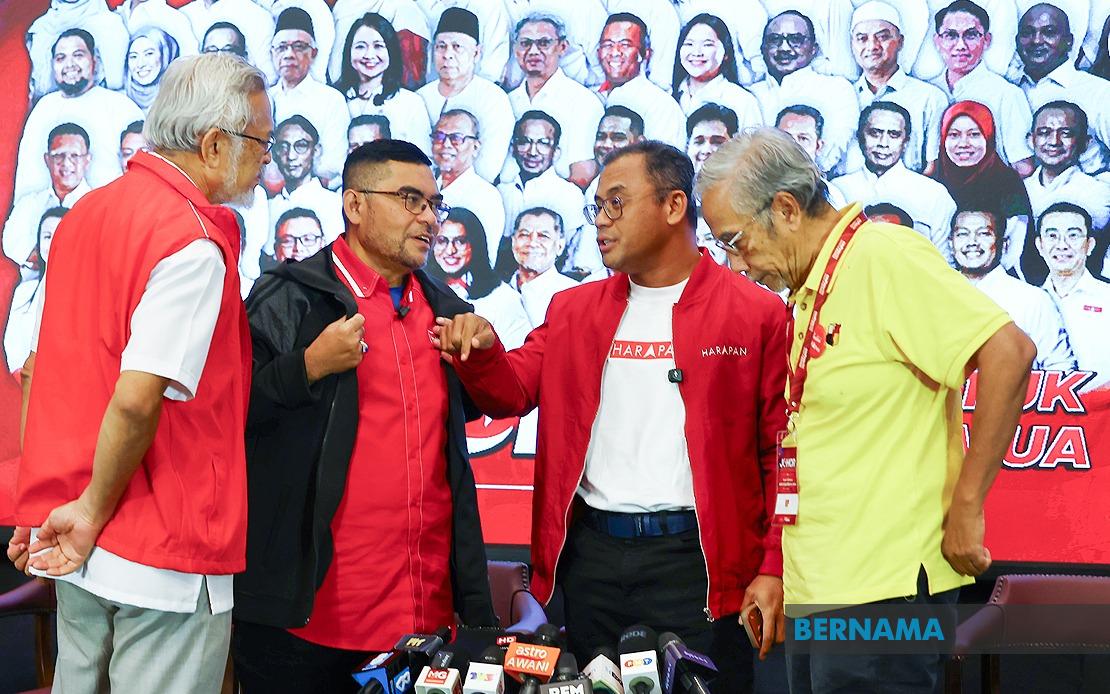
Pakatan Harapan signalled its intention to conduct a thorough post-mortem of the Johor state election results, using the findings to fortify its political machinery and voter engagement efforts as it pivots toward the Negeri Sembilan contest. Speaking in Johor Bahru on July 11, Datuk Seri Amirudin Shari, a senior PH figure and Selangor Menteri Besar, outlined plans for the coalition to examine multiple dimensions of its electoral performance, particularly shifts in voting behaviour across different demographic segments and the reception of its message among younger constituents.
The timing of Amirudin's remarks came as Barisan Nasional consolidated its dominance in Johor by securing 29 of the 56 state seats contested in what marked the 16th such election in the state. Election Commission chairman Datuk Seri Ramlan Harun confirmed that this result translated into more than 50 per cent of available seats, comfortably positioning BN as the governing coalition. For PH, the outcome underscored the mounting electoral challenge it faces in reclaiming ground in traditional strongholds where its support has eroded.
Amirudin cautioned against rushing to definitive conclusions on the Johor election, noting that several seats remained unconfirmed at the time of his announcement. This measured approach suggested that PH intended to wait for complete and verified data before finalizing its analysis, a stance that could provide the coalition breathing room to absorb the full scale of its losses without immediate pressure for wholesale strategic overhauls. He indicated that the comprehensive review would span approximately one week, allowing sufficient time for the coalition to digest results and prepare for what lies ahead.
The coalition's next major test arrives with the Negeri Sembilan state election, where PH currently holds the reins of government under Menteri Besar Datuk Seri Aminuddin Harun. Unlike Johor, where BN has demonstrated renewed electoral appeal, Negeri Sembilan represents terrain where PH retains incumbency advantages and a governing record it can leverage. Amirudin's confidence in retaining the state administration rested squarely on the performance achievements recorded under Aminuddin's tenure, effectively betting that good governance would translate into voter retention at the ballot box.
The transition from Johor to Negeri Sembilan occurs at a particularly sensitive juncture for PH, which must simultaneously manage external pressures while maintaining internal cohesion. The coalition comprises multiple parties with distinct constituencies and expectations, requiring careful calibration of candidate selection and campaign messaging to satisfy all stakeholders. Amirudin revealed that detailed discussions on candidate selection were scheduled for the day following his statement, with the full slate of PH candidates set for public announcement on July 14, providing the coalition just days to finalize nominations before election machinery shifts into high gear.
For Malaysian observers monitoring coalition stability, the Negeri Sembilan contest carries significance beyond the state itself. A loss in either state—or both—could precipitate internal recriminations within PH, potentially creating fissures between component parties and complicating the coalition's broader political standing. Conversely, retaining Negeri Sembilan while losses in Johor are digested as an isolated reversal could project narrative momentum heading into future electoral cycles. The coalition's ability to frame and manage expectations will prove crucial to navigating this period without destabilizing the broader political coalition.
Amirudin was explicit in reassuring stakeholders that state-level electoral fluctuations would not destabilize the federal government. His statement reflected the commitment extracted from all coalition partners to maintain the federal administration under Prime Minister Datuk Seri Anwar Ibrahim through the end of its designated term. This undertaking effectively placed a floor under federal government stability, insulating it from the shock waves that might otherwise ripple upward from state election defeats. Amirudin notably cited reciprocal commitment from Barisan Nasional to respect this federal compact, suggesting a working relationship between governing and opposition coalitions on this specific point.
The strategic contours of PH's Negeri Sembilan campaign will likely emphasize achievements under its administration, particularly in areas touching on state economic development, infrastructure, and social service delivery. The coalition can point to the contrast between incumbent performance and opposition promises, a positioning that typically advantages sitting governments when the state administration can demonstrate tangible improvements in voter welfare. Given that Amirudin specifically invoked Aminuddin's leadership as a cornerstone of PH confidence, the campaign will probably be built substantially around the Menteri Besar's profile and the institutional credibility he has accumulated.
Among younger voters—a demographic category that Amirudin identified as requiring closer examination following Johor—the Negeri Sembilan election presents an opportunity for PH to test revised messaging and engagement strategies. Youth voters represent a critical constituency whose behaviour patterns have shifted measurably in recent Malaysian election cycles, sometimes favoring opposition parties and sometimes gravitating toward candidates perceived as offering new approaches to governance. A detailed analysis of how younger voters in Johor responded to PH would inform how the coalition recalibrates its appeal for Negeri Sembilan voters in similar age brackets.
The week between the Johor results and the commencement of comprehensive internal review provided PH with a crucial window to absorb the scale of its setback without appearing to collapse into panic. Amirudin's structured approach—complete data verification, deliberate analysis, measured strategic adjustment—projected operational competence even amid electoral disappointment. This posture may help preserve PH's internal morale and maintain external projections of institutional stability during a period when coalition opponents would naturally seek to amplify any signs of dysfunction.
Regionally, the trajectory of Malaysia's coalition politics carries implications for broader Southeast Asian political trends. Incumbent governing coalitions across the region have experienced electoral volatility in recent cycles, with voters frequently switching support between competing alliances in search of improved governance outcomes. Malaysia's experience with PH—initially victorious in 2018 but subsequently weakened through defections and electoral losses—illustrates the fluidity of coalition politics in competitive democracies. How PH navigates its present challenges will contribute to broader regional patterns regarding the durability and adaptability of political coalitions.
Looking ahead, the Negeri Sembilan result will serve as a crucial data point for assessing whether PH's review and strategic adjustment following Johor bore fruit or whether deeper structural vulnerabilities require more fundamental repositioning. A victory would suggest the review process yielded actionable insights and effective tactical adjustments. A loss would raise more searching questions about whether state-level reversals reflect temporary campaign management failures or sustained erosion of PH's electoral coalition that cannot be easily remedied through messaging refinement. The months immediately following the Negeri Sembilan election will thus prove pivotal in determining the trajectory of Malaysian coalition politics heading into subsequent electoral contests.

