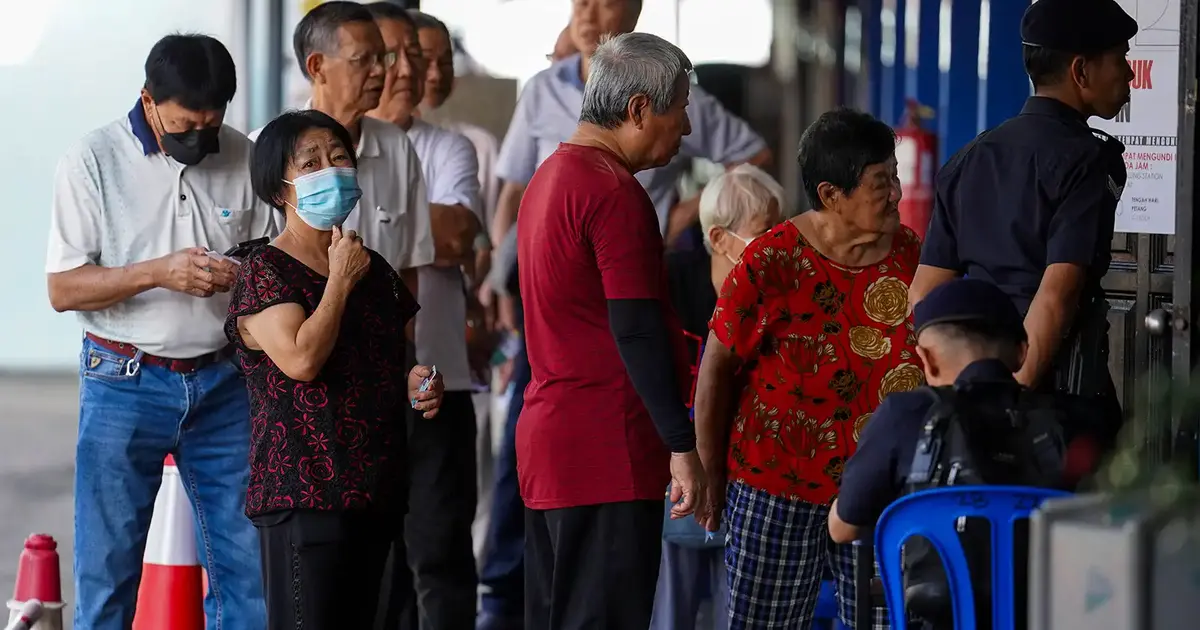
Pakatan Harapan's struggle to retain support among Johor's Chinese voters stems largely from disappointing turnout at the polling booths rather than wholesale defection to the Barisan Nasional, according to former Bangi MP Ong Teng Cheong, whose analysis provides fresh perspective on the coalition's electoral vulnerabilities in a traditionally important demographic.
Ong's assessment challenges the narrative of systematic vote-switching, instead pointing to a picture of voter disengagement that has proven increasingly damaging to opposition coalitions across Malaysia. The distinction carries significant weight for understanding why Pakatan Harapan's support base has fractured in key states, particularly in Johor where the coalition once held considerable appeal among urban and educated Chinese communities.
In making this assessment, Ong suggests that relatively few Chinese voters actively transferred their ballots to Barisan Nasional, meaning the primary problem facing the opposition was not persuasion to the government's side but rather mobilisation of its existing supporters. This interpretation aligns with broader patterns observed in Malaysian electoral politics, where turnout fluctuations among specific demographic groups often determine race outcomes more decisively than vote-switching alone.
The timing of Ong's comments carries particular relevance as Pakatan Harapan undertakes internal assessments of its electoral strategy and voter engagement approach. Chinese voters have historically represented a critical swing bloc in Malaysian politics, capable of shifting seat distributions significantly depending on their participation levels and allocation of support. In Johor specifically, this community's voting behaviour has substantial bearing on outcomes across constituencies with mixed demographics.
Turnout concerns in particular electoral cycles have repeatedly surfaced as explanations for opposition underperformance, yet determining precise causation remains methodologically challenging. Whether voter apathy stems from dissatisfaction with coalition performance, disappointment with internal party politics, or simply the competing demands and priorities in voters' lives requires deeper investigation than exit polls typically provide. Ong's framing suggests that Pakatan Harapan strategists should focus on why supporters stayed home rather than automatically assuming they switched camps.
The broader implications for Johor politics extend beyond immediate electoral mathematics. If Ong's assessment proves accurate, it suggests that Pakatan Harapan retains latent support capacity among Chinese voters in the state, provided the coalition can address the factors driving disengagement. Conversely, if Barisan Nasional has successfully consolidated gains through improved grassroots outreach and messaging, that foundation may prove difficult to dislodge regardless of opposition turnout improvements.
Johor represents one of the most strategically important states in Malaysian politics due to its size, demographic diversity, and role as an economic powerhouse. The state's Chinese voters, particularly concentrated in urban areas like Johor Bahru, Skudai, and other development corridors, wield disproportionate influence over electoral outcomes. Their engagement levels therefore reverberate far beyond state-level politics, affecting broader calculations about federal coalition viability.
Ong's distinction between apathy and defection also highlights the different remedies each situation demands. If turnout represents the core problem, Pakatan Harapan must examine its messaging effectiveness, campaign infrastructure, and perceived relevance to voters' concerns. If defection occurred, the coalition would need to demonstrate policy improvements or personnel changes to recapture lost trust. The former challenge, while significant, may prove more tractable for organised political movements.
Historical context shows that Chinese voter turnout has fluctuated considerably across different electoral cycles in Malaysia, influenced by factors ranging from national political developments to constituency-specific issues and even weather conditions on polling day. Ong's analysis encourages more granular examination of these variables rather than sweeping conclusions about systematic realignment. This approach could yield more actionable intelligence for opposition strategists planning future campaigns.
The question of Johor's political trajectory takes on heightened importance as Malaysia approaches potential future elections. The state has shown capacity to shift between coalitions, having moved away from Barisan Nasional dominance in recent years before the current configuration. Understanding precisely why voters behaved as they did in recent contests provides essential baseline data for all political actors seeking to influence future outcomes.
For Malaysian political observers, Ong's comments serve as a useful reminder that electoral outcomes rarely reflect simple voter sentiment. Rather, they emerge from complex interactions between actual preferences, mobilisation capacity, messaging effectiveness, and practical participation decisions. Properly interpreting these elements requires careful analysis rather than accepting surface-level narratives about shifting loyalties. As Pakatan Harapan contemplates its position in Johor and beyond, such clarity about what actually happened becomes essential for plotting a path forward.

