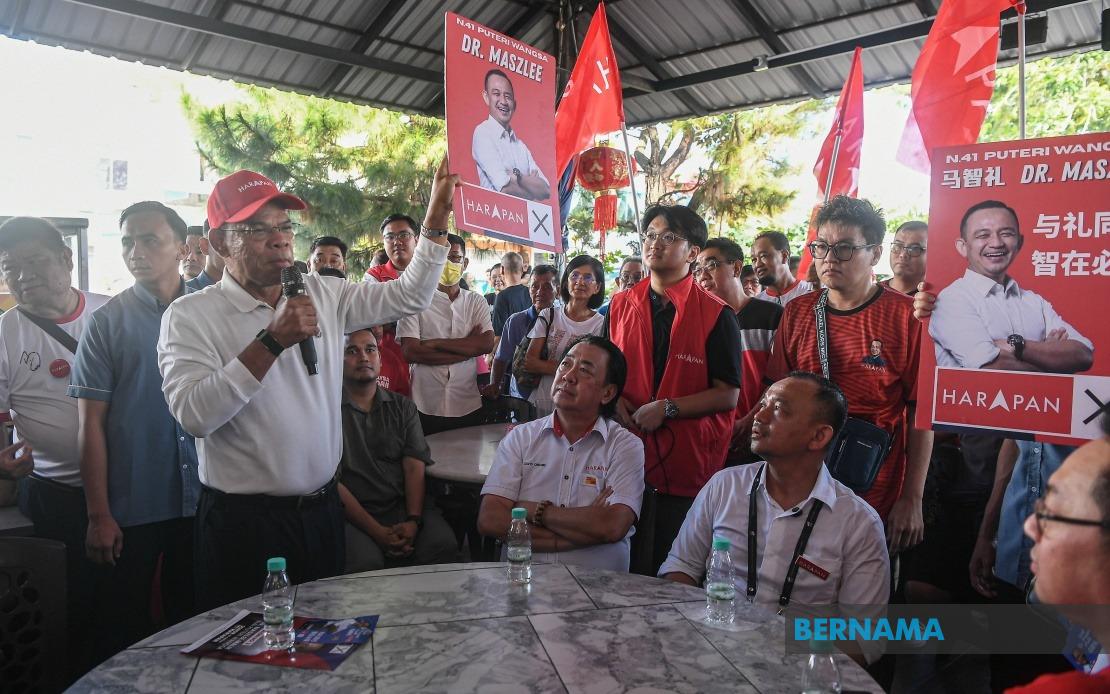
Pakatan Harapan's political momentum in the Johor state election campaign is being propelled by a sophisticated, constituency-level approach that moves beyond traditional blanket strategies, according to coalition secretary-general Datuk Seri Saifuddin Nasution Ismail. Speaking in Johor Bahru on July 5, Saifuddin Nasution outlined how the coalition has methodically categorized all 56 state seats under contest into distinct priority tiers, allowing campaign resources and messaging to be calibrated to the unique political landscape of each area.
This differentiated methodology represents a departure from conventional election playbooks. Rather than deploying identical messaging across all constituencies, PH recognizes that each seat presents distinct voter demographics, historical voting patterns, and community-specific concerns. The Puteri Wangsa seat, for instance, carries fundamentally different characteristics than Johor Lama or Larkin, requiring tailored engagement strategies. By clustering constituencies according to competitive viability and support trajectories, PH strategists can concentrate intensive ground efforts where they offer maximum electoral return. This precision-focused campaigning has emerged as a defining feature of the coalition's 2024 state election approach.
The efficacy of PH's seat-by-seat strategy has been amplified by strategic miscalculations from competing parties, particularly the Islamic PAS movement. By announcing it would contest only 11 seats while explicitly directing supporters to back Barisan Nasional candidates in remaining constituencies, PAS inadvertently fractured the opposition vote in critical areas. This approach provided an unexpected advantage to PH, which seized the opening by positioning itself as the more coherent and transparent alternative. Saifuddin Nasution emphasized that PH's willingness to make clear announcements regarding seat allocation and to present an implementable manifesto has resonated with voters fatigued by unclear or fragmented political messaging.
The timing of high-profile endorsements has further buttressed PH's campaign narrative. The participation of Datuk Dr Mohd Puad Zarkashi, a former UMNO Supreme Council member with significant grassroots influence, in a series of dialogue sessions with Prime Minister Datuk Seri Anwar Ibrahim at Felda Ulu Tiram, represented a symbolic bridging of political divides. Such cross-party engagement signals to moderate voters and fence-sitters that a PH-led state government enjoys genuine appeal beyond its core constituencies, potentially driving incremental gains in swing areas where election verdicts remain contested.
The coalition's candidate selection also reflects strategic thinking. Saifuddin Nasution characterized Dr Maszlee Malik, the PH contender in Puteri Wangsa, as a qualified representative and valuable asset for government formation. The careful pairing of strong candidates with priority constituencies sends a signal to voters that PH has invested serious thought into who would represent them, rather than deploying lesser-known or hastily-selected nominees. This granular attention to candidate quality across the full slate of 56 seats contributes to the perception of an organized, competent force capable of effective governance.
PH's fielding of candidates across all 56 state seats itself constitutes a strategic statement. The coalition's distribution—20 representatives from PKR, 19 from Amanah, and 17 from DAP—reflects negotiated compromises among coalition partners while maintaining unity. This comprehensive presence across the electoral map, combined with the prioritization framework, allows PH to compete seriously in virtually every constituency while concentrating maximum effort where victory probabilities are highest. The approach maximizes coverage while preserving strategic flexibility.
For Malaysian political observers, the Johor contest carries implications extending beyond state boundaries. As the second-most populous state and historically a BN stronghold, Johor represents a critical test case for PH's ability to sustain and expand the electoral coalition that delivered federal victory in 2022. A strong performance here would suggest the coalition has refined its ground organization and messaging strategies, while a disappointing result might indicate that rural consolidation or demographic shifts are working against opposition interests. The state's diverse population, encompassing significant Malay, Chinese, and Indian communities across urban and agricultural zones, provides a microcosm of national political dynamics.
The election unfolds amid broader regional political developments. Southeast Asia has witnessed increasing sophistication in opposition campaign strategies, with several successful challenges to long-incumbent parties relying on precisely this kind of targeted, data-informed approach. Thailand's 2023 elections and Indonesia's 2024 presidential race both demonstrated how new parties leveraging modern campaign technologies and constituency-specific messaging could upset established power structures. PH's application of comparable principles in Johor suggests the coalition is adapting global best practices to Malaysian electoral conditions.
With 172 candidates competing across 56 seats, the July 11 polling day will determine not merely who governs Johor for the next five years, but whether PH's strategic innovations have effectively translated into sustained electoral gains. Early voting scheduled for July 7 will provide preliminary indicators of turnout and engagement levels. The coalition's confidence in its momentum—reflected in comprehensive candidate fielding and public messaging emphasizing organizational strength—suggests PH strategists believe their granular approach has genuinely resonated with voters seeking alternatives to incumbent governance, though the ultimate electoral mathematics will be determined by voter turnout and persuasion across diverse communities.

